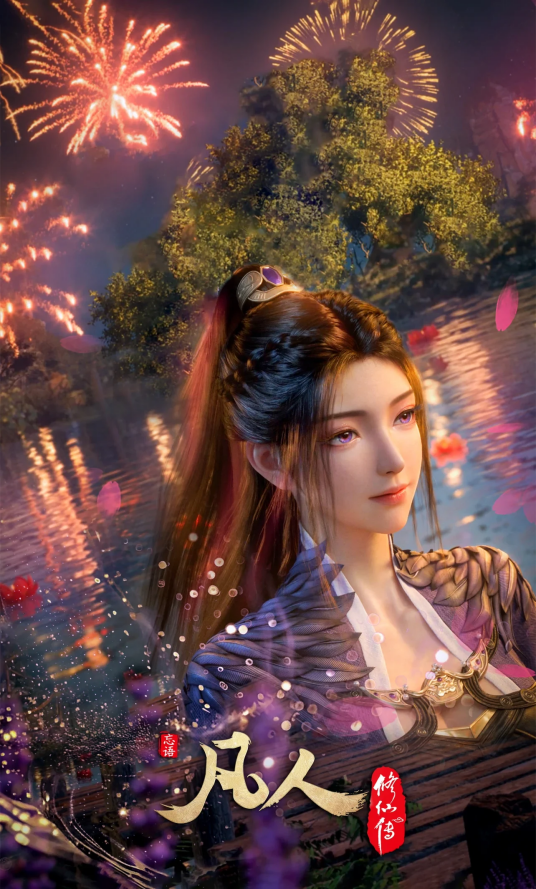
悲剧的本质:不是不被爱,是不被需要
古希腊悲剧的核心从来不是"好人遭殃"——那只是惨剧。真正的悲剧是:一个人的核心品质,恰恰是导致他毁灭的原因。
俄狄浦斯的智慧让他走向了不该知道的真相。安提戈涅的正义让她走向了必然的死亡。
而紫灵的爱——那种燃烧一切的、不计回报的深情——让她走向了修仙世界中最残酷的结局:不是死亡,而是被遗忘。
初见:一个注定不对等的开局
紫灵与韩立的相遇发生在天南修仙界,彼时韩立正处于结丹期的关键阶段。忘语对这次相遇的描写很克制——没有月下邂逅,没有英雄救美,只是两个修士因为机缘巧合走到了一起。
但从一开始,这段关系就存在一个根本性的不对等。
紫灵投入的是全部,韩立投入的是一部分。
这不是韩立冷漠。韩立的情感模式决定了他不可能把全部身心投入到任何一段关系中——他的生存哲学不允许。他可以喜欢紫灵,可以心动,可以在某些时刻感到温暖。但他永远会保留一部分自我,用来计算风险、评估形势、准备后路。
紫灵没有这个"保留区"。她的爱是全覆盖的。
这就是悲剧的种子。
天灵根的诅咒
紫灵拥有罕见的天灵根,修炼速度极快,在同辈中堪称天才。但天灵根在某种意义上成了她的诅咒。
在修仙世界里,天灵根意味着宗门的重点培养对象、各方势力的争夺目标、以及——一个没有自由选择权的人。 紫灵的修仙之路,在很大程度上是被她的天赋所定义的。她不是在选择自己的命运,而是在被命运推着走。
与韩立形成鲜明对比。韩立的资质平庸,反而让他拥有了一种诡异的自由——没有人对他有太高期望,也没有人试图控制他的方向。他可以自由地选择合作对象、自由地决定修炼路线、自由地在危机中做出判断。
紫灵不行。她的天灵根让她成为了一件"战略资产",而不仅仅是一个人。
牺牲的逻辑
紫灵在原著中最令人心碎的特质,是她的牺牲总是主动的、清醒的。
她不是那种被迫牺牲的悲情角色。每一次付出,她都清楚自己在做什么、代价是什么。她为韩立挡过劫难,为他放弃过更优的选择,为他承受过本不需要承受的风险。
她不是不知道韩立对她的感情没有那么深。她知道。
这才是最残酷的地方。
在传统的爱情叙事中,牺牲者通常有一个美好的信念支撑——"他/她也爱我,只是不善表达"。紫灵没有这个幻想。她对韩立的感情模式看得很清楚:韩立会感激她,会关心她,但韩立的心里永远有一个南宫婉形状的位置,那个位置不属于她。
知道自己不被深爱,却依然选择深爱。 这不是愚蠢,这是一种近乎宗教般的奉献——它的价值不在于是否得到回报,而在于奉献本身。
但修仙世界不是宗教世界。修仙世界是一个残酷的丛林,在这里,无条件的付出不会被感恩戴德地接受,只会被视为——一个可以利用的弱点。
被叙事吞噬的角色
紫灵在原著后半段的"消失",是忘语创作中一个引发大量争议的处理方式。
随着剧情推进到灵界篇和仙界篇,紫灵的戏份急剧减少,最终几乎完全退出了叙事主线。对于一个曾经与韩立有过深刻情感联结的角色来说,这种处理方式让很多读者感到不满。
但如果我们从叙事结构的角度来分析,会发现这种"消失"恰恰是紫灵悲剧的最终形态。
她不是被遗忘了,她是被"不需要"了。
韩立飞升灵界后,面对的挑战完全升级。在灵界和仙界的权力格局中,紫灵的实力已经无法参与韩立的核心叙事线。她既不能像蟹道人那样成为战力补充,也不能像元瑶那样在新世界找到新的叙事功能。
一个"不被需要"的角色,在以主角为中心的叙事中,自然会被边缘化。这不是忘语对紫灵的"不公平"——这就是叙事法则的冷酷运作。
而这种叙事法则,恰恰映射了修仙世界的生存法则:在不断攀升的修仙之路上,跟不上脚步的人终将被留在身后。 无论他们的爱有多深。
紫灵与古典悲剧的三要素
如果用亚里士多德的悲剧理论来分析紫灵,会发现她完美符合古典悲剧的三个核心要素。
Hamartia(悲剧缺陷):紫灵的"缺陷"不是性格弱点,而是她的核心美德——无条件的爱。在修仙世界中,这种爱是一种生存意义上的缺陷。它让她做出不理性的选择,让她放弃对自身有利的机会,让她把自己的命运绑定在另一个不愿被绑定的人身上。
Peripeteia(命运逆转):紫灵的命运逆转不是一个戏剧性的时刻,而是一个缓慢的过程——从韩立身边最亲近的人之一,到被叙事边缘化的配角。这种渐进式的逆转比突然的灾难更令人心痛,因为它发生得如此自然,以至于你无法指出一个"一切开始变糟"的明确时间点。
Catharsis(净化/宣泄):读者对紫灵命运的同情和愤怒,正是亚里士多德所说的"净化"效果。我们通过对她的命运的情感反应,审视了自己对"爱与牺牲"的理解。
一个不舒服的问题
紫灵的故事逼迫我们面对一个不舒服的问题:无条件的爱,真的值得赞美吗?
在现实生活中,我们被教导"无条件的爱"是最高形式的爱。但紫灵的遭遇暗示了另一种可能:无条件的爱,如果施加给一个不需要它的人,就不是爱的升华,而是自我的消耗。
紫灵把自己燃烧殆尽,照亮的却是韩立通往其他人的路。
这不是忘语在批判紫灵——忘语对她始终怀有温柔的笔触。但客观的叙事结果是:紫灵的牺牲没有改变任何人的命运轨迹。韩立没有因为她的爱而变成一个更好的人,世界没有因为她的付出而变得更公正。
她的爱是真实的,她的痛苦也是真实的。但在修仙世界的宏大叙事中,这些真实被淹没在了更紧迫的生存议题里。
结语
紫灵仙子的故事,是《凡人修仙传》中最安静的悲剧。
没有惊天动地的战斗,没有生离死别的嚎啕,没有命运巨轮碾过的轰鸣。只有一个女人,安安静静地爱着一个人,安安静静地被时间和距离冲淡,安安静静地消失在不断膨胀的叙事宇宙中。
她的悲剧不是死亡。死亡至少是一种存在的证明。
她的悲剧是——被遗忘。
而最残酷的部分是:她大概预见到了这个结局,却依然选择了爱。
这就是宿命。不是命运强加给她的,而是她自己选择的。
The Essence of Tragedy: Not Being Unloved, but Being Unneeded
The core of ancient Greek tragedy was never "bad things happen to good people" — that's merely misfortune. True tragedy is when a person's defining virtue becomes the very cause of their downfall.
Oedipus's wisdom led him to a truth he should never have known. Antigone's sense of justice led her to an inevitable death.
And Violet Spirit's (紫灵) love — that all-consuming, unrequited devotion — led her to the cruelest fate in the cultivation world: not death, but being forgotten.
First Meeting: An Inherently Unequal Beginning
Violet Spirit and Han Li (韩立) met in the Heavenly South cultivation world, while Han Li was at a critical juncture in his Core Formation stage (the cultivation level where practitioners condense their spiritual energy into a golden core). Wang Yu's description of this encounter is restrained — no moonlit rendezvous, no heroic rescue, just two cultivators brought together by chance.
But from the very start, this relationship contained a fundamental inequality.
Violet Spirit invested everything. Han Li invested a fraction.
This isn't Han Li being cold. His emotional patterns dictate that he can never pour his entire heart and soul into any relationship — his survival philosophy won't allow it. He can like Violet Spirit, feel moved, feel warmth in certain moments. But he will always reserve a portion of himself for calculating risk, assessing situations, and preparing escape routes.
Violet Spirit has no such "reserved zone." Her love provides total coverage.
This was the seed of tragedy.
The Curse of the Heavenly Spiritual Root
Violet Spirit possesses a rare Heavenly Spiritual Root (天灵根) — an innate spiritual affinity that dramatically accelerates cultivation speed, making her a generational prodigy. But in a sense, this gift became her curse.
In the cultivation world, a Heavenly Spiritual Root means being a sect's top priority for grooming, a target for competing factions, and — a person without the freedom to choose. Violet Spirit's cultivation path was largely defined by her talent. She wasn't choosing her destiny; destiny was pushing her along.
This stands in sharp contrast to Han Li. Han Li's mediocre aptitude paradoxically granted him a strange kind of freedom — no one had high expectations of him, and no one tried to control his direction. He could freely choose partners, cultivation routes, and crisis responses.
Violet Spirit couldn't. Her Heavenly Spiritual Root made her a "strategic asset" rather than merely a person.
The Logic of Sacrifice
Violet Spirit's most heartbreaking trait in the original novel is that her sacrifices are always active and clear-eyed.
She isn't a character forced into sacrifice. With every act of giving, she clearly understood what she was doing and what it would cost. She shielded Han Li from calamity, gave up better options for him, and bore risks she needn't have taken.
It's not that she didn't know Han Li's feelings for her weren't as deep. She knew.
This is what makes it so cruel.
In traditional love narratives, the one who sacrifices usually has a beautiful belief to sustain them — "they love me too, they're just bad at showing it." Violet Spirit harbored no such illusion. She saw Han Li's emotional patterns clearly: Han Li would be grateful, would care for her, but there would always be a Nangong Wan-shaped space in his heart that didn't belong to her.
Knowing you are not deeply loved, yet choosing to love deeply. This isn't foolishness — it's a near-religious devotion, valuable not for what it receives in return, but for the act of devotion itself.
But the cultivation world isn't a religious world. It's a brutal jungle where unconditional giving isn't accepted with gratitude — it's viewed as an exploitable weakness.
A Character Consumed by the Narrative
Violet Spirit's "disappearance" in the novel's latter half is one of Wang Yu's most controversial creative decisions.
As the plot advanced into the Spirit Realm Arc and the Immortal Realm Arc, Violet Spirit's role shrank dramatically until she virtually vanished from the main storyline. For a character who once shared a deep emotional connection with Han Li, this treatment left many readers dissatisfied.
But if we analyze from a narrative structure perspective, this "disappearance" is actually the final form of Violet Spirit's tragedy.
She wasn't forgotten — she was "not needed."
After Han Li ascended to the Spirit Realm, the challenges he faced escalated entirely. In the power dynamics of the Spirit and Immortal Realms, Violet Spirit's strength could no longer participate in Han Li's core narrative. She couldn't serve as combat reinforcement like Crab Daoist, nor could she find a new narrative function in the new world like Yuan Yao.
A character who is "not needed," in a protagonist-centered narrative, will naturally be marginalized. This isn't Wang Yu being "unfair" to Violet Spirit — it's simply the cold operation of narrative law.
And this narrative law perfectly mirrors the cultivation world's survival law: On the ever-ascending path of cultivation, those who can't keep pace will eventually be left behind. No matter how deep their love.
Violet Spirit and the Three Elements of Classical Tragedy
Analyzing Violet Spirit through Aristotle's theory of tragedy reveals she perfectly embodies three core elements of classical tragedy.
Hamartia (tragic flaw): Violet Spirit's "flaw" isn't a character weakness — it's her defining virtue: unconditional love. In the cultivation world, such love is a survival-level deficiency. It leads her to make irrational choices, give up self-beneficial opportunities, and bind her fate to someone who refuses to be bound.
Peripeteia (reversal of fortune): Violet Spirit's reversal isn't a single dramatic moment but a gradual process — from being one of the closest people to Han Li, to a marginalized supporting character. This incremental reversal is more painful than sudden catastrophe, because it happens so naturally you can't pinpoint a single moment when "everything started going wrong."
Catharsis (purification): Readers' sympathy and anger over Violet Spirit's fate is precisely the "catharsis" Aristotle described. Through our emotional response to her fate, we examine our own understanding of "love and sacrifice."
An Uncomfortable Question
Violet Spirit's story forces us to confront an uncomfortable question: Is unconditional love truly worthy of praise?
In real life, we're taught that "unconditional love" is the highest form of love. But Violet Spirit's experience suggests another possibility: unconditional love, when directed at someone who doesn't need it, isn't love's sublimation — it's self-consumption.
Violet Spirit burned herself out, only to illuminate Han Li's path to other people.
This isn't Wang Yu criticizing Violet Spirit — he always wrote her with gentle brushstrokes. But the objective narrative result is: Violet Spirit's sacrifice didn't change anyone's destiny. Han Li didn't become a better person because of her love, and the world didn't become more just because of her giving.
Her love was real, and her pain was real. But in the cultivation world's grand narrative, these realities were drowned out by more pressing survival concerns.
Closing
Fairy Violet Spirit's story is the quietest tragedy in A Record of a Mortal's Journey to Immortality.
No earth-shaking battles, no sobbing farewells, no thunder of fate's great wheel grinding overhead. Just a woman, quietly loving someone, quietly fading through time and distance, quietly disappearing into the ever-expanding narrative universe.
Her tragedy isn't death. Death is at least proof of existence.
Her tragedy is — being forgotten.
And the cruelest part is: she probably foresaw this ending, yet still chose to love.
This is fate. Not one imposed on her by destiny, but one she chose for herself.