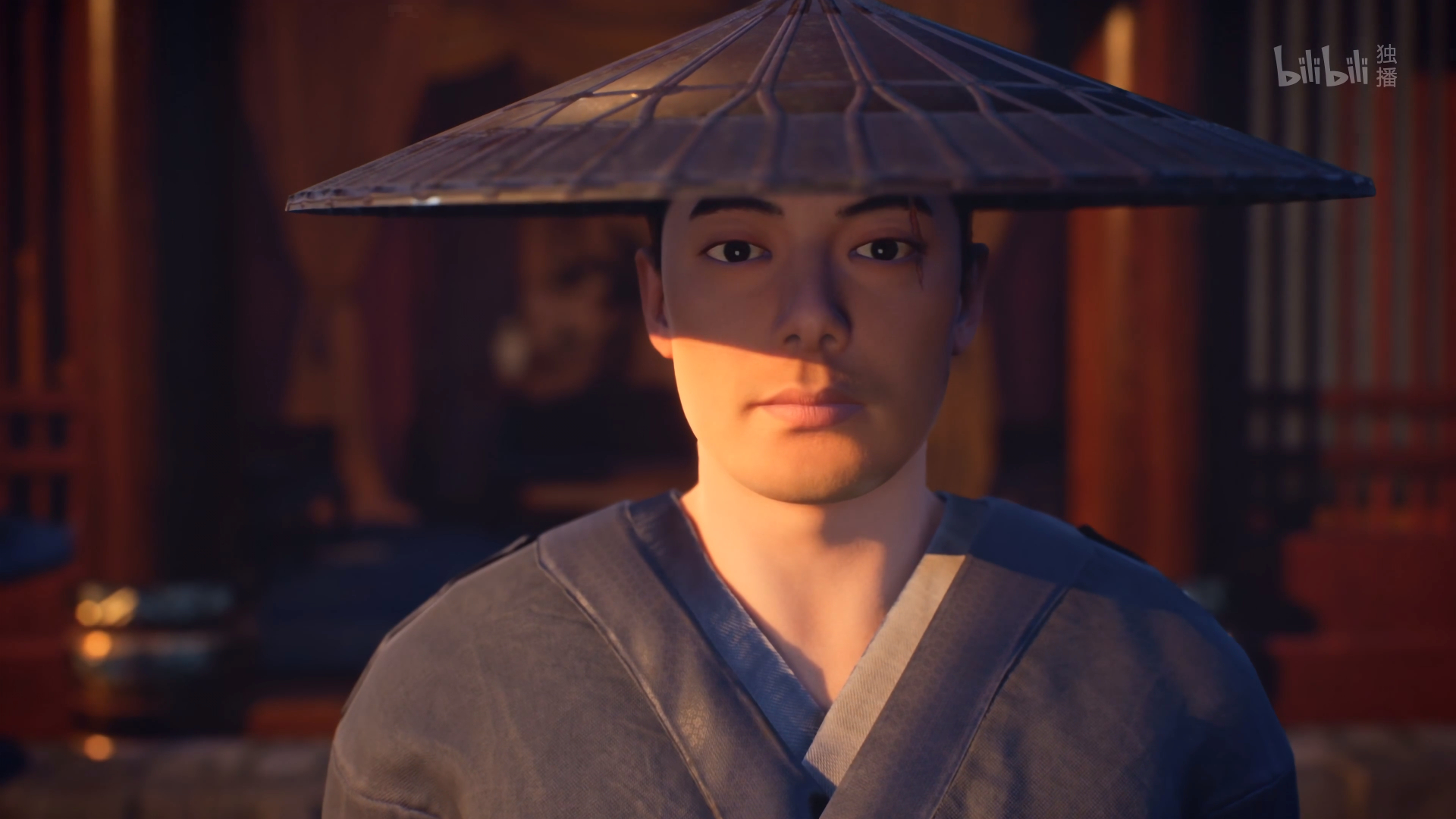
他是韩立没有走的那条路
每一个修仙故事都有一个叙事上的"路口":主角走上修仙之路,而他身边的普通人留在了原地。大多数网文不会回头看那些留在原地的人。但忘语回头看了。
张铁就是他回头看到的那个人。
张铁是韩立在七玄门时结识的好友,一个资质平平、性格憨厚、注定不会在修仙世界掀起任何波澜的普通人。他和韩立的友谊建立在修仙之前——那是韩立还没有变成后来那个冷静到近乎冷酷的生存主义者的时候。那时的韩立还会因为朋友的事而冲动,还会因为不公而愤怒,还像一个正常的少年。
张铁对韩立的意义,不在于他做了什么,而在于他代表了什么——他是韩立凡人身份的最后一个锚点。
正常人的叙事功能
修仙小说有一个固有的叙事问题:当主角越来越强,越来越远离人间烟火时,读者会逐渐失去与主角的情感联系。你很难对一个寿命以万年计算、随手毁天灭地的存在产生共情——因为他的烦恼和你的烦恼完全不在一个维度上。
张铁这样的角色,就是用来解决这个问题的。
每当韩立想起张铁、回去看望张铁、或者在某个瞬间因为张铁而感到某种人类情感的波动时,读者就被拉回了地面。这种拉回是必要的——它提醒读者,也提醒韩立自己:不管你修炼到了什么境界,你曾经是一个会和朋友勾肩搭背的普通少年。
这就是"凡人"二字在"凡人修仙传"中真正的分量。不是说韩立曾经是凡人,而是说凡人的部分永远是韩立最真实的部分。
张铁就是那个永远在提醒韩立这一点的人。
衰老:最安静的残忍
韩立修仙有成之后回去看望张铁的场景,是全书最安静也最残忍的场景之一。
想象一下这个画面:你离开家乡十年、二十年、五十年,回去之后发现你的发小已经白发苍苍、儿孙满堂。他认出了你,惊讶于你"一点没变"。你们坐下来聊天,但你们的共同语言已经所剩无几——他聊的是庄稼收成、孙子上学、腰腿疼痛;你聊的是……你能聊什么?元婴期修炼心得?异界夺宝的惊险经历?
你们之间的距离,已经不是空间上的距离,而是存在维度上的距离。
这种距离的残忍在于它的不可逆。韩立可以跨越万里去看张铁,但他无法跨越两个人的生命尺度之间的鸿沟。张铁的一生,在韩立的生命中不过是一个闪念。韩立看着张铁衰老的过程,就像一个人看着一朵花开了又谢——美丽、短暂、无法挽留。
而张铁呢?他看着韩立永远年轻的面孔,心里是什么感受?羡慕?释然?还是一种他自己也说不清的怅然?
小说没有花大量笔墨写张铁的心理活动,但正是这种留白,让这个角色的悲剧性更加深重。不被书写的痛苦,往往比被书写的痛苦更痛。
未选择的路
文学批评中有一个概念叫"未选择的路"(The Road Not Taken),来自弗罗斯特的诗。它指的是那些主角没有走上的人生道路——这些"未选择的路"通过对比,定义了主角"已选择的路"的意义。
张铁就是韩立"未选择的路"的人格化。
如果韩立没有被墨居仁看中(或者说选中),如果他的资质再普通一点,如果他没有那些不可思议的机缘——他的人生大概率就是张铁的人生:在七玄门学点粗浅功夫,混不出名堂后回到家乡,娶妻生子,种田过日子,六七十岁在某个冬天的夜里安静地死去。
这条路好吗?站在韩立的角度看,当然不好——短暂、平庸、没有任何可能性。但站在张铁的角度看呢?他有家人,有朋友,有四季轮转的确定性,有脚踩在泥土里的踏实感。他从来不需要担心有人要取他的性命,不需要在尔虞我诈中度日如年,不需要承受修炼瓶颈带来的精神压力。
张铁的幸福是小的、具体的、脆弱的,但它是真实的。 而韩立的成就是大的、抽象的、坚固的,但他为此付出的代价——孤独、冷漠、永远无法彻底放松的警惕——同样是真实的。
忘语从来没有明确判断哪条路更好。他只是把两条路都写了出来,让读者自己去感受。
记忆的重量
张铁在韩立的人生中占据的时间可能不到百分之一,但他在韩立记忆中的重量远远超过这个比例。
这是一个很有趣的现象:人对早年记忆的情感浓度,远远高于后来的记忆。心理学上这叫"怀旧偏差"——我们倾向于美化早年的经历,因为那时的我们还没有形成足够的防御机制,情感是直接的、赤裸的、不打折扣的。
韩立后来遇到了无数人——道侣、盟友、敌人、师长——但他和这些人的关系都带着修仙世界的滤镜:算计、利益、实力对比、潜在威胁。只有和张铁的友谊是"前修仙时代"的产物,是在韩立还不知道什么是元神、什么是天道的时候建立的。
这种纯粹性是不可复制的。一个修仙者可以拥有无限的寿命,但他永远无法再拥有一段不被修仙世界污染的友谊。
张铁是韩立的童年,是韩立的纯真年代,是韩立在漫长修仙路上回头看时唯一能看到温暖灯火的窗口。
凡人之死的叙事意义
张铁最终会死。不是被敌人杀死,不是在战斗中牺牲,而是简简单单地——老死。
这种死亡方式在修仙小说中几乎是缺席的。修仙世界里的死亡都是"暴力的"——被人杀死、渡劫失败、走火入魔。自然死亡,即一个人因为衰老而安静地离开这个世界,在修仙叙事中反而成了一种稀罕事。
但张铁的老死(虽然小说并未详细描写,但这是必然的结局)恰恰是全书最重要的死亡之一。因为它回答了一个修仙小说通常回避的问题:如果长生是修仙的终极目标,那么不长生的人生是否毫无意义?
张铁用他短暂、平凡、温暖的一生回答了这个问题:不,凡人的一生有它自己的完整性。
他不需要长生来赋予自己的人生意义。他的意义就在那些日常中——和朋友的闲聊、和妻子的争吵、抱孙子时的笑容、秋收时对田地的满足。这些东西在宇宙尺度上微不足道,但在人的尺度上,它们就是一切。
为什么"凡人修仙传"不能没有凡人
张铁这个角色的存在,让"凡人修仙传"的书名获得了双重含义。
表面上,"凡人修仙"说的是韩立从凡人变成仙人的过程。但深层来看,"凡人"不仅是一个起点,更是一个永远不能丢掉的参照系。没有凡人,"仙"就失去了定义的基准;没有有限的生命,"永生"就失去了被追求的理由。
张铁是那个参照系的具象化。他用自己的存在不断提醒着读者和韩立:修仙的起点是凡人,修仙的意义也要回到凡人的尺度上才能被理解。
当韩立站在仙界之巅回望来路时,那些惊天动地的战斗、那些改天换地的机缘,可能都不如卧牛村少年时代和张铁一起晒太阳的那个下午来得真实。
因为永恒的尽头,往往是对短暂最深的怀念。
He Is the Road Han Li Didn't Take
Every cultivation story has a narrative "fork in the road": the protagonist embarks on the path of cultivation while the ordinary people around him stay behind. Most web novels never look back at those who remained. But Wang Yu (忘语, the author) looked back.
Zhang Tie (张铁) is who he saw.
Zhang Tie was a friend Han Li (韩立) made during his time at the Seven Mysteries Sect — a person of unremarkable aptitude, straightforward temperament, and zero chance of making waves in the cultivation world. His friendship with Han Li was forged before cultivation — back when Han Li had not yet become the later version of himself, that calm-to-the-point-of-cold-blooded survivalist. Back then, Han Li still got impulsive over his friend's troubles, still felt angry at injustice, still acted like a normal boy.
Zhang Tie's significance to Han Li lies not in what he did, but in what he represented — he was the last anchor to Han Li's mortal identity.
The Narrative Function of a Normal Person
Cultivation novels have an inherent narrative problem: as the protagonist grows stronger and drifts further from the human world, readers gradually lose their emotional connection with him. It's hard to empathize with a being whose lifespan is measured in millennia and who can destroy mountains with a gesture — because his worries and yours exist in completely different dimensions.
Characters like Zhang Tie exist to solve this problem.
Whenever Han Li thought of Zhang Tie, went back to visit him, or felt some flicker of human emotion because of him, the reader was pulled back to earth. This grounding was necessary — it reminded the reader, and reminded Han Li himself: no matter what level you've cultivated to, you were once an ordinary boy who slung his arm around his friend's shoulder.
This is the true weight of the word "mortal" in A Record of a Mortal's Journey to Immortality. It doesn't mean Han Li was once a mortal — it means the mortal part of Han Li is forever his most authentic part.
Zhang Tie is the person who never stopped reminding Han Li of this truth.
Aging: The Quietest Cruelty
The scenes of Han Li returning to visit Zhang Tie after achieving cultivation success are among the novel's quietest and most cruel passages.
Imagine: you leave your hometown for ten years, twenty years, fifty years, and when you return, your childhood buddy is white-haired, surrounded by grandchildren. He recognizes you, marvels that you "haven't changed a bit." You sit down to chat, but your common language has dwindled to almost nothing — he talks about crop harvests, his grandson's schooling, aches in his back and legs. And you talk about... what? Nascent Soul cultivation insights? Thrilling treasure-hunting adventures in other realms?
The distance between you is no longer spatial — it is dimensional.
The cruelty of this distance lies in its irreversibility. Han Li could cross ten thousand miles to see Zhang Tie, but he could not cross the chasm between their lifespans. Zhang Tie's entire life, in Han Li's existence, was barely a passing thought. Watching Zhang Tie age was like watching a flower bloom and wither — beautiful, brief, impossible to hold.
And Zhang Tie? Looking at Han Li's eternally youthful face, what did he feel? Envy? Equanimity? Or a wistfulness even he couldn't quite name?
The novel spent no great amount of ink on Zhang Tie's inner life, and it is precisely this negative space that deepened the character's tragic quality. Pain that goes unwritten is often more painful than pain that is written.
The Road Not Taken
Literary criticism has a concept called "The Road Not Taken," from the Robert Frost poem. It refers to the life paths the protagonist did not walk — and these unchosen roads, through contrast, define the meaning of the road actually taken.
Zhang Tie is the personification of Han Li's "road not taken."
If Han Li had not been noticed (or rather, selected) by Mo Juren, if his aptitude had been just slightly more ordinary, if he had not encountered those incredible strokes of fortune — his life would most likely have been Zhang Tie's life: learn some rudimentary martial arts at the Seven Mysteries Sect, fail to make anything of it, return to his hometown, marry, have children, farm, and die quietly some winter night in his sixties or seventies.
Is this road good? From Han Li's perspective, clearly not — short, mediocre, devoid of possibility. But from Zhang Tie's perspective? He had family, friends, the certainty of seasons turning, and the solidity of feet planted in the earth. He never had to worry about someone trying to take his life, never had to spend his days navigating webs of deception, never had to endure the mental pressure of cultivation bottlenecks.
Zhang Tie's happiness was small, specific, fragile, but it was real. And Han Li's achievements were grand, abstract, and durable, but the price he paid — loneliness, emotional detachment, the eternal inability to fully let down his guard — was equally real.
Wang Yu never explicitly judged which road was better. He simply wrote them both and let the reader feel.
The Weight of Memory
Zhang Tie occupied perhaps less than one percent of Han Li's lifetime, but his weight in Han Li's memory far exceeded that proportion.
This is a fascinating phenomenon: the emotional density of early memories far outstrips that of later ones. In psychology, this is called "nostalgia bias" — we tend to idealize early experiences because we hadn't yet developed sufficient defense mechanisms. Emotions were direct, raw, unfiltered.
Han Li later encountered countless people — Dao companions, allies, enemies, mentors — but his relationships with all of them were filtered through the cultivation world's lens: calculation, interest, power dynamics, potential threats. Only his friendship with Zhang Tie was a product of the "pre-cultivation era," established when Han Li didn't yet know what a Nascent Soul was or what the Heavenly Dao meant.
This purity is irreplicable. A cultivator can possess infinite lifespan, but can never again possess a friendship untainted by the cultivation world.
Zhang Tie is Han Li's childhood, his age of innocence, the only window where warm light still glowed when he looked back along the interminable road of cultivation.
The Narrative Significance of a Mortal's Death
Zhang Tie will eventually die. Not killed by an enemy, not sacrificed in battle, but simply and plainly — of old age.
This manner of death is nearly absent in cultivation fiction. Deaths in the cultivation world are invariably "violent" — killed by others, failed tribulation, cultivation deviation. Natural death — a person quietly departing this world due to old age — has become a rare thing in cultivation narrative.
Cultural context: In Daoist philosophy, there is a concept called "wuwei er si" — dying without struggle, passing naturally. This "good death" of old age was historically viewed as the most blessed form of departure, contrasting sharply with the violent deaths that populate cultivation fiction. Zhang Tie's natural death thus carries philosophical weight beyond mere plot.
But Zhang Tie's death from old age (though the novel doesn't describe it in detail, it is an inevitable conclusion) is arguably one of the most important deaths in the entire book. Because it answers a question that cultivation novels usually avoid: If immortality is cultivation's ultimate goal, does a life without immortality have no meaning?
Zhang Tie answers this question with his brief, ordinary, warm life: No, a mortal's life has its own completeness.
He didn't need immortality to give his life meaning. His meaning lay in the everyday — casual chats with friends, arguments with his wife, the smile when holding his grandchild, the satisfaction of a good harvest. These things are cosmically insignificant, but on a human scale, they are everything.
Why A Record of a Mortal's Journey to Immortality Cannot Do Without Mortals
Zhang Tie's existence gives the novel's title a double meaning.
On the surface, "A Mortal's Journey to Immortality" describes Han Li's transformation from mortal to immortal. But at a deeper level, "mortal" is not merely a starting point — it is a permanent frame of reference. Without mortals, "immortal" loses its baseline for definition; without finite life, "eternal life" loses its reason for being pursued.
Zhang Tie is the embodiment of that frame of reference. His existence continuously reminds the reader and Han Li: cultivation begins from the mortal condition, and the meaning of cultivation can only be understood when measured against the mortal scale.
When Han Li stands at the pinnacle of the Immortal Realm and looks back at the road behind him, all those earth-shattering battles and world-altering fortunes may not feel as real as that afternoon in his boyhood days, basking in the sun with Zhang Tie in Green Ox Town.
Because at the far end of eternity, what you find is the deepest longing for what was brief.