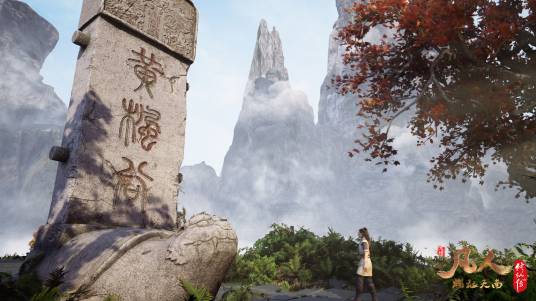
一个中等掌门的平凡困境
修仙小说通常聚焦于两类领导者:要么是统御天下的霸主,要么是阴险狡诈的大反派。很少有人关注那些既不够强大到改变世界、又不够邪恶到毁灭世界的中间层管理者。
玄青子就是这样一个人。
作为黄枫谷的掌门,他面对的处境用现代管理学的术语来说就是:资源有限、竞争激烈、人才流失、外部威胁不断,而他本人的能力刚好够维持现状,不够实现突破。
这不是一个英雄故事的材料。但它是一个真实得令人不适的现实写照。
黄枫谷:一个中等宗门的标本
要理解玄青子,必须先理解黄枫谷的处境。
黄枫谷是天南修仙界的七大宗门之一,这个排名听起来不错,但实际地位很尴尬。它比不上天南四大家族(这些势力有元婴期修士坐镇),但又比底层的小宗门强得多。它处在一个不上不下的夹心层。
这种位置的痛苦在于:它足够大,大到会引起大势力的注意和觊觎;但又不够强,强到能独立面对大势力的压力。
黄枫谷的核心问题是缺乏顶级战力。在修仙世界里,一个宗门的存亡往往取决于最顶尖那一两个修士的实力。黄枫谷没有元婴期修士(至少在韩立突破之前),这意味着在真正的大冲突中,它没有最终的"保命牌"。
玄青子作为掌门,面对的就是这样一副棋局:手里没有"车"和"炮",只能靠"兵"和"马"周旋。
玄青子的管理风格
在有限的资源下,玄青子展现出了一种值得分析的管理风格。
第一,保守主义。 玄青子的所有决策都倾向于"不犯错"而非"创造机会"。他不会主动挑起与其他宗门的冲突,不会冒险尝试未经验证的战略,不会在看不清局势时轻举妄动。
这种保守在读者看来可能显得"没有魄力",但在黄枫谷的处境下,它是合理的。当你没有犯错的资本时,不犯错本身就是最好的策略。一个赌徒可以靠一次豪赌翻身,但一个掌门不能拿整个宗门的存亡去赌。
第二,人才投资。 玄青子对弟子的培养虽然算不上独具慧眼,但他做到了一件事——给有潜力的弟子提供足够的空间和资源。韩立在黄枫谷的成长,虽然主要靠自身的机缘和能力,但黄枫谷至少没有成为他的阻碍。
在修仙界,有太多宗门因为内部的嫉妒和打压而埋没了天才弟子。玄青子没有犯这个错误。他可能没有慧眼识珠的能力,但他至少有不妨碍珠子发光的胸襟。
第三,外交平衡。 在天南修仙界的复杂格局中,玄青子努力维持着与各方势力的微妙平衡。不过分亲近任何一方,也不过分得罪任何一方。这种"墙头草"的策略看似可鄙,但在弱势方的立场上,这是最理性的外交选择。
韩立与黄枫谷的恩怨
韩立与黄枫谷的关系,是理解玄青子和黄枫谷命运的关键线索。
韩立是黄枫谷培养出的最强弟子,但讽刺的是,韩立的崛起对黄枫谷来说既是荣光也是挽歌。
荣光的一面很明显——韩立突破元婴期后,黄枫谷终于有了一个顶级战力,在天南修仙界的地位随之水涨船高。
挽歌的一面则更深层——韩立的离开,彻底暴露了黄枫谷的核心问题:这个宗门留不住顶级人才。
韩立加入黄枫谷是因为机缘巧合,留在黄枫谷是因为实力尚弱需要庇护,离开黄枫谷是因为他的修为已经超越了这个宗门所能提供的一切。黄枫谷对韩立来说,就像一个跳板——他需要它的时候用了它,不需要的时候就走了。
这不是韩立薄情。这是中等宗门的结构性困境——你能培养人才,但你留不住人才。 当一个弟子的实力超越了宗门能提供的资源和平台时,离开是必然的选择。
玄青子不可能不明白这一点。他看着韩立一步步强大、一步步远离黄枫谷,心里大概五味杂陈——欣慰弟子成才,痛惜宗门留不住人。
导师的困境
玄青子是韩立修仙生涯中的第一批"正面导师"之一(与墨居仁的"负面导师"形成对照)。但他的导师角色充满了无奈。
一个导师最大的成就,是弟子超越自己。但在修仙世界里,弟子超越师父往往意味着师父变得不再重要。
玄青子对韩立的影响随着韩立修为的提升而递减。在韩立炼气期和筑基初期,玄青子的指导还有意义;到了结丹期以后,韩立已经完全不需要玄青子的任何建议了。
这种"被超越后的冗余",是所有有限导师面临的宿命。 大衍神君之所以能持续对韩立产生影响,是因为他的知识储备远超常人。玄青子没有这个资本——他就是一个结丹期的掌门,他的能力天花板就在那里。
但我们不应该因此贬低玄青子的价值。在韩立最脆弱的时期,是黄枫谷(以及玄青子主导的宗门体系)为他提供了基本的修炼资源和安全环境。没有这个基础,韩立可能都活不到发迹的那一天。
玄青子的价值不在于他教了韩立多少东西,而在于他没有成为韩立的障碍。 在修仙世界里,不阻碍天才本身就是一种功德。
宗门消亡的预言
黄枫谷的命运,从结构上看,几乎是注定的。
一个缺乏顶级战力的中等宗门,在修仙世界不断升级的冲突中,最终会被碾碎。这不是玄青子管理失败的结果,而是修仙世界"赢者通吃"逻辑的必然产物。
修仙界的资源分配遵循一个残酷的马太效应——强者越强、弱者越弱。拥有元婴期修士的宗门能获得更多的灵脉、更好的功法、更稀有的材料,进而培养出更多的高阶修士。没有元婴期修士的宗门则陷入恶性循环——没有顶级资源,就培养不出顶级人才;没有顶级人才,就获取不了顶级资源。
黄枫谷在韩立离开后,失去了唯一打破这个循环的可能性。接下来的命运,虽然忘语没有详写,但读者可以推断——它要么被吞并,要么衰落,要么在某次修仙界大洗牌中消失。
玄青子的悲剧不是个人的悲剧,而是结构的悲剧。 他做了一个中等宗门掌门能做的一切——维持运转、培养弟子、平衡外交——但这些努力终究无法对抗系统层面的不公平。
与现实的映射
玄青子和黄枫谷的故事,如果映射到现实世界,大概对应着中小企业管理者的困境。
一个中小企业的CEO,面对的挑战与玄青子惊人地相似:资源有限、人才难留、大公司的挤压无处不在。你可以把一切都做到中等偏上的水平——管理不错、产品不差、团队稳定——但你仍然可能被一个手握十倍资源的竞争对手轻松碾压。
努力不够。正确还不够。你需要运气、时机和不可复制的核心竞争力。 黄枫谷什么都不缺,就缺一个能留下来的元婴期修士。而这种级别的人才,不是管理体系能制造的,它需要天赋、机缘和极其小概率的运气。
玄青子没有得到这份运气。韩立来了,又走了。黄枫谷像是一颗流星划过的夜空——那道光芒让它短暂辉煌,然后重归黑暗。
结语:平凡的分量
在《凡人修仙传》这样一部以"凡人"为核心主题的小说中,玄青子的"平凡"具有特殊的重量。
他不是天才,不是传奇,不是改变世界的伟人。他只是一个在自己能力范围内尽力而为的普通管理者。他的宗门没有因为他的领导而崛起为天下第一,但也没有在他手上覆灭。
在修仙世界里,维持一个宗门的存在本身就是一项成就。 太多的宗门因为掌门的愚蠢、贪婪或短视而覆灭。玄青子虽然没有让黄枫谷飞黄腾达,但他让它在一个极端危险的世界里续存了下来。
这种"维持"的价值,往往被忽视。我们习惯于关注创造者和毁灭者,却忽略了那些默默维持秩序的人。
玄青子就是这样一个被忽略的人。他配不上一首赞歌,但他值得一个点头致意。
An Average Sect Leader's Ordinary Dilemma
Cultivation novels usually focus on two types of leaders: either rulers who dominate the world, or insidiously cunning master villains. Rarely does anyone pay attention to those in the middle — neither strong enough to change the world, nor evil enough to destroy it.
Xuan Qingzi (玄青子) is exactly such a person.
As the sect leader of Yellow Maple Valley, his situation in modern management terms would be: limited resources, fierce competition, talent drain, constant external threats, and personal ability just barely sufficient to maintain the status quo — not enough to achieve a breakthrough.
This isn't the material for a hero's story. But it's a portrait of reality that's uncomfortably true to life.
Yellow Maple Valley: A Mid-Tier Sect Specimen
To understand Xuan Qingzi, you must first understand Yellow Maple Valley's situation.
Yellow Maple Valley was one of the seven major sects in the Heavenly South cultivation world. This ranking sounds impressive, but its actual position was awkward. It couldn't match the Heavenly South's Four Great Families (which had Nascent Soul cultivators at their helm), yet it was far stronger than bottom-tier minor sects. It occupied an uncomfortable middle ground.
The pain of this position lies in this: it was large enough to attract the attention and covetousness of major powers, yet not strong enough to independently withstand their pressure.
Yellow Maple Valley's core problem was lacking top-tier combat power. In the cultivation world, a sect's survival often hinges on its one or two strongest cultivators. Yellow Maple Valley had no Nascent Soul cultivators (at least before Han Li's breakthrough), which meant that in any truly major conflict, it had no ultimate "lifeline."
As sect leader, Xuan Qingzi faced this chessboard: no "rooks" or "cannons" in hand, having to maneuver with only "pawns" and "knights."
Xuan Qingzi's Management Style
Within his limited resources, Xuan Qingzi displayed a management style worth analyzing.
First, conservatism. All of Xuan Qingzi's decisions leaned toward "don't make mistakes" rather than "create opportunities." He wouldn't proactively provoke conflicts with other sects, wouldn't risk untested strategies, and wouldn't act rashly when the situation was unclear.
This conservatism might seem "lacking in boldness" to readers, but given Yellow Maple Valley's circumstances, it was rational. When you can't afford mistakes, not making mistakes is itself the best strategy. A gambler might turn things around with one bold bet, but a sect leader can't gamble an entire sect's existence.
Second, talent investment. Though Xuan Qingzi's eye for talent wasn't exceptionally keen, he accomplished one thing — providing promising disciples sufficient space and resources. Han Li's growth at Yellow Maple Valley, while primarily driven by his own opportunities and abilities, at least wasn't hindered by the sect.
In the cultivation world, too many sects bury talented disciples through internal jealousy and suppression. Xuan Qingzi didn't make this mistake. He might not have had the vision to spot a jewel, but he at least had the grace not to prevent one from shining.
Third, diplomatic balance. In the complex landscape of the Heavenly South cultivation world, Xuan Qingzi strove to maintain delicate balance with all factions. Not getting too close to anyone, nor offending anyone excessively. This "fence-sitting" strategy might seem contemptible, but from a weaker party's standpoint, it's the most rational diplomatic choice.
Han Li and Yellow Maple Valley's Bond
Han Li's relationship with Yellow Maple Valley is the key thread for understanding Xuan Qingzi and the sect's fate.
Han Li was the strongest disciple Yellow Maple Valley ever produced, but ironically, his rise was both glory and swan song for the sect.
The glory is obvious — after Han Li broke through to Nascent Soul stage, Yellow Maple Valley finally had a top-tier combatant, and its status in the Heavenly South surged accordingly.
The deeper tragedy was that Han Li's departure thoroughly exposed Yellow Maple Valley's core problem: this sect couldn't retain top-tier talent.
Han Li joined Yellow Maple Valley by chance, stayed because he was still weak and needed shelter, and left because his cultivation had surpassed everything the sect could offer. For Han Li, Yellow Maple Valley was a springboard — he used it when he needed it, then moved on.
This isn't Han Li being ungrateful. This is the structural dilemma of mid-tier sects — you can cultivate talent, but you can't retain talent. When a disciple's strength surpasses what the sect can provide in resources and platform, departure is the inevitable choice.
Xuan Qingzi couldn't have been unaware of this. Watching Han Li grow stronger step by step, drifting further from Yellow Maple Valley, he must have felt deeply conflicted — glad his disciple had flourished, pained that the sect couldn't keep him.
The Mentor's Dilemma
Xuan Qingzi was among Han Li's first "positive mentors" (contrasting with Mo Juren's "negative mentoring"). But his mentor role was filled with helplessness.
A mentor's greatest achievement is having the student surpass the teacher. But in the cultivation world, a student surpassing the master often means the master becomes irrelevant.
Xuan Qingzi's influence on Han Li diminished with each advance in Han Li's cultivation. During Han Li's Qi Refining and early Foundation Establishment stages, Xuan Qingzi's guidance still held meaning. By Core Formation and beyond, Han Li had absolutely no need for any of Xuan Qingzi's advice.
This "redundancy after being surpassed" is the fate of all limited mentors. Daoist Master Dayan could maintain lasting influence on Han Li because his knowledge reserves far exceeded ordinary cultivators. Xuan Qingzi lacked this advantage — he was just a Core Formation sect leader, and that was his ceiling.
But we shouldn't diminish Xuan Qingzi's value for this reason. During Han Li's most vulnerable period, it was Yellow Maple Valley (and the sect system Xuan Qingzi oversaw) that provided basic cultivation resources and a safe environment. Without this foundation, Han Li might not have survived to reach his moment of greatness.
Xuan Qingzi's value lies not in how much he taught Han Li, but in not becoming an obstacle to Han Li. In the cultivation world, not hindering a genius is itself a form of merit.
The Prophecy of Sect Decline
Yellow Maple Valley's fate, structurally speaking, was almost predetermined.
A mid-tier sect lacking top-tier combat power would eventually be crushed by the escalating conflicts of the cultivation world. This wasn't the result of Xuan Qingzi's management failure, but the inevitable product of the cultivation world's "winner-take-all" logic.
Resource distribution in the cultivation world follows a cruel Matthew Effect — the strong grow stronger, the weak grow weaker. Sects with Nascent Soul cultivators gain access to better spiritual veins, superior techniques, and rarer materials, thereby cultivating more high-level cultivators. Sects without Nascent Soul cultivators fall into a vicious cycle — no top-tier resources means no top-tier talent, and no top-tier talent means no access to top-tier resources.
After Han Li left, Yellow Maple Valley lost its only chance of breaking this cycle. Its subsequent fate, though Wang Yu didn't detail it, readers can infer — it was either absorbed, declined, or vanished in some great reshuffle of the cultivation world.
Xuan Qingzi's tragedy isn't personal — it's structural. He did everything a mid-tier sect leader could — maintained operations, cultivated disciples, balanced diplomacy — but these efforts ultimately couldn't overcome systemic inequality.
Mapping to Reality
Xuan Qingzi and Yellow Maple Valley's story, mapped to the real world, roughly corresponds to the dilemma of small-to-medium business managers.
A mid-sized company CEO faces challenges startlingly similar to Xuan Qingzi's: limited resources, difficulty retaining talent, constant pressure from major corporations. You can do everything at a decent-to-good level — decent management, decent products, stable team — and still be effortlessly crushed by a competitor with ten times your resources.
Hard work isn't enough. Being right isn't enough. You need luck, timing, and an irreplicable core competitive advantage. Yellow Maple Valley lacked nothing except a Nascent Soul cultivator willing to stay. And that level of talent can't be manufactured by a management system — it requires innate ability, serendipity, and extremely low-probability luck.
Xuan Qingzi didn't get that luck. Han Li came, then left. Yellow Maple Valley was like a night sky streaked by a meteor — that flash of brilliance made it briefly glorious before returning to darkness.
Closing: The Weight of Ordinariness
In a novel with "Mortal" as its core theme, Xuan Qingzi's "ordinariness" carries special weight.
He's not a genius, not a legend, not a world-changing figure. He's simply an ordinary manager doing his best within the limits of his ability. His sect didn't rise to the top under his leadership, but it also didn't fall to ruin on his watch.
In the cultivation world, keeping a sect alive is itself an achievement. Too many sects have perished due to leaders' stupidity, greed, or short-sightedness. Xuan Qingzi may not have made Yellow Maple Valley soar, but he kept it alive in an extremely dangerous world.
The value of "maintenance" is often overlooked. We're accustomed to paying attention to creators and destroyers, while ignoring those who quietly maintain order.
Xuan Qingzi is just such an overlooked person. He doesn't deserve a hymn, but he's earned a respectful nod.