忒修斯之船:修仙版
古希腊有一个经典的哲学悖论:如果忒修斯之船上的木板被逐一替换,直到每一块木板都是新的,这艘船还是原来那艘船吗?
元瑶的故事,就是这个悖论的修仙版本。
当一个人的肉身毁灭,灵魂以另一种形态继续存在——当她的修炼体系从人道变为鬼道,当她的存在方式从血肉之躯变为阴气凝聚——她还是那个元瑶吗?
忘语没有直接回答这个问题。他做了更高明的事:他让元瑶自己去寻找答案。
人界时期:美丽的普通
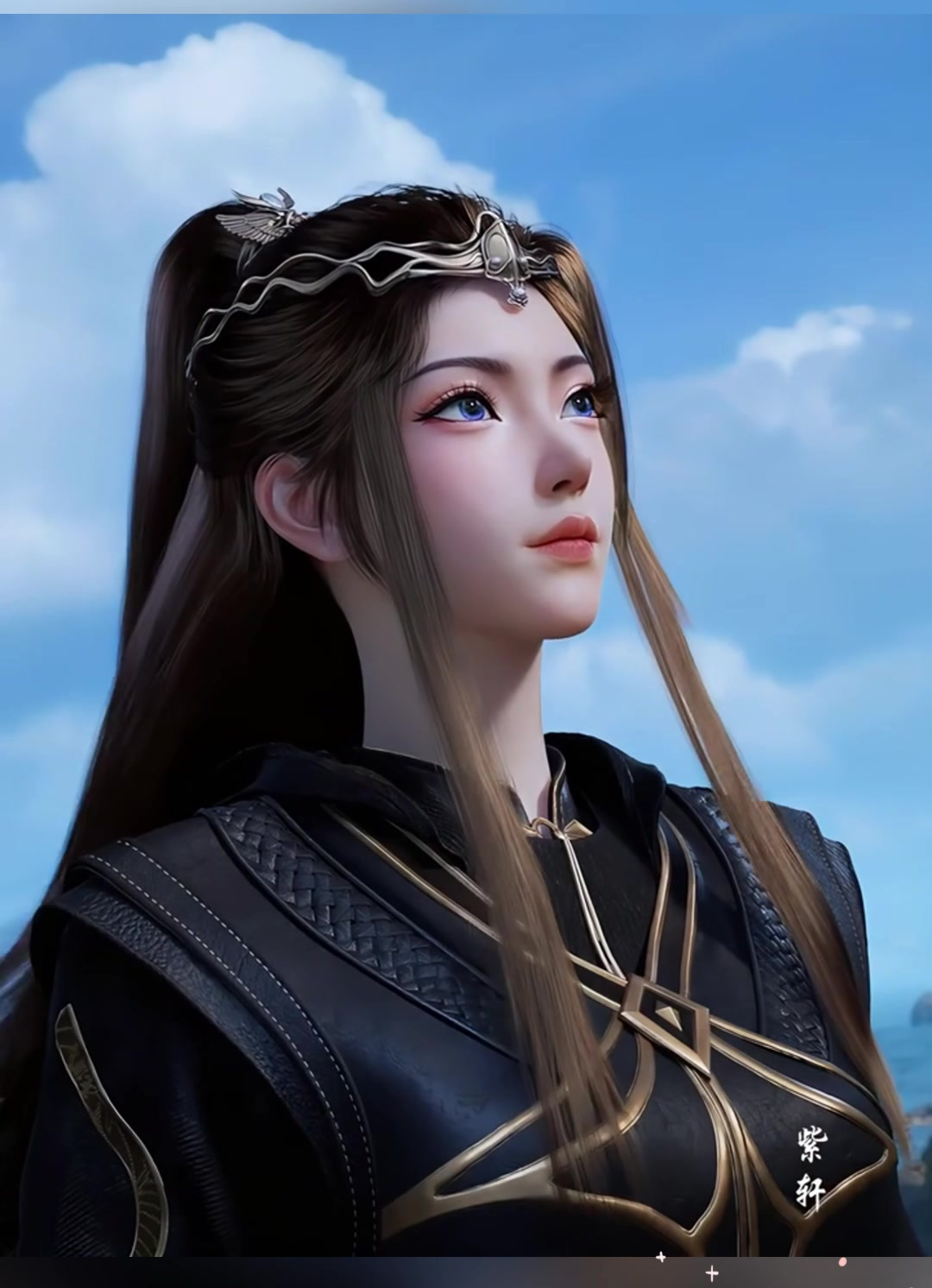
元瑶最初出场时,是一个令人过目不忘的女修。忘语用了一种罕见的克制笔法描写她的美貌——没有"沉鱼落雁"式的堆砌,而是通过韩立的视角传递出一种难以言说的吸引力。
但元瑶的故事真正有趣的地方,不在于她的美貌,而在于她的"普通"。
在人界修仙界的权力格局中,元瑶并不是一个举足轻重的人物。她没有紫灵的天灵根天赋,没有南宫婉的宗门背景,也没有什么逆天机缘。她只是一个中等偏上的女修,凭借自己的努力和机遇在修仙界生存。
正是这种"普通",让她后来的转变更具冲击力。 一个天才变成鬼仙可能只是换了一条赛道;一个普通人变成鬼仙,则是一次存在意义上的地震。
转变:不是选择,而是幸存
元瑶成为鬼仙的过程,不是一个深思熟虑的决定。在大多数修仙小说中,"转修他道"往往是主角或重要角色面临瓶颈时的主动选择——"我要走一条不同的路"。
元瑶不是。
她的转变更接近一种被迫的幸存。当肉身无法维持,当正常的修炼之路被截断,成为鬼修不是她的理想,而是唯一的替代方案。
这个细节至关重要。因为它意味着元瑶在成为鬼仙后,必须面对一个人类最基本的心理创伤:我现在的生活,不是我想要的。 她没有选择成为鬼仙的权利——命运替她做了这个决定。
而修仙世界对此的态度是冷漠的。在人族修士眼中,鬼修是异类。不管你曾经是谁,一旦走上鬼道,你就自动被划入了"非我族类"的范畴。
身份焦虑:最隐蔽的伤痛
元瑶成为鬼仙后最大的心理挑战,不是修炼体系的转换,不是阴气对灵魂的侵蚀,而是身份焦虑。
她是人还是鬼?她属于人界还是冥界?她与曾经认识的人之间,关系是否还能维持?
这种身份焦虑在她与韩立的重逢中表现得最为明显。元瑶在灵界再次遇到韩立时,她已经不是当年那个红颜知己了。她的存在形态、修炼方式、甚至感知世界的方式都发生了根本性的改变。
韩立对她的态度是温暖但审慎的——这恰恰是韩立式的回应。他不会因为元瑶变成了鬼仙就疏远她,但他也不会假装一切没有改变。
而元瑶自己,始终在两种身份之间摇摆。有时候她会像人族修士一样思考和行动,有时候鬼道的本能会占据上风。这种摇摆不是性格分裂,而是一个正在重新定义自我的人的正常反应。
燕丽:镜像与锚点
要理解元瑶的身份重塑,不能不谈燕丽。
燕丽同样是鬼修,但她的出发点与元瑶完全不同。燕丽对鬼道有着更坦然的接受——她没有元瑶那种"我曾经是人"的包袱。两人的关系构成了一组有趣的对照:
元瑶代表着"不愿放弃人类身份的鬼仙",燕丽代表着"已经完全接受鬼仙身份的存在"。
燕丽对元瑶来说既是同伴也是镜子。通过燕丽,元瑶看到了一种可能性——完全拥抱鬼道身份、不再纠结于"人与鬼"的界限。但元瑶无法完全走到那一步,因为她的记忆、她的情感纽带、她对韩立的感情,都牢牢地将她锚定在"人"的那一端。
她不愿意彻底成为鬼仙,因为那意味着彻底放弃曾经的自己。
与韩立关系的深层结构
元瑶与韩立的关系,在她成为鬼仙后进入了一个全新的维度。
在人界时期,他们的关系相对简单:互有好感、偶尔合作、各自修行。元瑶对韩立的感情,属于那种"心照不宣但从不挑明"的默契。
成为鬼仙后,这种关系被注入了新的张力。
元瑶现在面对韩立时,不仅是一个女人面对她欣赏的男人,更是一个"异类"面对"正常世界"的代表。韩立是她与人族世界之间最后的纽带。只要韩立还愿意平等地对待她、不把她当作异类,她就还能维持"我依然是人"的自我认知。
韩立的态度,成了元瑶身份焦虑的减压阀。
这让两人的关系产生了一种微妙的权力不对称:不是修为上的差距,而是心理上的依赖。元瑶需要韩立的认可来确认自己的身份,而韩立对此可能并不自知。
鬼道的隐喻
如果我们把元瑶的故事从修仙语境中抽离出来,会发现它触及了一个非常现代的主题:当一个人经历了不可逆的改变后,如何重新建立自我认同。
这种改变可以是身体上的——严重的疾病、残疾、衰老;可以是社会性的——移民、阶层变动、文化冲击;也可以是心理上的——创伤后的人格变化。
元瑶从人到鬼仙的转变,本质上就是一个"我再也回不去了"的故事。她的旧身份已经被摧毁,新身份尚未完全建立。她悬浮在两个世界之间,既不属于这边,也不完全属于那边。
忘语可能没有刻意写一个关于身份认同的寓言,但元瑶的故事客观上承载了这个主题。
结局中的和解
元瑶最终找到了某种和解——不是彻底成为鬼仙,也不是回归人族,而是接受自己是一个独特的、不可分类的存在。
她不再纠结于"我是人还是鬼"这个二元对立的问题。她就是元瑶——曾经是人,现在是鬼仙,但这两种身份都不能完全定义她。她是她所有经历的总和,是她所有选择的结果,是她所有关系的交汇点。
这种和解看似简单,实则需要巨大的勇气。接受自己无法被归类,接受自己不属于任何一个现成的类别,接受自己是一个"边界上的存在"——这比选择一个阵营站队要困难得多。
写在最后
元瑶的故事提醒我们:身份不是一个固定的标签,而是一个不断重建的过程。
我们每个人都在不断地经历小型的"元瑶时刻"——每一次重大的人生变化,都会迫使我们重新定义"我是谁"。毕业、工作、结婚、生子、失去亲人、搬到陌生的城市——这些事件都在不断地解构和重建我们的自我认知。
元瑶只是把这个过程推向了极致:从一个物种变成另一个物种,从一种存在方式变成另一种存在方式。但她面对的核心问题,与每一个经历重大人生转变的人是相同的:
当一切都变了,什么是不变的?
元瑶的答案是:记忆、感情和选择。只要她还记得自己是谁,还在乎自己在乎的人,还能做出属于自己的选择——她就还是元瑶。
不管她是人,还是鬼。
The Ship of Theseus: Cultivation Edition
Ancient Greece gave us a classic philosophical paradox: if every plank of the Ship of Theseus is replaced one by one until every piece is new, is it still the same ship?
Yuan Yao's (元瑶) story is the cultivation world's version of this paradox.
When a person's physical body is destroyed and their soul continues to exist in another form — when their cultivation system shifts from the human path to the ghost path, when their mode of existence changes from flesh and blood to condensed yin energy — is she still the same Yuan Yao?
Wang Yu doesn't answer this question directly. He does something more brilliant: he lets Yuan Yao find the answer herself.
The Mortal Realm Period: Beautifully Ordinary
When Yuan Yao first appears, she is an unforgettable female cultivator. Wang Yu employs a rare restraint in describing her beauty — no cliched piling of adjectives, but rather an ineffable attraction conveyed through Han Li's (韩立) perspective.
But what makes Yuan Yao's story truly interesting isn't her beauty — it's her "ordinariness."
In the power structure of the Mortal Realm's cultivation world, Yuan Yao wasn't a particularly significant figure. She lacked Violet Spirit's Heavenly Spiritual Root talent, Nangong Wan's sect backing, and any heaven-defying stroke of fortune. She was simply an above-average female cultivator, surviving in the cultivation world through her own effort and luck.
It's precisely this "ordinariness" that makes her later transformation so impactful. A genius becoming a Ghost Immortal (a being that cultivates through ghostly, yin-based energy rather than conventional spiritual power) might just be switching lanes. An ordinary person becoming a Ghost Immortal is an existential earthquake.
The Transformation: Not a Choice, but Survival
Yuan Yao's process of becoming a Ghost Immortal wasn't a carefully considered decision. In most cultivation novels, "switching cultivation paths" is usually an active choice made by protagonists or key characters facing bottlenecks — "I'll walk a different road."
Yuan Yao's wasn't like that.
Her transformation was closer to forced survival. When her physical body could no longer be sustained, when the normal cultivation path was severed, becoming a ghost cultivator wasn't her ideal — it was the only alternative.
This detail is crucial. It means that after becoming a Ghost Immortal, Yuan Yao had to face one of humanity's most fundamental psychological traumas: My current life is not the one I wanted. She had no say in becoming a Ghost Immortal — fate made that decision for her.
And the cultivation world's attitude toward this is cold. In the eyes of human cultivators, ghost cultivators are outsiders. No matter who you once were, once you walk the ghost path, you're automatically categorized as "not one of us."
Identity Anxiety: The Most Hidden Wound
After becoming a Ghost Immortal, Yuan Yao's greatest psychological challenge wasn't the switch in cultivation systems, nor the erosion of yin energy on her soul, but identity anxiety.
Is she human or ghost? Does she belong to the mortal world or the netherworld? Can her relationships with people she once knew still be maintained?
This identity anxiety is most evident in her reunion with Han Li. When Yuan Yao encountered Han Li again in the Spirit Realm, she was no longer the beauty he once knew. Her form of existence, cultivation methods, even the way she perceived the world — all had undergone fundamental changes.
Han Li's attitude toward her was warm but measured — a quintessentially Han Li response. He wouldn't distance himself from her just because she'd become a Ghost Immortal, but he also wouldn't pretend nothing had changed.
And Yuan Yao herself constantly oscillated between two identities. Sometimes she'd think and act like a human cultivator; other times, the instincts of the ghost path would take over. This oscillation isn't split personality — it's the normal response of someone in the process of redefining themselves.
Yan Li: Mirror and Anchor
To understand Yuan Yao's identity reconstruction, we must discuss Yan Li (燕丽).
Yan Li is also a ghost cultivator, but her starting point is completely different from Yuan Yao's. Yan Li accepts the ghost path with far more equanimity — she doesn't carry Yuan Yao's baggage of "I was once human." Their relationship forms an interesting contrast:
Yuan Yao represents "a Ghost Immortal who refuses to relinquish her human identity," while Yan Li represents "a being who has fully embraced her Ghost Immortal identity."
Yan Li serves as both companion and mirror for Yuan Yao. Through Yan Li, Yuan Yao sees a possibility — fully embracing the ghost path identity, no longer agonizing over the boundary between "human and ghost." But Yuan Yao can't fully make that leap, because her memories, her emotional bonds, her feelings for Han Li — all anchor her firmly to the "human" side.
She refuses to completely become a Ghost Immortal, because that would mean completely abandoning who she once was.
The Deep Structure of Her Relationship with Han Li
Yuan Yao's relationship with Han Li entered an entirely new dimension after she became a Ghost Immortal.
During the Mortal Realm period, their relationship was relatively simple: mutual attraction, occasional cooperation, each cultivating independently. Yuan Yao's feelings for Han Li belonged to that category of "mutually understood but never spoken" tacit understanding.
After becoming a Ghost Immortal, new tension was injected into this relationship.
Now when Yuan Yao faces Han Li, she isn't just a woman facing a man she admires — she's an "outsider" facing a representative of the "normal world." Han Li is her last link to the human world. As long as Han Li is still willing to treat her as an equal, to not regard her as an outsider, she can maintain her self-perception of "I am still human."
Han Li's attitude became the pressure valve for Yuan Yao's identity anxiety.
This creates a subtle power asymmetry in their relationship — not in cultivation levels, but in psychological dependency. Yuan Yao needs Han Li's acceptance to confirm her identity, while Han Li may not even be aware of this.
The Metaphor of the Ghost Path
If we extract Yuan Yao's story from the cultivation context, we find it touches on a very modern theme: How does a person rebuild their sense of self after undergoing irreversible change?
Such change can be physical — severe illness, disability, aging. It can be social — immigration, class mobility, culture shock. It can be psychological — personality changes after trauma.
Yuan Yao's transformation from human to Ghost Immortal is essentially a story of "I can never go back." Her old identity has been destroyed; her new identity isn't yet fully established. She's suspended between two worlds, not fully belonging to either.
Wang Yu may not have intentionally written an allegory about identity — but Yuan Yao's story objectively carries this theme.
Reconciliation in the Ending
Yuan Yao eventually found a kind of reconciliation — not by becoming fully Ghost Immortal, nor by returning to humanity, but by accepting herself as a unique, unclassifiable existence.
She stopped agonizing over the binary question of "Am I human or ghost?" She is Yuan Yao — once human, now a Ghost Immortal, but neither identity can fully define her. She is the sum of all her experiences, the result of all her choices, the intersection of all her relationships.
This reconciliation seems simple but requires tremendous courage. Accepting that you cannot be categorized, accepting that you don't belong to any ready-made category, accepting that you are "a being on the boundary" — this is far harder than picking a side and standing with it.
In Closing
Yuan Yao's story reminds us: Identity is not a fixed label but a process of constant reconstruction.
Each of us experiences minor "Yuan Yao moments" — every major life change forces us to redefine "who I am." Graduation, career, marriage, parenthood, losing loved ones, moving to an unfamiliar city — these events constantly deconstruct and rebuild our self-perception.
Yuan Yao simply pushed this process to its extreme: changing from one species to another, from one mode of existence to another. But the core question she faces is the same as anyone undergoing major life transitions:
When everything has changed, what remains unchanged?
Yuan Yao's answer is: memory, love, and choice. As long as she remembers who she is, still cares about those she cares about, and can still make choices that are her own — she is still Yuan Yao.
Whether she is human or ghost.