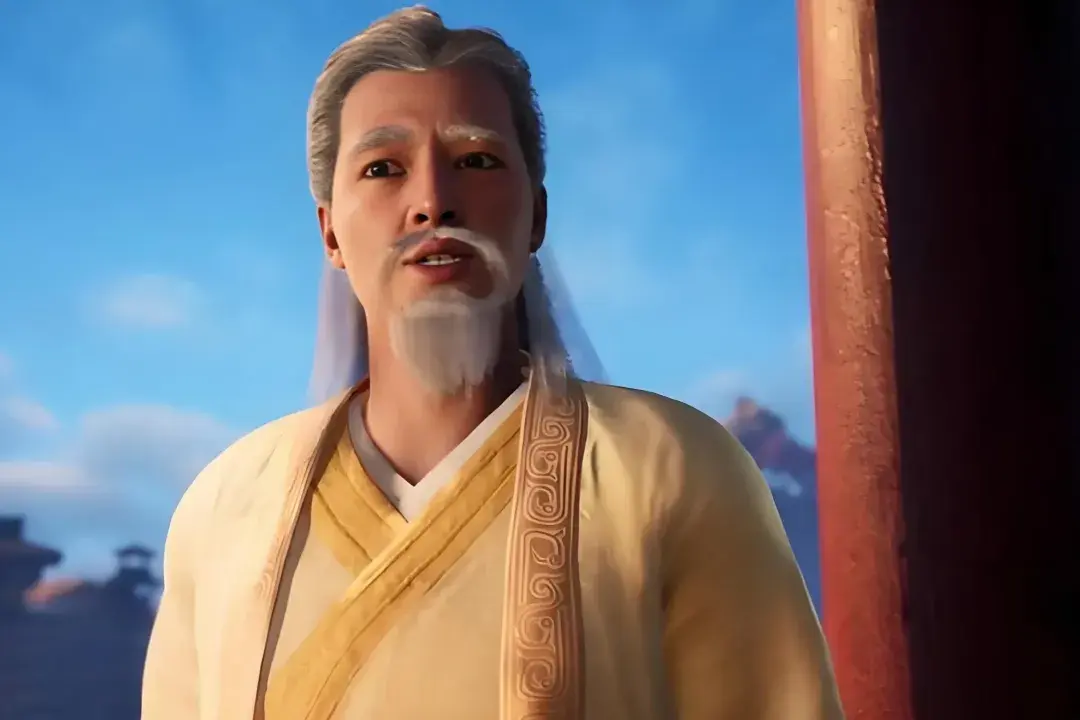
向之礼:化神期修士的孤独棋局
一、最高处的寒冷
在人界修仙者的权力金字塔上,化神期修士是事实上的顶点。合体期、大乘期的存在或已飞升,或隐匿不出,化神期修士就是凡人世界中能够接触到的最强力量。向之礼正是站在这一顶点上的人物之一。
然而,顶点意味着什么?意味着没有同级别的师长可以指点,没有真正意义上的同伴可以信赖,甚至没有一个值得全力以赴的对手可以切磋。化神期修士之间的关系,与其说是同道,不如说是互相忌惮的核威慑。每一位化神修士都是一颗行走的毁灭性武器,他们之间保持着微妙的平衡,任何一方的异动都可能引发连锁反应。
向之礼在这样的环境中存活了数千年。这本身就说明了他的可怕之处——不是战斗力的可怕,而是心智的可怕。
二、棋手的自觉
向之礼身上最突出的特质,是一种近乎本能的战略思维。他看待一切事物——包括人——首先考虑的是"有没有用"和"怎么用"。这不是道德上的冷血,而是在化神期这个层次上生存所必需的思维方式。
他与韩立的关系就是最好的例证。从两人初次在人界相遇开始,向之礼就表现出对韩立异乎寻常的兴趣。这种兴趣并非出于欣赏或喜爱,而是出于一个棋手发现了一枚潜力巨大的棋子时的兴奋。韩立修为虽低,但身上的种种异常——天雷竹、噬金虫、异常的突破速度——都暗示着此人未来不可限量。
向之礼选择与韩立保持一种若即若离的关系,既不过分亲近以免引起韩立警觉,也不过分疏远以免失去影响力。他提供恰到好处的帮助,释放精确计算过的善意,在韩立心中种下"此人可以合作"的印象。这种操作的精细程度,远非一般修士能够企及。
三、信息就是修为
在化神期这个层次上,决定生死的往往不是谁的法力更深厚、谁的法宝更强大,而是谁掌握了更多的信息。向之礼深谙此道。他对人界各大势力的情报了如指掌,对灵界的信息也有独到的获取渠道,对各种秘境、遗迹的分布更是如数家珍。
这种信息优势赋予了他一种特殊的权力形态。他不需要像低阶修士那样靠蛮力威压对手,只需要在恰当的时机透露恰当的信息,就能让局势向有利于自己的方向发展。他与韩立分享的每一条情报,都经过了精密的筛选和包装——既要有足够的价值让韩立觉得这份人情值得回报,又不能包含真正核心的秘密。
这是一种高度成熟的权力运作方式,也是化神期修士之间博弈的主要形式。他们的战场不在法术的碰撞上,而在信息的攻防中。
四、时代的桥梁
从叙事结构来看,向之礼扮演了一个极为重要的角色:他是人界篇与灵界篇之间的桥梁。在韩立离开人界、进入灵界的过程中,向之礼提供了关键的信息和指引。他的存在,让韩立从"人界顶尖高手"向"灵界新人"的身份转变有了一个合理的过渡。
更深层地说,向之礼代表了人界修仙体系的极限。他已经走到了人界所能提供的最远处,再往前就只有飞升这一条路。他的所有布局和算计,归根结底都指向一个目标:找到一条通往更高层次的道路。在这个意义上,他和韩立其实是同路人——都是被天花板困住、拼命寻找出口的囚徒。
但两人的方法论截然不同。韩立靠的是步步为营的实力积累和无与伦比的运气(或者说气运),向之礼靠的是提前数百年布局的战略眼光。前者像一个执着的登山者,一步一个脚印地往上爬;后者像一个建筑师,试图在山体上修建一架通天的电梯。
五、孤独的本质
化神期修士的孤独,不是简单的"高处不胜寒",而是一种存在论层面的困境。
当你的寿命以千年计,你所认识的绝大多数人都会在你面前死去。当你的实力强到可以毁灭一座城池,你与普通人之间的共同语言就趋近于零。当你的每一个决定都可能影响一个宗门甚至一个国家的命运,你就不可能对任何人敞开心扉——因为任何一句真心话都可能成为别人手中的筹码。
向之礼的圆滑世故、他的算计和布局,从这个角度来看,与其说是性格特征,不如说是生存适应。他不是因为冷血才变得善于算计,而是因为在化神期修士的世界里,不善于算计的人早就死了。
他与玄和真人等同级别修士之间的互动,充满了表面的客气和深层的防备。每一次见面都像是一场精心编排的外交活动,每一句话都经过反复斟酌。这种社交方式极度消耗心神,但他们别无选择——在化神期的世界里,一次失言的代价可能是数千年积累的付之东流。
六、棋局的终局
向之礼最令人深思的地方在于,他下了一辈子棋,但始终不确定自己是棋手还是棋子。他操纵他人,但也被更大的力量所操纵——天地法则、因果轮回、气运大势,这些看不见的力量编织成一张远比任何化神期修士的智慧更宏大的网。
他精心布局了无数步棋,每一步都堪称完美,但他无法控制棋盘本身的规则。当灵界的大势变动、当真仙级别的存在投下阴影,他那些精密的计算就显得如此脆弱。这并不是说他的努力毫无意义——恰恰相反,正是这种"在不可抗力面前依然坚持算计"的姿态,赋予了向之礼这个角色一种悲壮的尊严。
他是修仙世界中理性主义的化身:在一个本质上不讲道理的世界里,他坚持用理性来应对一切。这注定是一场不可能全赢的棋局,但他依然端坐棋盘前,手执黑子,落子无悔。
这也许就是化神期修士最深刻的孤独——不是没有对手的孤独,而是不知道对手是谁的孤独。
Xiang Zhili: The Lonely Chess Game of a Deity Transformation Cultivator
I. The Cold at the Summit
On the power pyramid of Mortal Realm cultivators, Deity Transformation cultivators stood at the de facto apex. Body Integration and Grand Ascension cultivators had either already ascended or retreated into seclusion. Deity Transformation cultivators were the strongest force that ordinary people in the mortal world could encounter. Xiang Zhili (向之礼) was one of the figures standing at this peak.
Cultural context: "Deity Transformation" (huashen) is a pivotal cultivation stage in the novel's hierarchy. At this level, a cultivator can transform their spiritual energy into various forms and manipulate natural laws to a limited degree. In the Mortal Realm, where higher-stage cultivators have departed for the Spirit Realm, Deity Transformation represents the practical ceiling of power — making these cultivators the de facto rulers of their world.
But what does the apex mean? It means there are no peers at your level to offer guidance, no one you can truly trust as a companion, and not even a worthy opponent against whom to test your skills. The relationship between Deity Transformation cultivators was less camaraderie than mutual wariness — a form of nuclear deterrence. Each Deity Transformation cultivator was a walking weapon of mass destruction, and they maintained a delicate equilibrium among themselves, where any one party's unusual movement could trigger a chain reaction.
Xiang Zhili survived thousands of years in this environment. That alone spoke to his formidable nature — not the formidability of combat prowess, but the formidability of mind.
II. The Self-Awareness of a Chess Player
Xiang Zhili's most prominent trait was a near-instinctual strategic thinking. His first consideration when evaluating anything — including people — was "is this useful?" and "how can I use it?" This was not moral cold-bloodedness; it was the necessary mode of thinking for survival at the Deity Transformation tier.
His relationship with Han Li (韩立) was the perfect illustration. From their first encounter in the Mortal Realm, Xiang Zhili displayed an extraordinary interest in Han Li. This interest was not born of appreciation or fondness, but the excitement of a chess player who has discovered a piece with immense potential. Han Li's cultivation was low, but the anomalies around him — the Sky Lightning Bamboo, the Gold Devouring Beetles, his abnormal rate of breakthrough — all hinted that this person's future was limitless.
Xiang Zhili chose to maintain a carefully calibrated relationship with Han Li: not too close, lest Han Li grow wary; not too distant, lest he lose influence. He offered precisely measured assistance, dispensed exactly calculated goodwill, planting in Han Li's mind the impression that "this is someone worth cooperating with." The refinement of these maneuvers was far beyond what an ordinary cultivator could achieve.
III. Information Is Cultivation
At the Deity Transformation tier, what determined life and death was often not whose spiritual power was deeper or whose treasures were more formidable, but who possessed more information. Xiang Zhili understood this thoroughly. His intelligence on the major forces of the Mortal Realm was encyclopedic, his channels for Spirit Realm information were uniquely effective, and his knowledge of the locations of various secret realms and ruins was exhaustive.
This informational advantage granted him a distinctive form of power. He didn't need to coerce opponents through brute force like lower-ranked cultivators; he merely needed to release the right information at the right moment to steer the situation in his favor. Every piece of intelligence he shared with Han Li was precisely filtered and packaged — valuable enough that Han Li would feel the favor was worth reciprocating, yet never touching truly core secrets.
This was a highly mature exercise of power, and the primary arena in which Deity Transformation cultivators competed. Their battleground was not in the clash of spells but in the offense and defense of information.
IV. Bridge Between Eras
From a narrative-structural perspective, Xiang Zhili played a critically important role: he was the bridge between the Mortal Realm Arc and the Spirit Realm Arc. During Han Li's departure from the Mortal Realm and entry into the Spirit Realm, Xiang Zhili provided key information and guidance. His existence gave Han Li's identity transition — from "Mortal Realm top expert" to "Spirit Realm newcomer" — a plausible throughline.
At a deeper level, Xiang Zhili represented the limit of the Mortal Realm's cultivation system. He had walked to the farthest point the Mortal Realm could offer, and the only path forward was ascension. All his planning and calculation ultimately pointed toward a single goal: finding a path to a higher plane of existence. In this sense, he and Han Li were actually fellow travelers — both prisoners trapped by a ceiling, desperately searching for an exit.
But their methodologies were entirely different. Han Li relied on step-by-step accumulation of power and unparalleled luck (or perhaps fate/destiny), while Xiang Zhili relied on strategic vision laid out centuries in advance. The former was like a dogged mountaineer, planting one foot after another on the way up; the latter was like an architect, trying to build an elevator through the mountain.
V. The Nature of Solitude
The loneliness of a Deity Transformation cultivator was not simply "it's lonely at the top" — it was a predicament on the existential level.
When your lifespan is measured in millennia, the vast majority of people you know will die before your eyes. When your power is sufficient to obliterate a city, common ground with ordinary people approaches zero. When your every decision could affect the fate of a sect or even a nation, you cannot open your heart to anyone — because any honest word could become a bargaining chip in someone else's hands.
Cultural context: The Chinese idiom "gaochu bu sheng han" (高处不胜寒, "it is too cold at the heights") captures this sentiment perfectly. Originally from a poem by the Song dynasty poet Su Shi (Su Dongpo), it describes the isolation that comes with extraordinary status — a loneliness that is not about lack of company but about the impossibility of genuine connection.
Xiang Zhili's smooth sophistication, his calculations and maneuvering — viewed from this angle — were less personality traits than survival adaptations. He didn't become calculating because he was cold-blooded; rather, in the world of Deity Transformation cultivators, those who weren't good at calculating had long since died.
His interactions with Xuan He (玄和真人) and other cultivators at his level were filled with surface courtesy and deep-seated wariness. Each meeting resembled a carefully choreographed diplomatic event; every sentence was weighed and reconsidered. This mode of socializing was extraordinarily draining on the mind, but they had no choice — at the Deity Transformation level, a single careless remark could cost you millennia of accumulated advantage.
VI. The End of the Chess Game
The most thought-provoking aspect of Xiang Zhili is that he played chess his entire life but never knew for certain whether he was the player or a piece. He manipulated others, but he too was manipulated by greater forces — the laws of heaven and earth, karmic cycles, the momentum of destiny. These invisible forces wove a web far grander than any Deity Transformation cultivator's wisdom.
He laid out countless moves of the game, each one arguably flawless, but he could not control the rules of the board itself. When the Spirit Realm's tides shifted, when the shadow of True Immortal-level beings fell upon the world, his meticulous calculations seemed so fragile. But this doesn't mean his efforts were meaningless — quite the opposite. It was precisely this stance of "persisting in calculation even in the face of irresistible forces" that imbued Xiang Zhili with a kind of tragic dignity.
He was the cultivation world's embodiment of rationalism: in a world that is fundamentally unreasonable, he insisted on responding to everything with reason. This was destined to be a game he couldn't fully win, but he still sat before the board, black stones in hand, playing each move without regret.
This is perhaps the deepest loneliness of a Deity Transformation cultivator — not the loneliness of having no opponent, but the loneliness of not knowing who the opponent is.