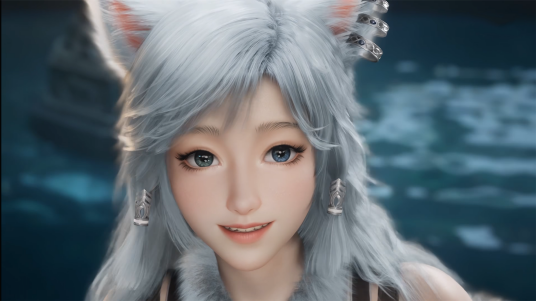
她是法宝,还是人?
这个问题贯穿了银月在《凡人修仙传》中的全部戏份,也是她这个角色最核心的叙事张力。
银月以法宝灵体的身份登场——寄居在一件月亮形状的法宝中,可以化为一只银色小狼或者一个美丽女子的形态。她有独立的意识、独立的情感、独立的判断力,但她的"身体"是一件法宝,她的"主人"是韩立。
她是一个被困在工具外壳里的人。
这种设定在修仙小说中并不罕见——很多小说都有"武器灵"或"法宝之灵"的角色。但忘语对银月的处理方式与众不同:他没有简单地把银月写成一个"有人格的工具"或者"被工具化的人"。他让银月在这两种身份之间不断摇摆,让读者无法确定她到底"是什么"。
而这种不确定性,恰恰是她最大的魅力所在。
身世的多重揭示
银月的身世在原著中是逐步揭示的,每一次揭示都会刷新读者对她的理解。
最初,她只是一个法宝中的灵体,来历不明。读者(和韩立)以为她不过是某个古修士留在法宝中的印记或者人工创造的灵智。
然后,她的真实身份开始浮出水面——她有着远比法宝灵体更复杂的过往。她不是被创造出来的,而是因为某种原因被封印在法宝之中。她有自己的过去、自己的故事、自己未完成的使命。
每一次身世揭示,都在银月的"工具属性"上叠加更多的"人格属性"。 当读者了解的越多,就越难把她单纯地看作韩立的一件装备。她有动机、有情感、有自己的利益诉求——这些都是"人"的特征,不是"工具"的特征。
但与此同时,她的存在方式又确实是"工具化"的。她需要韩立提供灵力来维持存在,她的物理形态受制于法宝的限制,她无法像一个独立修士那样自由行动。
她是一个有人权却没有人身自由的存在。
与韩立的共生关系
银月与韩立的关系,是全书中最独特的人际(如果可以这么称呼的话)关系之一。
从功能层面看,他们是"使用者与被使用者"的关系。韩立在战斗中使用银月作为辅助,银月从韩立处获得存在所需的资源。
从情感层面看,他们更接近"室友"或者"搭档"。长期的共处让两人之间产生了某种默契和信任。银月了解韩立的性格和习惯,韩立也逐渐习惯了银月的存在。
但这种关系中始终存在一个不对等的权力结构:韩立可以不需要银月,银月不能不需要韩立。
银月对此心知肚明。她在与韩立的互动中,始终保持着一种微妙的分寸感——亲近但不逾矩,坦诚但不暴露弱点,展现独立性但不挑战韩立的权威。
这种分寸感不是虚伪,而是一种在不对等关系中保持尊严的生存智慧。她无法改变自己依附于韩立的事实,但她可以选择在这种依附关系中保持自己的人格完整性。
沉默的观察者
银月在叙事中的另一个重要功能,是观察者。
作为韩立最贴身的存在,银月比任何人都更了解韩立的日常。她看到韩立独处时的样子,看到他在做出重大决定前的犹豫,看到他在战斗胜利后的疲惫,看到他在深夜独自修炼时的孤独。
她看到的是韩立不展示给任何人的一面。
这种"特权"赋予了银月一种独特的叙事视角。通过她的观察(虽然忘语很少直接从她的视角叙事),读者可以窥见韩立那层"谨慎理性"面具下面的真实面貌。
银月知道韩立不是一台冷冰冰的生存机器。她知道他会在夜深人静时想念南宫婉,知道他在面对旧人旧事时会有一瞬间的柔软,知道他对世界的警惕背后是一个曾经被伤害过的少年。
但她从不说破。 这不是因为她不关心,而是因为她理解韩立——说破这些,只会让韩立更不自在。沉默的陪伴,是她能给予的最好的支持。
双重身份的哲学困境
银月的存在引发了一个深层的哲学问题:如果一个存在具有完整的意识和情感,但它的物理形态是一件"物品",那么它应该被视为"人"还是"物"?
这个问题在修仙世界中有着特殊的重量。修仙世界的等级体系是建立在"存在形态"基础上的——人族修士、妖族修士、鬼修、魔修,各有各的位置。法宝灵体在这个分类系统中不属于任何一个传统类别。
银月既不是人族(没有人类的肉身),也不是妖族(不是天然的妖兽修炼而来),更不是鬼修或魔修。她是一个分类系统之外的存在。
这种"无法分类"的状态,与元瑶的身份困境有异曲同工之处。但银月的情况更极端——元瑶至少还有一个明确的类别(鬼仙),银月连这个都没有。
她是一个活在别人定义的世界中、却不被任何定义所容纳的存在。
自由与归属
银月的故事最终指向一个关于"自由"的命题。
什么是自由?对银月来说,自由不是摆脱韩立的控制——她与韩立之间的关系已经超越了简单的控制与被控制。自由是被承认为一个完整的存在。
银月不需要韩立给她自由(事实上韩立也从未刻意限制她的自由)。她需要的是一种更根本的东西:被世界接纳为一个"人",而不是一件"物"。
韩立在这方面做得并不差。他从未把银月当作一件纯粹的工具——他尊重她的意见,考虑她的感受,甚至在某些时刻把她当作一个值得信赖的同伴。但韩立的尊重终究是个体层面的——整个修仙世界的分类系统并不会因为韩立的态度而改变。
银月的悲哀不在于遇到了一个坏主人,而在于生存在一个没有她位置的世界里。
叙事张力的魅力
回到叙事层面,银月的双重身份创造了一种持续的张力,让每一个涉及她的场景都充满了阅读的快感。
当她在战斗中发挥关键作用时,读者会问:她是在"被使用"还是在"主动选择"?
当她与韩立交流时,读者会问:她是在"执行法宝灵体的功能"还是在"作为一个独立个体表达自己"?
当她展现出超出预期的能力或情感时,读者会问:她到底"是什么"?
这种持续的疑问,正是银月这个角色最成功的地方。 忘语没有给出一个明确的答案——银月到底是工具还是人——而是让这个问题始终悬在那里,成为阅读体验中一个不断闪烁的未解之谜。
结语
银月的故事,归根结底是一个关于存在边界的故事。
在一个把一切都清晰分类的世界里,她是一个无法被分类的异常值。在一个以实力定义价值的世界里,她的价值无法用修为来衡量。在一个以独立个体为基本单位的世界里,她的存在依附于另一个人。
但正是这些"不合规"的特质,让她成为了全书中最引人深思的角色之一。
她让我们思考:当我们定义"人"的时候,我们到底在定义什么?是肉身?是灵魂?是意识?是情感?还是别的什么?
银月没有给出答案。她只是静静地存在着,在法宝与人之间的缝隙中,闪烁着属于她自己的光芒。
Is She an Artifact, or a Person?
This question runs through Silvermoon's (银月) entire presence in A Record of a Mortal's Journey to Immortality, and it is the core narrative tension of her character.
Silvermoon enters the story as an artifact spirit — dwelling within a crescent-shaped magical treasure, capable of assuming the form of a small silver wolf or a beautiful woman. She possesses independent consciousness, independent emotions, and independent judgment, yet her "body" is a magical artifact and her "master" is Han Li (韩立).
She is a person trapped inside the shell of a tool.
This setup isn't rare in cultivation fiction — many novels feature "weapon spirits" or "artifact spirits." But Wang Yu's treatment of Silvermoon is distinctive: he doesn't simply write her as a "tool with personality" or a "person reduced to a tool." He lets Silvermoon oscillate between these two identities, leaving readers unable to determine what she truly "is."
And this uncertainty is precisely her greatest charm.
Progressive Revelations of Her Origins
Silvermoon's backstory is gradually revealed throughout the novel, with each revelation refreshing the reader's understanding of her.
Initially, she's just a spirit within an artifact, origins unknown. Readers (and Han Li) assumed she was merely an imprint left by some ancient cultivator, or an artificially created intelligence.
Then her true identity begins to surface — she has a past far more complex than a mere artifact spirit. She wasn't created; she was sealed within the artifact for reasons of her own. She has her own history, her own story, her own unfinished mission.
Each revelation layers more "personhood" onto Silvermoon's "tool" attributes. The more readers learn, the harder it becomes to see her simply as a piece of Han Li's equipment. She has motivations, emotions, and her own interests — all characteristics of a "person," not a "tool."
Yet simultaneously, her mode of existence is decidedly "tool-like." She needs Han Li's spiritual energy to sustain her existence, her physical form is constrained by the artifact's limitations, and she cannot move freely like an independent cultivator.
She is a being with human rights but no bodily freedom.
The Symbiotic Relationship with Han Li
Silvermoon's relationship with Han Li is one of the most unique interpersonal (if we can call it that) relationships in the entire book.
On a functional level, they have a "user and used" relationship. Han Li utilizes Silvermoon as combat support; Silvermoon obtains the resources she needs to exist from Han Li.
On an emotional level, they're closer to "roommates" or "partners." Long cohabitation has bred a certain rapport and trust. Silvermoon understands Han Li's personality and habits; Han Li has grown accustomed to Silvermoon's presence.
But an asymmetric power structure always exists within this relationship: Han Li can survive without Silvermoon. Silvermoon cannot survive without Han Li.
Silvermoon is keenly aware of this. In her interactions with Han Li, she maintains a delicate sense of propriety — close but never overstepping, candid but never exposing vulnerability, showing independence but never challenging Han Li's authority.
This propriety isn't hypocrisy — it's the survival wisdom of maintaining dignity within an unequal relationship. She cannot change the fact of her dependence on Han Li, but she can choose to preserve her personhood within that dependent relationship.
The Silent Observer
Silvermoon's other important narrative function is that of observer.
As Han Li's most constant companion, Silvermoon knows him better than anyone else. She sees Han Li when he's alone, sees his hesitation before major decisions, sees his exhaustion after battle victories, sees his loneliness during solitary late-night cultivation sessions.
She sees the side of Han Li he shows to no one else.
This "privilege" gives Silvermoon a unique narrative perspective. Through her observations (though Wang Yu rarely narrates directly from her viewpoint), readers can glimpse the real face beneath Han Li's mask of "cautious rationality."
Silvermoon knows Han Li isn't a cold survival machine. She knows he misses Nangong Wan in the dead of night, that he has momentary flashes of softness when encountering old faces and old affairs, that behind his wariness toward the world is a boy who was once wounded.
But she never says any of this aloud. Not because she doesn't care, but because she understands Han Li — voicing these things would only make him more uncomfortable. Silent companionship is the best support she can offer.
The Philosophical Dilemma of Dual Identity
Silvermoon's existence raises a deep philosophical question: If a being possesses complete consciousness and emotions, but its physical form is an "object," should it be regarded as a "person" or a "thing"?
This question carries special weight in the cultivation world. The cultivation world's hierarchy is built on "form of existence" — human cultivators, demon cultivators, ghost cultivators, devil cultivators each have their place. Artifact spirits don't fit any traditional category.
Silvermoon is neither human (lacking a human body), nor demon (not a natural beast that cultivated to sentience), nor ghost or devil cultivator. She is an existence outside the classification system.
This "unclassifiable" state shares similarities with Yuan Yao's identity crisis. But Silvermoon's situation is more extreme — Yuan Yao at least has a clear category (Ghost Immortal). Silvermoon doesn't even have that.
She is a being living in a world defined by others, yet contained by none of their definitions.
Freedom and Belonging
Silvermoon's story ultimately points to a proposition about "freedom."
What is freedom? For Silvermoon, freedom isn't liberation from Han Li's control — her relationship with Han Li has transcended simple control and submission. Freedom is being recognized as a complete being.
Silvermoon doesn't need Han Li to give her freedom (in fact, Han Li never deliberately restricted her freedom). What she needs is something more fundamental: to be accepted by the world as a "person" rather than a "thing."
Han Li doesn't do badly in this regard. He never treats Silvermoon as a mere tool — he respects her opinions, considers her feelings, and in certain moments treats her as a trustworthy companion. But Han Li's respect is on an individual level — the entire cultivation world's classification system won't change because of Han Li's attitude.
Silvermoon's sorrow isn't that she encountered a bad master, but that she exists in a world with no place for her.
The Charm of Narrative Tension
Returning to the narrative level, Silvermoon's dual identity creates a sustained tension that fills every scene involving her with reading pleasure.
When she plays a crucial role in battle, readers ask: Is she "being used" or "actively choosing"?
When she communicates with Han Li, readers ask: Is she "performing artifact spirit functions" or "expressing herself as an independent being"?
When she displays abilities or emotions beyond expectations, readers ask: What exactly "is" she?
This sustained questioning is what makes Silvermoon such a successful character. Wang Yu never provides a definitive answer — whether Silvermoon is tool or person — instead letting the question shimmer perpetually, an unresolved mystery flickering throughout the reading experience.
Closing
Silvermoon's story is, at its core, a story about the boundaries of existence.
In a world that classifies everything neatly, she is an unclassifiable anomaly. In a world that defines value by strength, her value cannot be measured by cultivation level. In a world built around independent individuals as basic units, her existence depends on another person.
Yet it is precisely these "non-conforming" qualities that make her one of the most thought-provoking characters in the entire book.
She makes us consider: When we define "personhood," what exactly are we defining? The body? The soul? Consciousness? Emotion? Or something else entirely?
Silvermoon provides no answer. She simply exists quietly, in the crevice between artifact and person, radiating a light entirely her own.