青元子的遗产
一、缺席的在场
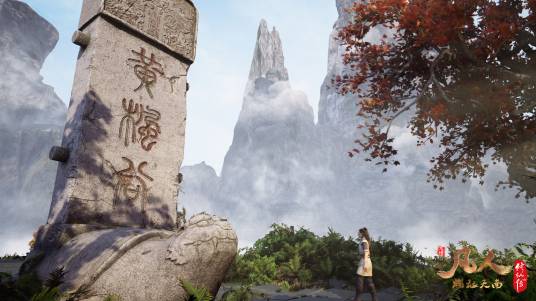
青元子是《凡人修仙传》中一个极为特殊的存在:作为一个已经陨落的古修士,他从未以活人的身份与韩立面对面交流过,却对韩立在灵界的修炼产生了不可忽视的深远影响。他是一个"缺席的在场者"——肉身早已消亡,但通过洞府、法宝、禁制和残留的神识碎片,他的意志依然在世界中运作。
这种存在方式在修仙小说中并不罕见,但忘语对青元子遗产的处理方式有其独到之处。青元子的遗产不是一个简单的"主角获得金手指"的情节装置,而是一个经过精心设计的叙事系统,它在推动情节的同时,也提出了关于传承、记忆和死亡的深层问题。
二、洞府作为文本
在修仙世界中,一位高阶修士的洞府就是他一生修为和智慧的物质化呈现。禁制的布局反映着主人的功法路数,丹房的设计透露着主人的炼丹偏好,藏经阁的分类方式暗示着主人的修炼理念。从这个角度来看,洞府就是一部用空间和物质书写的自传。
青元子的洞府也是如此。韩立探索这处遗迹的过程,本质上是一个"阅读"的过程——他在阅读一位已故修士留下的人生文本。每一道禁制都是一个段落,每一件法宝都是一个注脚,每一片灵田都是一个章节。通过这些物质遗存,韩立得以窥见一位前辈的修炼思路、战斗风格和人生选择。
这种"通过遗迹认识一个人"的叙事模式,在文学上有着深厚的传统——从考古学的发现到历史文献的解读,人类一直在通过死者留下的痕迹来重建他们的形象。忘语将这一传统嫁接到修仙世界中,产生了独特的效果:因为修仙世界中的遗迹不仅包含信息,还包含力量。
三、死者对生者的塑造
青元子对韩立的影响是多维度的。
在功法层面,青元子的修炼体系为韩立提供了重要的参考和补充。韩立的修炼路线一直是博采众长、不拘一格的,青元子的遗产恰好为他提供了更多的选择和组合可能。
在资源层面,青元子洞府中的灵药、材料和法宝,直接充实了韩立的物质基础。在灵界这个竞争远比人界激烈的环境中,这些资源的价值怎么估计都不过分。
在认知层面,青元子的经历和选择为韩立提供了一面镜子。通过了解青元子的修炼之路——他的成功、他的失败、他最终的陨落——韩立得以反思自己的修炼策略,避开一些可以预见的陷阱。在某种意义上,青元子用自己的死亡为韩立上了最后一课。
这种"死者塑造生者"的关系,比任何活着的师徒关系都更加纯粹。死者不会提出条件,不会索取回报,不会在关键时刻背叛。死者留下的遗产,是一种无条件的馈赠——前提是你有能力找到它、理解它、使用它。
四、遗产的双刃性
然而,青元子的遗产并非纯然的恩赐。每一处高阶修士的遗迹都伴随着危险——强大的守护禁制、残留的妖兽、可能存在的诅咒或陷阱。获取遗产的过程本身就是一场考验,只有实力和智慧兼备的后来者才能安全通过。
更深层的危险在于依赖。如果韩立过度依赖青元子的遗产——套用他的功法体系、沿袭他的修炼路线、使用他的法宝而不发展自己的——那么他就会逐渐被一个死人的思维模式所束缚。遗产可以是助力,也可以是牢笼。韩立的聪明之处在于,他总是将获得的传承消化吸收为自己体系的一部分,而不是全盘照搬。
这也解释了为什么修仙世界中有那么多探索遗迹的修士最终折戟:他们或者没有足够的实力通过考验,或者没有足够的判断力区分遗产中的精华与糟粕。遗迹不是自动提款机,而是一场与古人的隔空对弈——你需要读懂对方的棋路,同时保持自己的棋风。
五、记忆的物质化
修仙世界提供了一种凡人世界不可能实现的死亡形态:通过禁制和法阵,一个人的部分意识可以在肉身消亡后继续存在。青元子洞府中残留的意志碎片,就是这种"物质化记忆"的体现。
这些碎片不是完整的人格,更像是一段段被固化的思维程序——在特定条件被触发时执行特定的功能。它们可以传达信息,可以进行简单的判断,甚至可以在一定范围内与后来者互动。但它们不是青元子本人,就像一本书不是作者本人一样。
这种"不完全的存续"引发了一个引人深思的问题:当一个人死后,他的禁制还在运行,他的法阵还在守护洞府,他的意志碎片还能与来访者对话——这个人到底是死了还是没死?修仙世界模糊了生与死的界限,而古修士的遗迹就是这道模糊边界上最醒目的地标。
六、遗产作为叙事装置
从写作技巧的角度分析,青元子的遗产是忘语解决一个核心叙事难题的精巧工具。
这个难题是:韩立进入灵界后,面临着一个全新的、远比人界庞大和复杂的世界。他需要快速获取大量的知识、资源和实力提升,否则就无法在灵界生存。但如果这些东西来得太容易、太突兀,就会破坏故事的可信度。
青元子的遗产提供了一个完美的解决方案。它的获取过程有足够的难度和危险性,满足了"天下没有免费午餐"的叙事公正感。它的内容足够丰富,可以一次性解决韩立在灵界初期的多项需求。它还附带着一个已故修士的故事背景,为灵界的世界观增添了历史纵深。
更重要的是,这种"通过遗迹获取传承"的模式,与韩立一贯的成长方式高度一致。韩立从来不是那种靠天赋碾压一切的天才,他的每一次实力跃升都离不开外部机缘——只是他有着超越常人的敏锐度来发现这些机缘,以及超越常人的谨慎来安全地利用它们。青元子的遗产,是韩立漫长奇遇链中极为重要的一环。
七、最后的启示
青元子最终给我们的启示是关于"遗产"这个概念本身的。在修仙世界中,一个人最持久的影响力不在于他活着时的修为多高、杀了多少敌人,而在于他死后留下了什么。功法可以流传,法宝可以易手,洞府可以被后来者发现——这些物质遗存是修仙者对抗死亡的真正方式。
从这个角度看,青元子虽然陨落了,但他的遗产在被韩立继承和发展之后,获得了新的生命。他的智慧融入了韩立的修炼体系,他的资源转化为韩立的战斗力,他的故事成为韩立理解灵界的一个窗口。在这个意义上,传承就是修仙者的另一种永生——不是肉身的永生,而是智慧的永生。
这,也许就是修仙世界中最接近真正"不朽"的东西。
The Legacy of Qing Yuanzi
I. The Absent Presence
Qing Yuanzi (青元子) is a uniquely special existence in A Record of a Mortal's Journey to Immortality. As a long-fallen ancient cultivator, he never interacted with Han Li (韩立) face to face while alive, yet his influence on Han Li's Spirit Realm cultivation was profound and undeniable. He was an "absent presence" — his physical body had long since perished, but through his cave dwelling, magical treasures, protective formations, and residual fragments of divine consciousness, his will continued to operate in the world.
Cultural context: In xianxia fiction, an ancient cultivator's "cave dwelling" (dongfu) is not merely a home — it is a comprehensive repository of their life's work, containing cultivation techniques, refined treasures, medicinal gardens, libraries, and elaborate protective formations. Discovering and safely inheriting such a dwelling is one of the great "fortuitous encounters" (qiyu) that drive xianxia narratives.
This mode of existence is not uncommon in cultivation fiction, but Wang Yu's (忘语) treatment of Qing Yuanzi's legacy has distinctive qualities. It is not merely a "protagonist gets a power-up" plot device but a carefully designed narrative system that, while advancing the story, also raises profound questions about inheritance, memory, and death.
II. The Cave Dwelling as Text
In the cultivation world, a high-level cultivator's cave dwelling is the material manifestation of their lifetime of cultivation and wisdom. The layout of protective formations reflects the owner's technique preferences, the design of the alchemy chamber reveals pill-refining proclivities, and the classification system of the scripture library suggests the owner's cultivation philosophy. From this perspective, a cave dwelling is an autobiography written in space and matter.
Qing Yuanzi's cave dwelling was no different. Han Li's process of exploring these ruins was fundamentally an act of "reading" — reading the life-text left behind by a deceased cultivator. Every formation was a paragraph, every treasure was a footnote, every spiritual field was a chapter. Through these material remains, Han Li glimpsed a predecessor's cultivation approach, combat style, and life choices.
This narrative mode of "coming to know a person through their ruins" has deep roots in literary tradition — from archaeological discoveries to the interpretation of historical documents, humanity has always reconstructed the images of the dead through the traces they left behind. Wang Yu transplanted this tradition into the cultivation world to unique effect: because ruins in the cultivation world contain not only information but also power.
III. How the Dead Shape the Living
Qing Yuanzi's influence on Han Li operated across multiple dimensions.
At the technique level, Qing Yuanzi's cultivation system provided Han Li with crucial reference points and supplements. Han Li's cultivation path had always been eclectic and unorthodox, and Qing Yuanzi's legacy offered additional possibilities for combination and innovation.
At the resource level, the spiritual herbs, materials, and magical treasures within Qing Yuanzi's cave dwelling directly enriched Han Li's material foundation. In the Spirit Realm — an environment far more competitive than the Mortal Realm — the value of these resources cannot be overstated.
At the cognitive level, Qing Yuanzi's experiences and choices provided Han Li with a mirror. By understanding Qing Yuanzi's cultivation path — his successes, his failures, his ultimate fall — Han Li could reflect on his own cultivation strategy and avoid foreseeable pitfalls. In a sense, Qing Yuanzi used his own death to teach Han Li one final lesson.
This "dead shaping the living" relationship is purer than any relationship between living master and disciple. The dead do not impose conditions, do not demand repayment, and do not betray at critical moments. The legacy left by the dead is an unconditional gift — provided you have the ability to find it, understand it, and use it.
IV. The Double-Edged Nature of Legacy
However, Qing Yuanzi's legacy was not purely a blessing. Every high-level cultivator's ruins came with dangers — powerful guardian formations, lingering spirit beasts, and possible curses or traps. The process of acquiring the legacy was itself a trial; only successors with both strength and wisdom could pass safely.
The deeper danger lay in dependency. If Han Li over-relied on Qing Yuanzi's legacy — adopting his technique system wholesale, following his cultivation path, using his treasures instead of developing his own — he would gradually become shackled by a dead man's thought patterns. Legacy can be an asset or a cage. Han Li's wisdom lay in always digesting and absorbing what he acquired into his own system, rather than copying it wholesale.
This also explains why so many cultivators who explored ancient ruins ultimately fell: they either lacked the strength to pass the trials, or lacked the judgment to distinguish treasure from trap. Ruins are not ATMs — they are a long-distance chess match against an ancient mind. You need to read your opponent's game while maintaining your own playing style.
V. The Materialization of Memory
The cultivation world provides a form of death impossible in the mortal world: through formations and arrays, a portion of a person's consciousness can persist after their physical body perishes. The residual will fragments in Qing Yuanzi's cave dwelling were manifestations of this "materialized memory."
These fragments were not complete personalities — they were more like fixed thought programs that executed specific functions when triggered by specific conditions. They could convey information, make simple judgments, and even interact with visitors within a limited scope. But they were not Qing Yuanzi himself, just as a book is not its author.
Cultural context: This concept draws on Chinese religious traditions where ancestral spirits, tablet worship, and residual spiritual consciousness are deeply established ideas. The notion that part of a person can persist after death through objects or places resonates with Chinese folk beliefs about lingering spirits (yinhun) attached to locations of significance.
This "incomplete persistence" raises a thought-provoking question: when a person has died but their formations still operate, their arrays still guard the dwelling, and their consciousness fragments can still converse with visitors — is that person dead or not? The cultivation world blurs the boundary between life and death, and the ruins of ancient cultivators are the most prominent landmarks along this blurred border.
VI. Legacy as Narrative Device
From a craft perspective, Qing Yuanzi's legacy is Wang Yu's elegant solution to a core narrative problem.
That problem: after Han Li entered the Spirit Realm, he faced an entirely new world vastly more expansive and complex than the Mortal Realm. He needed to rapidly acquire large amounts of knowledge, resources, and power upgrades, or he would be unable to survive. But if these things came too easily or abruptly, it would undermine the story's credibility.
Qing Yuanzi's legacy provided a perfect solution. The acquisition process carried sufficient difficulty and danger to satisfy the narrative sense of justice that "there are no free lunches." Its contents were rich enough to address multiple needs during Han Li's early Spirit Realm period in one stroke. It also came with the backstory of a deceased cultivator, adding historical depth to the Spirit Realm's worldbuilding.
More importantly, this "gaining inheritance through ruins" model was highly consistent with Han Li's established growth pattern. Han Li was never the type of genius who bulldozed everything through sheer talent — every leap in his power depended on external opportunities. But he possessed extraordinary perceptiveness in discovering those opportunities, and extraordinary caution in safely exploiting them. Qing Yuanzi's legacy was a critical link in Han Li's long chain of fortuitous encounters.
VII. The Final Insight
What Qing Yuanzi ultimately teaches us is something about the concept of "legacy" itself. In the cultivation world, a person's most lasting influence lies not in how high their cultivation was while alive or how many enemies they killed, but in what they left behind after death. Techniques can be passed down, treasures can change hands, cave dwellings can be discovered by future generations — these material remains are the cultivator's true means of defying death.
From this angle, although Qing Yuanzi fell, his legacy — inherited and developed by Han Li — gained new life. His wisdom was integrated into Han Li's cultivation system, his resources were converted into Han Li's combat power, and his story became a window through which Han Li understood the Spirit Realm. In this sense, inheritance is the cultivator's alternative immortality — not immortality of the flesh, but immortality of wisdom.
This, perhaps, is the thing closest to true "imperishability" in the cultivation world.