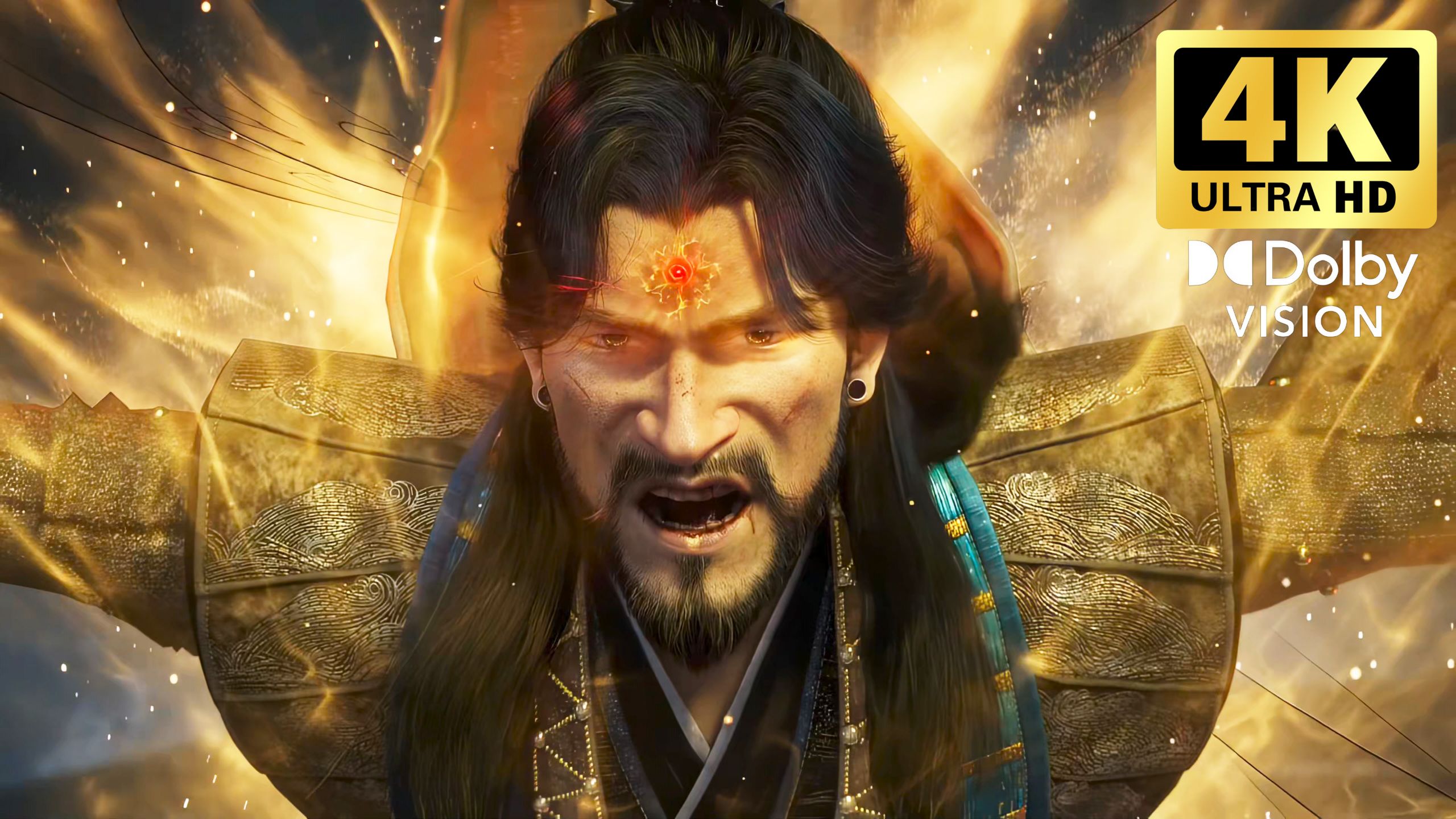
一个无法用善恶定义的人
修仙小说里从不缺反派,但南陇侯不是反派。
他是天南十大元婴强者之一,苍坤上人后裔,紫蟒锦袍、碧玉高冠、长髯齐胸——出场时的气度,比大多数正道大修士还要体面。他与韩立的关系也不是简单的敌我对立:两人合作过、交过手、互相算计过,最终一个成为人界传奇,另一个沦为古魔傀儡。
这段关系之所以值得深究,是因为它触及了《凡人修仙传》最核心的主题之一:在一个弱肉强食的世界里,人与人之间的关系究竟能走多远?
神识比斗:第一次交锋的潜台词
南陇侯与韩立的初次正面接触,发生在阗天城交易会上。这个场景在原著中常被读者一笔带过,但实际上埋下了两人关系的全部伏笔。
南陇侯主动提出与韩立比试神识,结果战成平手。表面上看,这不过是修士间的一次"切磋"。但仔细分析南陇侯的动机,事情远没有这么简单。
他在筛选合作者。
彼时的南陇侯已经发现了苍坤上人洞府的线索,正在物色有足够实力的同伴。他需要一个实力够强、背景不深、不会反过来吞掉他的合作对象。韩立恰好满足所有条件——元婴初期的落云宗长老,实力出众但根基尚浅,没有厉害的大佬撑腰。
这次"切磋"本质上是一场面试。韩立通过了。
这也揭示了南陇侯的行事逻辑:他从不做没有目的的事。 每一次主动接近、每一次示好,背后都有精确的利益计算。这不是说他虚伪——在修仙世界里,这就是生存的标准姿态。韩立自己何尝不是如此?
苍坤遗宝:合作的黄金时代
南陇侯邀请韩立等人前往慕兰草原,探寻苍坤上人留下的古修士遗址。这段情节是两人关系最接近"友谊"的阶段。
在遗址探险中,南陇侯展现了令人刮目相看的一面。面对重重机关禁制,他沉着冷静地指挥队伍推进,在绝境中施展独门秘术"万尺一线"寻得生机。所谓万尺一线,是一种消耗大量精元甚至精血来换取瞬间移动的逃命手段——能修炼出这种保命绝技的人,既有天赋,也有对危险的清醒认知。
但合作从一开始就不纯粹。 南陇侯暗中谋划独吞最大份宝物,这不是临时起意,而是从邀请韩立那一刻就埋好的棋。他需要韩立的战力来闯关,但从未打算公平分配收益。
问题在于:韩立难道不知道吗?
以韩立的谨慎性格,他不可能对南陇侯毫无防备。他之所以接受邀请,同样是基于自身的利益计算——即便南陇侯有小动作,探险中获得的机缘也足以值回票价。两个聪明人心照不宣地进行着一场各怀鬼胎的合作,谁也没有真正信任对方,但谁也没有撕破脸。
这就是修仙世界的"友谊"——一种建立在互利基础上的临时同盟,维持它不需要感情,只需要利益平衡。
坠魔谷:从合作到毁灭
苍坤遗址事件后,南陇侯元气大伤。原著中一个容易被忽略的细节是:他逃离遗址后被追踪术标记,在慕兰草原边境险些丧命,是趁着与高阶法士的混战才侥幸脱身。
元气大伤的南陇侯,放下了骄傲。 他找到生死之交璇肌子,又主动联络韩立,组织坠魔谷探险。进入坠魔谷需要两仪环——阴环和阳环必须配合使用——而韩立手握阴环。这意味着南陇侯不得不与韩立合作,没有谈判余地。
注意这里的权力关系已经发生了微妙的逆转。第一次合作时,南陇侯是发起者和主导者;这一次,他是请求者。韩立从被挑选的一方,变成了不可或缺的一方。
南陇侯为这次探险做了周全准备——感应铃等装备一应俱全,三人小队(与韩立、天极门鲁卫英)配合默契,合力斩杀了火蟾古兽。如果故事到此为止,这会是一段完美的冒险合作。
但南陇侯的贪婪再次发作。
在血咒之门前,他与鲁卫英急于破除禁制,误放出被封印的上古魔物之魂。乌光击中南陇侯的瞬间,他的面部剧烈扭曲抽搐——原著描写了一个令人心悸的细节:在被完全夺舍之前,他的意识有过一丝挣扎。 那一刻的南陇侯,或许终于意识到自己犯了怎样不可挽回的错误。
但一切为时已晚。他的身体变为双头四臂、浑身鳞片的魔化之躯,古魔血焱的主魂彻底吞噬了他的灵魂。被夺舍后的第一个受害者,是他的合作伙伴鲁卫英。
南陇侯的背叛是否"不道德"?
这个问题看似荒唐,但值得严肃讨论。
南陇侯在苍坤遗址中暗中谋划独吞宝物,在坠魔谷中因贪婪触发禁忌——这些行为在现实道德框架下当然是"背叛"。但忘语笔下的修仙世界有自己的一套规则:
第一,修仙界的合作关系本质上就是利益交换。 韩立与南宫婉的救援行动、与星宫的联盟、与落云宗的归属——每一段关系背后都有明确的利益驱动。南陇侯的做法并不比其他修士更恶劣,他只是更不加掩饰。
第二,贪婪在修仙世界不是性格缺陷,而是生存本能。 灵石、法宝、功法——每一样资源都可能决定生死。一个不贪婪的修士,往往就是一个死去的修士。南陇侯的问题不在于他贪,而在于他高估了自己控制风险的能力。
第三,韩立的"正面形象"同样经不起道德审视。 韩立在乱星海被称为"虫魔",一路走来杀人夺宝的事做了不少。他和南陇侯之间的区别,不在于道德高度,而在于谨慎程度——韩立永远会在行动前多想一步,而南陇侯少想了那一步。
忘语的高明之处在于,他从不在角色身上贴标签。南陇侯不是"坏人",韩立也不是"好人"。他们只是两个在修仙世界求生的人,走了不同的路,得了不同的结局。
"嫁衣神功":一个残酷的隐喻
知乎网友"我在知乎写列传"曾将南陇侯列入"嫁衣指数"排行第四名——所谓嫁衣,就是辛苦一场最终为他人做了嫁衣裳。南陇侯的宝物、他的探险成果、甚至他被魔化后引发的连锁反应,最终都成为韩立崛起的养料。
这不是巧合,而是忘语的一种叙事策略。凡人修仙传中的配角命运,几乎都遵循一个残酷的模式:越是有野心的人,越容易成为主角的垫脚石。 墨居仁处心积虑要夺韩立身体,反而为他开启修仙之门;金光上人全书的作用就是送一张"升仙令";风希把半成品风雷翅、龙鳞果树移植法、甚至性命和妖丹都"赠予"了韩立。
南陇侯的悲剧在于,他有能力、有野心、有智谋,放在任何一部普通修仙小说里都是主角级的配置。但在韩立的故事里,这一切只能服务于主角的成长曲线。他的才华和贪婪同时存在,前者让他成为值得尊重的对手,后者让他走向不可逆的毁灭。
结构性的宿命
从叙事结构的角度看,南陇侯的命运线与韩立形成了一组精确的对照:
同样是元婴期修士面对上古遗迹的诱惑。 韩立在虚天殿中差点死于玄骨上人之手,但他选择了与强敌周旋而非硬抢宝物;南陇侯在血咒之门前选择了破除禁制直取宝藏。两种选择,两种结局。
同样是被魔道力量侵蚀的风险。 韩立修炼辟邪神雷、掌握虚天鼎,始终保持着对魔道力量的克制能力;南陇侯没有这样的准备,在古魔面前毫无还手之力。
同样是与他人合作时的信任边界。 韩立在每次合作中都留有后手(包括对南陇侯的合作),而南陇侯在关键时刻的贪婪超越了他的理性判断。
这组对照说明了什么?不是"谨慎者胜、贪婪者亡"这样的简单教训。而是忘语在用两条平行的命运线告诉读者:修仙世界不存在绝对安全的选择,只有概率更高的生存策略。 韩立的谨慎不保证他永远不犯错,南陇侯的贪婪也不意味着他注定失败——只是在那个特定的时刻,在那扇特定的门前,他的选择让概率倒向了毁灭的一边。
重新审视这段关系
如果我们跳出"主角视角"来看待南陇侯与韩立的关系,会发现一个有趣的事实:在那个世界里,两人之间的关系已经算是相当好的了。
他们没有反目成仇(至少在南陇侯被夺舍之前),没有背后捅刀,甚至在利益冲突明显的情况下依然维持了多次合作。南陇侯的暗中算计被韩立洞察却没有翻脸,韩立的戒备被南陇侯感知却没有放弃合作。两个修士在"我知道你在算计我,你也知道我知道"的状态下,依然选择了并肩作战。
这种关系在现实世界里或许令人不适,但在修仙世界的语境下,它已经是"信任"能达到的最高形态。
南陇侯最终的毁灭,并非来自他与韩立的关系破裂,而是来自他自身的局限。他的故事不是一个关于"背叛"的故事,而是一个关于能力与野心不匹配的故事。他有元婴中期巅峰的修为,有苍坤上人后裔的资源,有心思缜密的头脑——但他没有韩立那种近乎偏执的风险意识。
在修仙世界里,这就是生与死的差距。
A Man Who Defies Good-and-Evil Labels
Cultivation novels never lack villains, but Marquis Nanlong (南陇侯) isn't one.
He was one of the ten most powerful Nascent Soul cultivators in the Heavenly South region (Nascent Soul being an advanced cultivation stage where the practitioner forms a miniature spiritual body within themselves), a descendant of the ancient cultivator Master Cang Kun. Clad in a purple python-silk robe, wearing a jade crown, with a long beard flowing to his chest — his bearing upon first appearance was more dignified than most orthodox senior cultivators. His relationship with Han Li (韩立) was no simple hero-versus-villain dynamic either: the two had cooperated, fought, schemed against each other, and ultimately one became a legend of the mortal realm while the other fell as a puppet of an ancient demon.
This relationship merits deep examination because it touches on one of the novel's core themes: In a world where the strong devour the weak, how far can relationships between people truly go?
The Spiritual Sense Contest: Subtext of Their First Encounter
Marquis Nanlong's first direct contact with Han Li occurred at a trade fair in Tian Tian City. This scene is often glossed over by readers, but it actually planted all the seeds for their future relationship.
Marquis Nanlong proactively proposed a spiritual sense contest with Han Li, and the result was a draw. On the surface, this was merely a "friendly sparring match" between cultivators. But analyzing Nanlong's motivations reveals something far more complex.
He was screening for partners.
By that time, Marquis Nanlong had already discovered clues to Master Cang Kun's cave dwelling and was looking for companions with sufficient strength. He needed someone powerful enough but without deep backing — someone who wouldn't turn around and swallow him whole. Han Li fit every criterion perfectly: an early Nascent Soul elder of the Drifting Cloud Sect, outstanding in strength but still shallow-rooted, without any powerful patron behind him.
This "sparring match" was essentially a job interview. Han Li passed.
This also reveals Marquis Nanlong's operating logic: He never does anything without purpose. Every approach, every gesture of goodwill, is backed by precise calculations of interest. This doesn't make him hypocritical — in the cultivation world, this is simply the standard posture for survival. Han Li himself is no different.
The Cang Kun Legacy: The Golden Age of Cooperation
Marquis Nanlong invited Han Li and others to the Mulan Grasslands to explore an ancient cultivator's ruins left by Master Cang Kun. This stretch of the story represents the closest their relationship came to "friendship."
During the ruins exploration, Marquis Nanlong displayed an impressive side. Facing layer after layer of traps and restrictions, he calmly directed the team forward, using his unique secret technique "Myriad Feet Single Thread" — a desperate escape method that burns vast amounts of vital essence and blood for instant teleportation — to find a way through. Someone who could develop such a life-saving technique possessed both talent and a clear-eyed awareness of danger.
But the cooperation was impure from the start. Marquis Nanlong had been secretly plotting to claim the greatest treasures for himself — this wasn't a spur-of-the-moment decision but a scheme embedded from the moment he invited Han Li. He needed Han Li's combat power to clear obstacles but never intended to share the spoils fairly.
The question is: didn't Han Li know this?
Given Han Li's cautious nature, it's impossible he had no guard up against Marquis Nanlong. He accepted the invitation based on his own calculations — even if Nanlong pulled something underhanded, the opportunities gained during the expedition would more than pay for themselves. Two clever men tacitly conducted a collaboration where each harbored ulterior motives, neither truly trusting the other, yet neither tearing off the mask.
This is "friendship" in the cultivation world — a temporary alliance built on mutual benefit, maintained not by emotion but by the balance of interests.
Devilfall Valley: From Cooperation to Destruction
After the Cang Kun ruins incident, Marquis Nanlong was severely weakened. An easily overlooked detail in the novel: after fleeing the ruins, he was tracked by a marking technique and nearly lost his life at the Mulan Grasslands border, only escaping by exploiting a chaotic battle with high-ranking Mulan spell warriors.
A severely weakened Marquis Nanlong set aside his pride. He found his close friend Daoist Xuan Ji, then proactively contacted Han Li to organize the Devilfall Valley expedition. Entering the valley required the Two Revolutions Rings — the Yin Ring and Yang Ring had to be used in conjunction — and Han Li held the Yin Ring. This meant Marquis Nanlong had no choice but to cooperate with Han Li.
Note how the power dynamic had subtly reversed. In the first collaboration, Marquis Nanlong was the initiator and leader; this time, he was the supplicant. Han Li went from being the selected party to the indispensable one.
Marquis Nanlong prepared thoroughly for this expedition — sensing bells and other equipment were all ready, and the three-person team (with Han Li and Lu Weiying of the Heavenly Pole Sect) cooperated seamlessly, jointly slaying the ancient Fire Toad beast. Had the story ended here, this would have been a perfect adventure partnership.
But Marquis Nanlong's greed resurfaced.
Before the Blood Curse Gate, he and Lu Weiying rushed to break the seals, accidentally releasing the soul of an ancient demon that had been imprisoned within. The moment the dark light struck Marquis Nanlong, his face twisted violently — the novel describes a chilling detail: before being completely possessed, his consciousness struggled for one last moment. In that instant, Marquis Nanlong perhaps finally realized what an irreversible mistake he had made.
But it was too late. His body transformed into a two-headed, four-armed, scale-covered demonic form, as the Elder Devil Bloodflame's main soul completely devoured his spirit. The first victim after the possession was his partner Lu Weiying.
Was Marquis Nanlong's Betrayal "Immoral"?
This question seems absurd but deserves serious discussion.
Marquis Nanlong secretly plotted to monopolize treasure in the Cang Kun ruins and triggered a forbidden disaster through greed in Devilfall Valley — these actions are certainly "betrayal" in a real-world moral framework. But the cultivation world in Wang Yu's writing operates by its own set of rules:
First, cooperative relationships in the cultivation world are fundamentally interest exchanges. Han Li's rescue missions with Nangong Wan, his alliance with Star Palace, his affiliation with the Drifting Cloud Sect — every relationship has clear interest-driven motivations behind it. Marquis Nanlong's behavior wasn't worse than other cultivators; he was simply less disguised about it.
Second, greed in the cultivation world isn't a character flaw — it's a survival instinct. Spirit stones, magical treasures, cultivation techniques — each resource could determine life or death. An ungreedy cultivator is often a dead cultivator. Marquis Nanlong's problem wasn't that he was greedy, but that he overestimated his ability to control risk.
Third, Han Li's "positive image" doesn't withstand moral scrutiny either. Han Li earned the moniker "Insect Devil" in the Scattered Star Seas and committed his fair share of killing and treasure-seizing along the way. The difference between him and Marquis Nanlong isn't moral superiority — it's degree of caution. Han Li always thinks one step further before acting; Marquis Nanlong thought one step fewer.
Wang Yu's brilliance lies in never labeling his characters. Marquis Nanlong isn't a "bad guy," and Han Li isn't a "good guy." They're just two people trying to survive in the cultivation world who took different paths and arrived at different endings.
"Making Wedding Clothes for Others": A Cruel Metaphor
A Zhihu (Chinese Q&A platform) user once ranked Marquis Nanlong fourth on a "Wedding Clothes Index" — referring to the Chinese idiom about working hard only to benefit someone else. Marquis Nanlong's treasures, his expedition results, even the chain reactions triggered by his demonification, all ultimately became fuel for Han Li's rise.
This isn't coincidence but a deliberate narrative strategy by Wang Yu. The fates of supporting characters in A Record of a Mortal's Journey to Immortality almost all follow one cruel pattern: The more ambitious a person is, the more likely they become a stepping stone for the protagonist. Mo Juren painstakingly tried to seize Han Li's body, only to open the door to cultivation for him instead. Grandmaster Golden Light's entire narrative function was to deliver an "Ascension Token." Feng Xi "gifted" Han Li his half-formed Wind-Thunder Wings, Dragon Scale Fruit tree transplant method, and even his life and demon core.
Marquis Nanlong's tragedy is that he had ability, ambition, and cunning — in any ordinary cultivation novel, he'd have protagonist-tier attributes. But in Han Li's story, all of these could only serve the protagonist's growth arc. His talent and greed coexisted: the former made him a worthy adversary, the latter led him to irreversible destruction.
Structural Fate
From a narrative structure perspective, Marquis Nanlong's fate line forms a precise parallel contrast with Han Li's:
Both were Nascent Soul cultivators facing the temptation of ancient ruins. Han Li nearly died at the hands of the Bone Sage in the Heavenvoid Hall, but he chose to maneuver against the powerful enemy rather than forcibly seize treasure. Marquis Nanlong chose to break the seals at the Blood Curse Gate and grab the treasure directly. Two choices, two outcomes.
Both faced the risk of demonic corruption. Han Li cultivated the Divine Devilbane Lightning and mastered the Heavenvoid Cauldron, maintaining the ability to counter demonic forces. Marquis Nanlong had no such preparations and was utterly defenseless against the ancient demon.
Both navigated trust boundaries in cooperation. Han Li always kept contingency plans in every collaboration (including his cooperation with Marquis Nanlong), while Marquis Nanlong's greed overcame his rational judgment at the critical moment.
What does this parallel tell us? Not the simplistic lesson of "the cautious survive, the greedy perish." Rather, Wang Yu uses two parallel fate lines to tell readers: The cultivation world offers no absolutely safe choices, only survival strategies with higher probabilities. Han Li's caution doesn't guarantee he'll never err; Marquis Nanlong's greed doesn't mean he was destined to fail. It's just that at that particular moment, before that particular gate, his choice tipped the odds toward destruction.
Reconsidering This Relationship
If we step outside the "protagonist's perspective" to view the relationship between Marquis Nanlong and Han Li, we find an interesting fact: In that world, their relationship was actually quite good by prevailing standards.
They never became mortal enemies (at least before Nanlong's possession), never stabbed each other in the back, and even maintained multiple collaborations despite obvious conflicts of interest. Nanlong's secret scheming was detected by Han Li without causing a falling-out; Han Li's wariness was sensed by Nanlong without causing him to abandon the partnership. Two cultivators, in a state of "I know you're scheming against me, and you know I know," still chose to fight side by side.
This kind of relationship might be uncomfortable in the real world, but in the context of the cultivation world, it represents the highest form that "trust" can achieve.
Marquis Nanlong's ultimate destruction didn't come from the breakdown of his relationship with Han Li, but from his own limitations. His story isn't about "betrayal" — it's about ability failing to match ambition. He had peak mid-stage Nascent Soul cultivation, Master Cang Kun's heritage resources, and a meticulous mind — but he lacked Han Li's almost obsessive sense of risk awareness.
In the cultivation world, that's the difference between life and death.