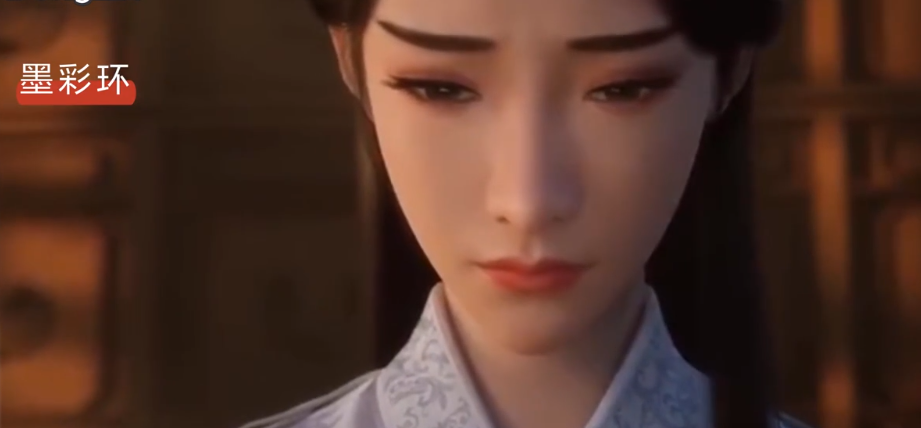
她不是女主,甚至不是女配
如果你问一个读过《凡人修仙传》的人"墨彩环是谁",大概率会得到这样的回答:"哦,就是那个……韩立师弟的妹妹?好像喜欢过韩立?后来怎么样了来着……"
然后一片沉默。
因为大多数读者确实不记得她后来怎么样了。墨彩环在全书中的出场时间极短,戏份极少,没有参与过任何重大战役,没有掌握过任何惊天秘密,没有和韩立产生过轰轰烈烈的感情纠葛。
她只是安安静静地出现在韩立修仙之路的起点,安安静静地喜欢过他,然后安安静静地消失在了浩瀚的修仙叙事中。
但正是因为她的"不重要",她反而成了全书中最重要的符号之一。
凡人世界的温度
韩立从七玄门出发,踏上修仙之路。在那个阶段,他接触的人大致分为两类:想利用他的(墨居仁)和与他利益交换的(七玄门同门)。
墨彩环是第三类——一个单纯地对他好、不求回报的人。
这在韩立的经历中几乎是独一无二的。此后的修仙生涯中,他遇到的每一个人都带着某种目的性。即便是南宫婉、紫灵,她们对韩立的感情虽然真挚,但也发生在"修仙"这个大框架下——她们是修士,她们的感情表达方式也带着修士的印记。
墨彩环不是。她对韩立的好感,纯粹是一个少女对一个让她感到安全的大哥哥的朦胧情愫。没有修为的算计,没有资源的考量,没有宗门立场的权衡。
这是韩立最后一次被一个完全不带功利性的目光注视。
此后两千多章,再也没有了。
韩立为什么没有选择她?
这个问题有一个很现实的答案:修为差距。
韩立踏上修仙之路后,他与墨彩环之间的距离以指数级扩大。当韩立已经在筑基、结丹的路上狂奔时,墨彩环可能还在炼气初期挣扎。修仙世界的残酷之处在于——修为差距不仅是实力的差距,更是寿命的差距。一个结丹期修士可以活五百年,一个炼气期修士可能连一百年都活不到。
韩立不可能与一个会在他面前老去、死去的人建立长久的道侣关系。这不是冷漠,这是现实。
但还有一个更深层的原因:墨彩环让韩立不舒服。
不是讨厌她,恰恰相反,是她的纯粹让韩立不知如何应对。韩立的心理结构在墨居仁事件后就被重塑了——他习惯了带着防备与人相处,习惯了在每段关系中寻找对方的"目的"。墨彩环的无条件好感,打破了这个框架。
面对一个不需要他回报什么的人,韩立的反应不是感动,而是手足无措。他不知道如何处理一份不包含利益交换的感情,就像一个只学过博弈论的人突然被要求进行一场没有输赢的游戏。
所以他选择了礼貌的距离。 不拒绝,不接受,不回应。让时间和修为的差距自然地将两人分开。
叙事功能:被遗忘的必要性
从叙事结构的角度看,墨彩环的"被遗忘"不是忘语的疏忽,而是一种刻意的设计。
她的存在,为韩立的修仙之路提供了一个基准线——一个"如果韩立没有修仙,他可能会拥有的普通生活"的参照系。
想象一下:如果韩立留在凡人世界,娶了隔壁村的姑娘(或者墨彩环),过着平凡的一生——那会是一种什么样的生活?温暖、安稳、有人关心、有人等待。没有生死搏杀,没有勾心斗角,没有永无止境的修炼。
墨彩环代表的就是这种生活的可能性。
而韩立选择了修仙——选择了另一条路。这条路上有力量、有长生、有广阔的天地,但没有了墨彩环式的温暖。
每一次选择都有代价。 墨彩环就是韩立修仙的代价之一——一种他放弃了的温暖,一个他不愿回头看的方向。
忘语让墨彩环"被遗忘",恰恰是为了让读者在某个不经意的瞬间想起她,然后意识到韩立失去了什么。
韩立回到家乡的那一幕
原著中有一个极其短暂但极其动人的情节:韩立在修为大成后回到了自己的家乡。
那个曾经贫穷的山村,那些曾经的邻居亲人——对他来说已经变成了另一个世界的记忆。他站在变化不大的村口,身边的一切都显得如此渺小和脆弱。
韩立在那一刻的心情是什么?忘语没有明写。但我们可以猜测:那大概是他整个修仙生涯中最孤独的瞬间。
因为他终于明白,自己已经无法回到那个世界了。不是不想回,是回不去了。他与凡人世界之间的距离,不是几千里路可以衡量的,而是几百年的寿命差、几千年的认知差、几万倍的存在层级差。
墨彩环就是那个世界最温暖的缩影。她可能已经老去,可能已经不在人世,可能嫁了人、生了孩子、过完了平凡的一生。她大概早就忘记了那个叫韩立的大哥哥。
但韩立不会完全忘记她。
不是因为爱情,而是因为她代表了一种他再也无法拥有的东西:凡人的温度。
被遗忘者的群像
墨彩环不是唯一一个被韩立的修仙之路"甩在身后"的人。厉飞雨、七玄门的师兄弟们、黄枫谷的同门——这些角色都曾在韩立的生命中占据一席之地,最终都消失在了不断膨胀的叙事宇宙中。
修仙小说的本质是一个不断"丢弃"的过程。 随着主角的修为提升,旧世界的人和事被一层层剥离。每一次飞升,都是与一个旧世界的永别。
但墨彩环的"被丢弃"最令人感伤,因为她代表的不是某个修仙阶段的战友或对手,而是韩立人性中最柔软、最不设防的那一部分。
她被遗忘了,韩立的那一部分人性也随之沉入了记忆深处。
结语:初心不可追
"不忘初心"是一句我们经常听到的话。但《凡人修仙传》通过墨彩环这个角色,揭示了一个不太舒服的事实:初心是注定要被遗忘的。
不是因为人善忘,而是因为成长本身就意味着远离起点。韩立从那个贫穷山村出发,走过了人界、灵界、仙界,他已经不是当年那个少年了。那个少年的记忆、感情和温暖,都被封存在了一个他再也打不开的时间胶囊里。
墨彩环就在那个胶囊里面,永远年轻,永远温暖,永远被遗忘。
而这才是真正令人心碎的地方——不是她被韩立遗忘了,而是韩立被他自己遗忘了。
那个会对一个少女的好感手足无措的青涩少年,早已不在了。取而代之的是一台精密的生存机器。这台机器效率极高,能在三界纵横驰骋。
但它不会再为一个平凡少女的笑容而心跳加速了。
She's Not the Heroine — Not Even a Supporting Love Interest
If you asked someone who's read A Record of a Mortal's Journey to Immortality "Who is Mo Caihuan (墨彩环)?", you'd most likely get this answer: "Oh, she's... Han Li's junior martial brother's sister? Apparently had a crush on Han Li? What happened to her again..."
Then silence.
Because most readers genuinely don't remember what happened to her. Mo Caihuan's screen time in the novel is extremely brief, her role minimal. She never participated in any major battle, never possessed any earth-shattering secret, never had a passionate romantic entanglement with Han Li (韩立).
She simply appeared quietly at the starting point of Han Li's cultivation journey, quietly liked him, then quietly disappeared into the vast cultivation narrative.
But it's precisely because she's "unimportant" that she becomes one of the most important symbols in the entire book.
The Warmth of the Mortal World
When Han Li left the Seven Mysteries Sect and set out on his cultivation path, the people he encountered roughly fell into two categories: those who wanted to exploit him (Mo Juren) and those who engaged in transactional exchanges with him (fellow sect members).
Mo Caihuan was a third category — someone who was simply kind to him, expecting nothing in return.
This was almost unique in Han Li's experience. Throughout his subsequent cultivation career, everyone he met carried some degree of ulterior motive. Even Nangong Wan and Violet Spirit, whose feelings for Han Li were genuine, existed within the framework of "cultivation" — they were cultivators, and their emotional expressions bore a cultivator's imprint.
Mo Caihuan was different. Her affection for Han Li was purely a young girl's hazy crush on an older boy who made her feel safe. No calculations of cultivation level, no considerations of resources, no weighing of sect politics.
This was the last time Han Li was ever looked at with completely non-utilitarian eyes.
For over two thousand chapters after that, it never happened again.
Why Didn't Han Li Choose Her?
This question has a very practical answer: the cultivation gap.
After Han Li set foot on the cultivation path, the distance between him and Mo Caihuan expanded exponentially. While Han Li was racing through Foundation Establishment and Core Formation (progressive cultivation levels requiring increasingly rare resources and spiritual breakthroughs), Mo Caihuan might still have been struggling in early Qi Refining. The cruelty of the cultivation world lies in this: the cultivation gap isn't just a power gap — it's a lifespan gap. A Core Formation cultivator can live five hundred years; a Qi Refining cultivator might not even reach one hundred.
Han Li couldn't build a lasting Dao companion relationship with someone who would age and die before his eyes. This isn't coldness — it's reality.
But there's a deeper reason: Mo Caihuan made Han Li uncomfortable.
Not because he disliked her — quite the opposite. Her purity left him at a loss for how to respond. Han Li's psychological framework was rebuilt after the Mo Juren incident — he grew accustomed to interacting with people while maintaining defenses, accustomed to searching for every person's "agenda" in each relationship. Mo Caihuan's unconditional affection broke this framework.
Faced with someone who wanted nothing from him in return, Han Li's response wasn't gratitude but bewilderment. He didn't know how to handle a feeling that contained no interest exchange — like someone who only knows game theory suddenly being asked to play a game with no winners or losers.
So he chose polite distance. Neither rejecting, accepting, nor responding. Letting time and the cultivation gap naturally separate them.
Narrative Function: The Necessity of Being Forgotten
From a narrative structure perspective, Mo Caihuan's "being forgotten" isn't Wang Yu's oversight — it's a deliberate design.
Her existence provides Han Li's cultivation path with a baseline — a reference point for "the ordinary life Han Li might have had if he hadn't become a cultivator."
Imagine: if Han Li had stayed in the mortal world, married a village girl (or Mo Caihuan), lived an ordinary life — what would that have been like? Warm, stable, with someone who cared, someone who waited. No life-or-death battles, no scheming, no endless cultivation.
Mo Caihuan represents the possibility of that life.
And Han Li chose cultivation — chose another road. This road has power, longevity, and vast horizons, but it lacks Mo Caihuan's kind of warmth.
Every choice has a cost. Mo Caihuan is one of the costs of Han Li's cultivation — a warmth he gave up, a direction he refuses to look back toward.
Wang Yu made Mo Caihuan "forgotten" precisely so that readers, at some unexpected moment, would remember her — and realize what Han Li lost.
When Han Li Returned Home
There's an extremely brief but extremely poignant scene in the novel: Han Li, after achieving great power, returned to his hometown.
That once-impoverished mountain village, those once-familiar neighbors and relatives — to him they had become memories from another world. Standing at the barely changed village entrance, everything around him seemed so small and fragile.
What was Han Li feeling at that moment? Wang Yu doesn't say explicitly. But we can guess: it was probably the loneliest instant of his entire cultivation career.
Because he finally understood that he could never return to that world. Not that he didn't want to — he couldn't. The distance between him and the mortal world couldn't be measured in miles, but in centuries of lifespan, millennia of cognitive difference, and orders of magnitude in existential level.
Mo Caihuan was the warmest snapshot of that world. She may have aged, may have passed away, may have married, had children, lived out a perfectly ordinary life. She'd probably long forgotten the older boy named Han Li.
But Han Li would never completely forget her.
Not because of love, but because she represented something he could never have again: the warmth of mortal life.
Portrait of the Forgotten
Mo Caihuan isn't the only person Han Li's cultivation journey "left behind." Li Feiyu, the fellow disciples of the Seven Mysteries Sect, members of Yellow Maple Valley — all these characters once occupied a place in Han Li's life and eventually vanished into the ever-expanding narrative universe.
The essence of cultivation novels is a process of continual "shedding." As the protagonist's cultivation rises, people and things from old worlds are peeled away layer by layer. Every ascension is a permanent farewell to an old world.
But Mo Caihuan's "shedding" is the most poignant, because what she represents isn't some cultivation-era comrade or rival, but the softest, most unguarded part of Han Li's humanity.
She was forgotten, and that part of Han Li's humanity sank with her into the depths of memory.
Closing: First Hearts Cannot Be Pursued
"Never forget your original aspiration" is a phrase we hear often. But A Record of a Mortal's Journey to Immortality, through Mo Caihuan, reveals an uncomfortable truth: Original aspirations are destined to be forgotten.
Not because people are forgetful, but because growth itself means moving away from the starting point. Han Li set out from that poor mountain village, traveled through the Mortal Realm, the Spirit Realm, and the Immortal Realm — he is no longer that boy. That boy's memories, emotions, and warmth are all sealed in a time capsule he can never open again.
Mo Caihuan is inside that capsule — forever young, forever warm, forever forgotten.
And this is what's truly heartbreaking — not that Han Li forgot her, but that Han Li forgot himself.
That awkward teenager who didn't know what to do with a young girl's affection is long gone. In his place stands a precision survival machine. This machine is supremely efficient, capable of traversing the Three Realms.
But it will never again have its heartbeat quicken at the smile of an ordinary girl.