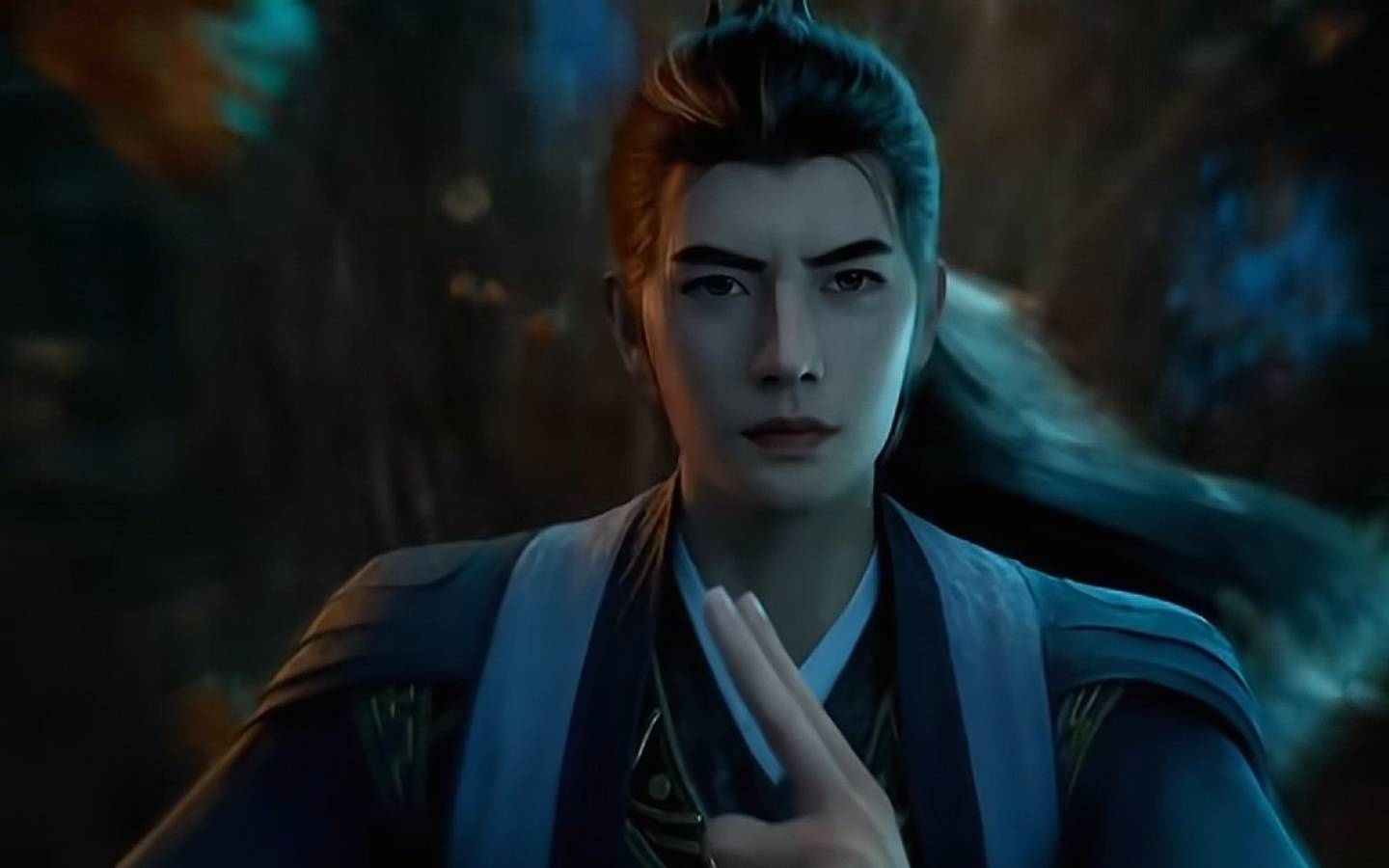
他不是英雄,他只是想活着
读完两千多章《凡人修仙传》,如果让你用一个词形容韩立,大多数读者会说"谨慎"。
但谨慎只是表象。韩立身上真正贯穿全书的东西,是一种深入骨髓的生存焦虑。这种焦虑不是修仙世界教给他的——它从他还是那个贫穷山村里的瘦弱少年时就已经存在了。
仔细回忆韩立的童年:家里穷到揭不开锅,父母把他送去七玄门,不是为了让他出人头地,而是为了少一张吃饭的嘴。一个从小就知道自己是家庭负担的孩子,他对世界的底层认知是什么?
资源是有限的,活着需要代价,没有人会无条件地帮你。
这三条信念,构成了韩立此后所有行为的心理底色。
墨居仁事件:第一课
韩立在七玄门遭遇墨居仁,是他人生的第一堂课。但这堂课教给他的东西,比大多数读者意识到的更深刻。
表面上看,墨居仁是一个想夺舍韩立的反派。但换一个角度:墨居仁对韩立有过真实的"好"——传授武艺、提供食宿、甚至表现出某种程度的关怀。一个十岁左右的孩子,在远离家乡的陌生环境中,遇到一个对自己"好"的大人,他会怎么想?
他会信任。
然后这份信任被彻底粉碎。
墨居仁事件教给韩立的不是"坏人很坏"——这太浅了。它教给韩立的是:善意可以是武器,信任可以是陷阱。一个人对你好,可能只是因为你对他有用。
从这一刻起,韩立的心理防线就永远竖起来了。此后他与任何人的关系,都保持着一层透明的隔膜。他可以合作、可以帮助、甚至可以产生感情——但他永远不会把自己的命运完全交到另一个人手里。
谨慎的本质:概率思维
很多读者把韩立的谨慎理解为"胆小"。这是一种误读。
韩立的谨慎,本质上是一种概率思维。他不是害怕危险,而是在每一次行动前都会计算风险收益比。当收益足够大、风险可控时,他会毫不犹豫地冒险——虚天殿探险、坠魔谷之行、乱星海时期的多次搏命,都证明韩立绝不是一个胆小的人。
但他绝对不会做一件事:为了面子冒险。
这是韩立与绝大多数修仙小说主角的根本区别。传统修仙主角遇到挑衅会怒发冲冠,遇到不平会拔刀相助,遇到美人会英雄救美。韩立不会。不是他没有血性,而是他从骨子里就认为:死了就什么都没有了,面子不值一条命。
修仙界有一句话叫"大丈夫能屈能伸",但说这话的人往往只是暂时的"屈",本质上还是要"伸"回来。韩立不同。他的"屈"是真心实意的——逃跑不丢人,认怂不可耻,活着比什么都重要。
这种心态在他筑基期经历尤为明显。面对结丹期修士的威胁,他二话不说转身就走;面对乱星海的混乱局势,他能忍则忍,绝不主动招惹是非。这不是软弱,这是一个清醒地认识到自己处境的人做出的理性选择。
感情线中的心理密码
韩立的感情关系,是理解他心理的最佳切入点。
南宫婉——韩立最接近"正常恋爱"的一段关系。但仔细看他们的相处模式,你会发现一个细节:韩立对南宫婉的感情,始终混杂着一种"这段感情随时可能失去"的预期。他从不为了南宫婉做出超出理性范围的事。当南宫婉被延寿丹毒侵蚀、生死未卜时,韩立心急如焚——但他没有冲动行事,而是有条不紊地寻找解药。
感情很深,行动很稳。这就是韩立。
紫灵仙子——韩立对她的感情更复杂。紫灵的执着和牺牲让韩立感到不安,因为这种无条件的付出超出了他的理解框架。一个从小就被教导"天下没有免费午餐"的人,面对无条件的爱,第一反应不是感动,而是困惑甚至警惕。
墨彩环——最容易被忽略但最能说明问题的一段关系。墨彩环对韩立的感情是纯粹的少女情怀,而韩立对她始终保持着礼貌的距离。不是因为不喜欢,而是因为在韩立的世界观里,一个筑基期修士和一个凡人少女之间的关系,根本无法建立在平等的基础上——而他不愿意利用这种不平等。
杀人的哲学
韩立杀人吗?杀。而且杀了很多。
但如果仔细统计他的杀人记录,会发现一个有趣的规律:韩立几乎从不主动挑起冲突,但一旦决定动手,就不会留活口。
这不是残忍,这是生存逻辑。修仙世界不存在"放过敌人后对方改邪归正"的情节。放过一个敌人,就是给自己埋下一颗定时炸弹。韩立在乱星海被称为"虫魔",不是因为他滥杀无辜,而是因为他杀伐果断、从不拖泥带水。
这种杀伐果断的背后,是一种经过反复验证的生存策略:在修仙世界里,仁慈是最昂贵的奢侈品,只有实力远超对手时才消费得起。
韩立深谙此道。当他实力不足时,他会选择逃避而非战斗;当他不得不战斗时,他会选择雷霆手段而非点到为止。这种行为模式看似矛盾——既胆小又狠辣——但在生存哲学的框架下完全统一。
孤独者的社交术
韩立的社交关系呈现出一种"有用即交、无用即散"的特征。但这种说法过于简化了。
更准确的描述是:韩立建立的每一段关系,都有一个清晰的边界——他愿意为对方做到什么程度,他期望对方回报到什么程度。 当这个边界被打破(无论是对方要求太多还是给予太多),他就会感到不适。
这就是为什么他与蟹道人的关系反而是最稳定的。蟹道人的忠诚是基于契约的——主仆关系明确,权利义务清晰,没有模糊的感情地带。韩立在这种关系中反而最放松,因为他不需要猜测对方的动机。
而他与南陇侯的关系之所以走向悲剧,恰恰因为两人都在"合作"的名义下进行着超出合作范围的算计。边界模糊了,信任就崩塌了。
从凡人到"凡人"
韩立最令人深思的一点是:即使他成为了仙界道祖级的存在,他的底层心理结构几乎没有变过。
他依然谨慎,依然算计,依然不会为了面子冒不必要的风险。他依然在每一次行动前评估概率,依然保持着那层透明的防线。
修为可以从炼气到真仙,寿命可以从百年到永恒,但一个人的底层操作系统——那些在童年时期就写入的核心信念——几乎不可能被改写。
韩立从头到尾都是那个农家少年。他不信任世界对他的善意,他认为一切美好的东西都有代价,他觉得活着本身就已经是最大的胜利。
这不是一个英雄的故事。这是一个幸存者的故事。
而忘语最高明的地方在于,他让读者在两千多章的阅读中,不知不觉地理解并认同了这种生存哲学。当你合上书,回想韩立的一生,你不会觉得他冷漠、自私或功利。你会觉得——
如果换成我,我可能也会这样做。
这才是"凡人修仙传"这五个字最深层的含义。不是一个凡人如何成仙的故事,而是一个凡人如何在成仙的过程中始终保持凡人心态的故事。他修的不是仙道,他修的是生存之道。
写在最后
韩立的心理画像,其实是忘语对人性的一次冷静观察。
在一个没有法律、没有道德约束、弱肉强食的世界里,一个普通人会变成什么样?忘语的答案不是"堕落为恶",也不是"坚守正义",而是——变成一台精密的生存机器。
这台机器有感情,但感情从不凌驾于理性之上。这台机器有善意,但善意从不超出安全边际。这台机器有野心,但野心从不超越实力许可的范围。
韩立是修仙文学中最真实的主角,因为他身上没有任何一丝"小说主角"的光环。他就是一个被扔进残酷世界的普通人,用最朴素的智慧活了下来。
而这种朴素的智慧,恰恰是最深刻的生存哲学。
He's Not a Hero — He Just Wants to Stay Alive
After reading over two thousand chapters of A Record of a Mortal's Journey to Immortality, if you had to describe Han Li (韩立) in one word, most readers would say "cautious."
But caution is only the surface. The thing that truly runs through Han Li's entire character is a bone-deep survival anxiety. This anxiety wasn't something the cultivation world taught him — it existed from the time he was still a scrawny boy in a poor mountain village.
Think carefully about Han Li's childhood: his family was so poor they could barely put food on the table. His parents sent him to the Seven Mysteries Sect not to give him a bright future, but to have one fewer mouth to feed. What is the foundational worldview of a child who grows up knowing he's a burden on his family?
Resources are finite. Staying alive has a cost. No one will help you unconditionally.
These three beliefs form the psychological bedrock of everything Han Li does thereafter.
The Mo Juren Incident: Lesson One
Han Li's encounter with Mo Juren (墨居仁) at the Seven Mysteries Sect was his first real lesson in life. But what this lesson taught him runs deeper than most readers realize.
On the surface, Mo Juren was a villain who wanted to seize Han Li's body through a parasitic technique. But consider another angle: Mo Juren showed Han Li genuine "kindness" — teaching him martial arts, providing food and shelter, even displaying a certain degree of care. A boy of about ten, far from home in an unfamiliar environment, meeting an adult who is "nice" to him — what would he think?
He would trust.
Then that trust was utterly shattered.
What the Mo Juren incident taught Han Li wasn't simply "bad people are bad" — that's too shallow. It taught him: Kindness can be a weapon. Trust can be a trap. Someone being good to you might only mean you're useful to them.
From that moment on, Han Li's psychological defenses went up permanently. Every relationship he formed afterward maintained an invisible membrane of distance. He could cooperate, help others, even develop feelings — but he would never place his fate entirely in another person's hands.
The True Nature of Caution: Probabilistic Thinking
Many readers interpret Han Li's caution as "cowardice." This is a misreading.
Han Li's caution is fundamentally a form of probabilistic thinking. He doesn't fear danger — he calculates the risk-reward ratio before every action. When the payoff is big enough and the risk manageable, he charges in without hesitation. His expeditions to the Heavenvoid Hall, the Devilfall Valley, and his many life-or-death battles during the Scattered Star Seas period all prove Han Li is no coward.
But there's one thing he absolutely won't do: risk his life for the sake of pride.
This is the fundamental difference between Han Li and the vast majority of cultivation novel protagonists. Traditional protagonists fly into rage when provoked, rush to right injustices, and play the gallant hero for beautiful women. Han Li doesn't. Not because he lacks passion, but because deep in his bones he believes: Once you're dead, you have nothing. Pride isn't worth a life.
The cultivation world has a saying: "A great man knows when to bend and when to stand tall." But those who say this usually only "bend" temporarily, intending to "stand tall" again later. Han Li is different. His "bending" is wholehearted — running away isn't shameful, backing down isn't disgraceful, staying alive matters more than anything.
This mindset is especially evident during his Foundation Establishment stage (a cultivation level where practitioners solidify their spiritual foundation). When facing threats from Core Formation cultivators far above his level, he turned and left without a second word. In the chaos of the Scattered Star Seas, he endured what he could and never went looking for trouble. This isn't weakness — it's the rational choice of someone with clear-eyed awareness of his own situation.
The Psychological Code in His Romantic Relationships
Han Li's romantic relationships are the best lens for understanding his psychology.
Nangong Wan (南宫婉) — Han Li's closest approximation to a "normal romance." But look closely at their dynamic and you'll notice a detail: Han Li's feelings for Nangong Wan are always tinged with the expectation that "this relationship could be lost at any moment." He never does anything for Nangong Wan that exceeds rational bounds. When Nangong Wan was poisoned by the Longevity Pill's toxins and her life hung in the balance, Han Li was frantic with worry — but he didn't act impulsively. Instead, he searched for a cure methodically and systematically.
Deep feelings, steady actions. That's Han Li.
Fairy Violet Spirit (紫灵仙子) — Han Li's feelings for her are more complicated. Violet Spirit's devotion and self-sacrifice made Han Li uneasy, because her unconditional giving exceeded his frame of understanding. A person who was taught from childhood that "there's no such thing as a free lunch" doesn't respond to unconditional love with gratitude — he responds with confusion, even wariness.
Mo Caihuan (墨彩环) — The most easily overlooked relationship, yet the most revealing one. Mo Caihuan's feelings for Han Li were pure youthful affection, and Han Li always kept her at a polite distance. Not because he disliked her, but because in Han Li's worldview, a Foundation Establishment cultivator and an ordinary mortal girl could never build a relationship on equal footing — and he refused to exploit that inequality.
The Philosophy of Killing
Does Han Li kill? Yes. And he's killed many.
But if you examine his kill record carefully, you'll find an interesting pattern: Han Li almost never initiates conflict, but once he decides to act, he leaves no survivors.
This isn't cruelty — it's survival logic. In the cultivation world, there is no plotline where a spared enemy repents and turns good. Sparing an enemy is planting a ticking time bomb for yourself. Han Li earned the moniker "Insect Devil" in the Scattered Star Seas, not because he slaughtered innocents, but because he was decisive in killing and never left loose ends.
Behind this decisiveness lies a survival strategy validated through repeated experience: In the cultivation world, mercy is the most expensive luxury — one you can only afford when your strength far exceeds your opponent's.
Han Li understands this deeply. When his strength is lacking, he chooses evasion over combat. When he must fight, he opts for overwhelming force rather than holding back. This behavioral pattern seems contradictory — both timid and ruthless — but within the framework of survival philosophy, it's perfectly unified.
A Loner's Social Skills
Han Li's social relationships appear to follow a pattern of "useful means stay, useless means go." But this oversimplifies things.
A more accurate description: Every relationship Han Li builds has a clear boundary — how far he's willing to go for the other person, and how much he expects in return. When this boundary is breached (whether the other party demands too much or gives too much), he becomes uncomfortable.
This is why his relationship with Crab Daoist (蟹道人) is ironically his most stable one. Crab Daoist's loyalty is contract-based — the master-servant relationship is clear, rights and obligations are defined, with no ambiguous emotional territory. Han Li is most relaxed in this kind of relationship because he doesn't need to guess at the other party's motives.
And his relationship with Marquis Nanlong (南陇侯) turned tragic precisely because both men were calculating beyond the scope of "cooperation" under the guise of cooperation. When boundaries blur, trust collapses.
From Mortal to "Mortal"
The most thought-provoking thing about Han Li is this: Even after becoming a Dao Ancestor-level existence in the Immortal Realm — the highest echelon of power — his core psychological structure has barely changed.
He's still cautious, still calculating, still unwilling to take unnecessary risks for the sake of pride. He still assesses probabilities before every action, still maintains that transparent wall of defense.
Cultivation level can advance from Qi Refining to True Immortal. Lifespan can extend from a century to eternity. But a person's core operating system — those fundamental beliefs written during childhood — is nearly impossible to overwrite.
From start to finish, Han Li is that farm boy. He doesn't trust the world's kindness toward him, he believes everything good comes at a cost, and he considers simply being alive the greatest victory.
This is not a hero's story. This is a survivor's story.
And the most brilliant thing Wang Yu (the author, pen name "Wangyu"/忘语) did was make readers, over the course of two thousand chapters, unconsciously understand and accept this survival philosophy. When you close the book and look back on Han Li's life, you don't think of him as cold, selfish, or calculating. You think —
If it were me, I'd probably do the same thing.
That's the deepest meaning behind the title "A Record of a Mortal's Journey to Immortality." It's not the story of how a mortal became immortal. It's the story of how a mortal maintained a mortal's mindset throughout the process of becoming immortal. What he cultivated wasn't the Immortal Dao — it was the Dao of Survival.
In Closing
Han Li's psychological portrait is really Wang Yu's dispassionate observation of human nature.
In a world without law, without moral constraints, where the strong devour the weak — what does an ordinary person become? Wang Yu's answer isn't "descend into evil," nor is it "uphold justice." It's — become a precision survival machine.
This machine has emotions, but emotions never override rationality. This machine has goodwill, but goodwill never exceeds the margin of safety. This machine has ambition, but ambition never surpasses what its strength permits.
Han Li is the most realistic protagonist in cultivation fiction, because there isn't a trace of "protagonist aura" on him. He's just an ordinary person thrown into a cruel world, surviving with the most humble wisdom.
And that humble wisdom is precisely the most profound survival philosophy.