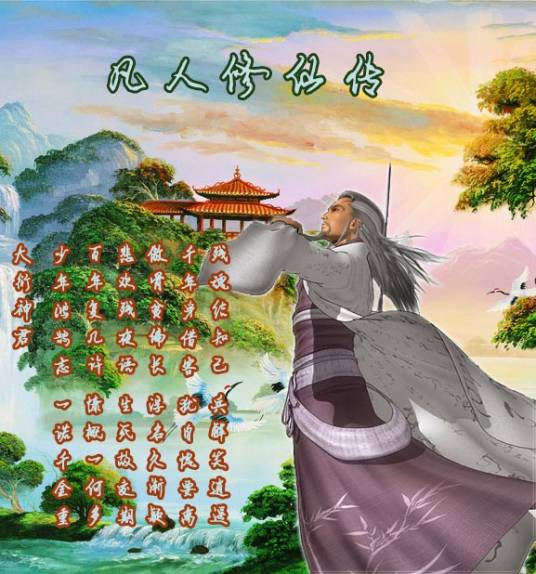
一个灵魂碎片的尊严
大衍神君第一次出场时,他已经死了。
准确地说,他是以"残魂"的形态存在的——生前是叱咤一方的化神期大修士,死后只剩下一缕不完整的神识,寄居在一件法宝之中。这缕残魂不具备完整的记忆,不拥有生前的修为,甚至不确定自己还能存在多久。
但就是这样一个残缺的存在,展现出了全书中最令人敬佩的品质之一:即便只剩下灵魂的碎片,也要活得有尊严。
大衍神君从不自怨自艾。他不哀叹自己的遭遇,不抱怨命运的不公,不纠结于生前的荣光。他清醒地认识到自己的处境——一个随时可能消散的残魂——然后在这个处境下做出了最理性的选择:与韩立合作,互利共生。
这种态度本身就是一种教科书级别的生存哲学。
天才的定义
什么是天才?
在修仙世界里,天才通常指天灵根、天赋异禀、修炼速度惊人的修士。但大衍神君的天才不在于此。他的天才在于理解力。
大衍决——他创立的功法——不是一套普通的修炼技巧。它本质上是一种元认知系统。修炼大衍决的核心不是积累灵力,而是提升对天地法则的理解能力。它让修炼者能更快地领悟其他功法的精髓,更高效地运用各种术法,更精准地把控战斗中的每一个变量。
换句话说,大衍决修炼的不是"力量",而是"智慧"。
能创造出这样一套功法的人,其思维深度远超同辈。大衍神君不仅是一个强大的修士,更是一个修仙世界的理论家。他试图从根本层面理解修仙的本质,并将这种理解系统化、可传承化。
这就是天才与强者的区别。 强者只需要打赢眼前的敌人,天才需要理解整个游戏的规则。
代价:天才的等式
大衍神君的一生,是"天才代价"这个主题的完美诠释。
他创立了大衍决,却没能凭借这套功法突破瓶颈。他在化神期止步不前,最终陨落。生前辉煌的成就——深厚的修为、渊博的学识、独创的功法——在死亡面前一文不值。
更讽刺的是,大衍决在他死后,反而在韩立手中发挥了最大的价值。韩立凭借大衍决提升的领悟力,在修仙之路上一路突破。
天才创造了工具,但受益者不是天才自己。
这种模式在人类历史上反复出现。尼古拉·特斯拉发明了交流电系统,但穷困潦倒地死去;梵高生前一幅画都卖不出去,死后作品价值数亿。天才的悲剧不在于他们不够强大,而在于他们的成果往往需要在他们之后的时代才能被充分利用。
大衍神君的"嫁衣"宿命,正是这种悲剧的修仙版本。
残魂阶段:最佳的导师
如果说大衍神君生前的故事是关于天才的代价,那么他残魂阶段的故事则是关于智慧的传承。
作为韩立的导师,大衍神君的表现堪称教科书级别。他教给韩立的不仅是功法和术法的运用技巧,更是一种思维方式。
仔细观察大衍神君的教导模式,你会发现几个显著特征:
第一,他从不包办。 大衍神君不会告诉韩立"你应该做A而不是B"。他会分析各种选择的利弊,然后让韩立自己做决定。这种教学方式比直接给答案更耗时,但培养出的是独立思考能力——韩立后来能在没有大衍神君指导的情况下应对各种危机,很大程度上得益于此。
第二,他坦率面对自身的局限。 大衍神君从不掩饰自己"不知道"的领域。当韩立面对的问题超出他的知识范围时,他会直接说"这个我不清楚",而不是装模作样地给出一个模糊的建议。这种诚实在修仙世界尤为珍贵——大多数师长都倾向于维持"无所不知"的形象。
第三,他尊重韩立的独立人格。 尽管在知识和经验上远超韩立,大衍神君从未试图控制韩立的选择。他把韩立视为一个独立的个体而非自己遗志的执行者。
师徒关系的本质
大衍神君与韩立的关系,严格来说不是传统的师徒关系。它更接近一种互利的合作。
大衍神君需要韩立提供维持残魂存在的条件,韩立需要大衍神君的知识和指导。两人的关系是建立在利益交换基础上的——这一点,双方都心知肚明。
但在这种功利性的框架下,两人之间确实生长出了某种超越利益的情感。大衍神君在韩立身上看到了自己的影子——同样谨慎、同样理性、同样有着不服输的执念。韩立在大衍神君身上看到了一种他所尊重的品质——即便只是一缕残魂,也保持着学者的好奇心和教育者的责任感。
这种在功利框架内生长出的真情实感,恰恰是凡人修仙传最擅长描写的关系类型。
忘语笔下的关系从来不是非黑即白的——不是纯粹的利益交换,也不是无条件的真心相待。它们总是两者兼有,混合着功利的算计和真诚的情感,让你无法清晰地划出一条分界线。
消散:最后的教导
大衍神君的残魂最终消散了。
这个结局是不可避免的——残魂的存在本身就是不稳定的,总有一天会耗尽最后的能量。大衍神君对此有清醒的预期,他从来没有幻想过自己能永远存在。
他的消散方式,是他给韩立的最后一课。
面对不可逆的终结,大衍神君没有恐惧,没有不甘,没有对韩立提出什么未了的请求。他坦然地接受了这个结局,就像接受一道数学题的最终解一样。
这种平静不是装出来的。它来自一种深刻的理解:生命的意义不在于它的长度,而在于它产生的影响。 大衍神君的肉身早已消亡,残魂也即将消散,但大衍决会继续存在,他的知识和智慧会通过韩立继续传播。
在修仙世界里,大多数修士追求的是长生——活得越久越好。大衍神君用他的存在方式证明了另一种可能:你可以在死后产生比生前更大的影响力。
天才与普通人
大衍神君的故事,最终指向了一个关于"天才"的深层思考。
在修仙世界里(也在现实世界里),天才面临着一个独特的困境:他们的思维超前于时代,但他们的生命受限于时间。
大衍神君理解的东西太多,走得太前。他创造的大衍决在他所处的时代没有得到充分利用的条件——直到韩立带着它走向了更高的境界。
这是天才永恒的命运:种下种子,看不到花开。
韩立不是天才。韩立是一个极其优秀的"普通人"——他的成功来自谨慎、勤奋和把握机遇的能力,而不是超凡的理解力。但正是这样一个"普通人",成为了天才成果的最佳执行者。
天才负责创造,普通人负责实现。 这不是天才的悲剧,而是知识传承的自然规律。大衍神君的悲剧只在于,他不得不在创造和实现之间选择了前者——不是因为他想选,而是因为命运没有给他选的余地。
结语
大衍神君是《凡人修仙传》中最安静的悲剧英雄。
他没有南陇侯那样戏剧化的堕落,没有紫灵那样令人心碎的痴情,没有元瑶那样深刻的身份危机。他只是一个已经死去的天才,以碎片化的形态继续发光发热,直到最后一缕光芒也消散在虚空之中。
但他留下的东西比他本人更持久。大衍决还在,韩立还在用它,整个修仙世界还在受益于他的智慧结晶。
这或许就是天才最好的结局——不是被记住,而是被使用。
他的名字可能会被遗忘,但他创造的东西会以另一种形式永远存在。
这不是不公平。这就是天才的使命。
The Dignity of a Soul Fragment
When Daoist Master Dayan (大衍神君) first appears, he is already dead.
More precisely, he exists as a "remnant soul" — in life he was a formidable Deity Transformation stage cultivator (one of the highest realms achievable in the mortal world, where a cultivator's spiritual power undergoes a fundamental metamorphosis) who commanded an entire region. After death, only a wisp of incomplete spiritual consciousness remained, inhabiting a magical artifact. This remnant soul possesses no complete memories, commands none of its former cultivation power, and is uncertain how much longer it can even continue to exist.
Yet this diminished being displayed one of the most admirable qualities in the entire novel: Even as nothing more than a fragment of a soul, he chose to live with dignity.
Daoist Master Dayan never wallows in self-pity. He doesn't lament his circumstances, doesn't complain about fate's unfairness, doesn't dwell on past glory. He clearly recognizes his situation — a remnant soul that could dissipate at any moment — and makes the most rational choice within that situation: cooperate with Han Li (韩立) for mutual benefit.
This attitude is itself a textbook lesson in survival philosophy.
Defining Genius
What is genius?
In the cultivation world, genius typically refers to cultivators with Heavenly Spiritual Roots, exceptional innate gifts, or astonishing cultivation speed. But Daoist Master Dayan's genius lies elsewhere. His genius lies in comprehension.
The Great Development Technique (大衍决) — the cultivation method he created — isn't an ordinary set of cultivation practices. It is fundamentally a metacognitive system. The core of practicing the Great Development Technique isn't accumulating spiritual power, but enhancing one's ability to understand the laws of heaven and earth. It enables practitioners to grasp the essence of other cultivation methods faster, utilize various techniques more efficiently, and control every variable in combat with greater precision.
In other words, the Great Development Technique cultivates not "power" but "wisdom."
Someone capable of creating such a method possessed a depth of thinking that far exceeded his peers. Daoist Master Dayan wasn't merely a powerful cultivator — he was a theoretician of the cultivation world. He sought to understand cultivation at its most fundamental level and to systematize that understanding into something transmissible.
This is the difference between genius and mere strength. The strong only need to defeat the enemy in front of them. A genius needs to understand the rules of the entire game.
The Price: The Genius Equation
Daoist Master Dayan's life is the perfect embodiment of the theme "the price of genius."
He created the Great Development Technique yet couldn't use it to break through his own bottleneck. He stalled at the Deity Transformation stage and ultimately perished. His brilliant lifetime achievements — profound cultivation, vast knowledge, an original technique — were worth nothing in the face of death.
More ironically, the Great Development Technique realized its greatest value only after his death, in Han Li's hands. Han Li used the enhanced comprehension from the Great Development Technique to break through barrier after barrier on the cultivation path.
The genius created the tool, but the beneficiary wasn't the genius himself.
This pattern recurs throughout human history. Nikola Tesla invented the alternating current system but died in poverty. Van Gogh couldn't sell a single painting in his lifetime; after death, his works became worth hundreds of millions. The tragedy of genius isn't that they're insufficiently capable, but that their achievements often require the era after them to be fully utilized.
Daoist Master Dayan's "making wedding clothes for others" fate is the cultivation-world version of this tragedy.
The Remnant Soul Phase: The Ideal Mentor
If Daoist Master Dayan's life story is about the price of genius, then his remnant soul phase is about the transmission of wisdom.
As Han Li's mentor, Daoist Master Dayan's performance is textbook-level excellent. What he taught Han Li wasn't just the practical application of techniques and spells, but a way of thinking.
Observe his teaching methods closely and you'll notice several distinctive features:
First, he never hand-holds. Daoist Master Dayan doesn't tell Han Li "you should do A rather than B." He analyzes the pros and cons of various options, then lets Han Li decide for himself. This teaching approach takes more time than simply giving answers, but it cultivates independent thinking — Han Li's ability to handle crises without Dayan's guidance later on is largely thanks to this.
Second, he frankly acknowledges his own limitations. Daoist Master Dayan never conceals the areas where his knowledge falls short. When Han Li faces problems beyond his expertise, he directly says "I don't know about this" rather than putting on an act with vague advice. This honesty is especially precious in the cultivation world, where most elders are inclined to maintain an "omniscient" image.
Third, he respects Han Li's independent personality. Despite far exceeding Han Li in knowledge and experience, Daoist Master Dayan never tries to control Han Li's choices. He treats Han Li as an independent individual rather than an executor of his unfinished legacy.
The True Nature of Their Master-Disciple Relationship
The relationship between Daoist Master Dayan and Han Li isn't a traditional master-disciple bond, strictly speaking. It's closer to mutually beneficial cooperation.
Dayan needs Han Li to provide conditions for maintaining his remnant soul's existence; Han Li needs Dayan's knowledge and guidance. Their relationship is built on interest exchange — a fact both parties understand perfectly well.
But within this utilitarian framework, something transcending mere interest genuinely grew between them. Daoist Master Dayan saw his own shadow in Han Li — equally cautious, equally rational, equally possessed of an unyielding determination. Han Li saw in Daoist Master Dayan a quality he respected — even as just a remnant soul, maintaining a scholar's curiosity and an educator's sense of responsibility.
This genuine emotion growing within a utilitarian framework is precisely the type of relationship A Record of a Mortal's Journey to Immortality excels at portraying.
Wang Yu's relationships are never black or white — never purely transactional interest exchange, never unconditional sincerity. They always contain both, blending calculated self-interest with authentic emotion, making it impossible to draw a clear dividing line.
Dissipation: The Final Lesson
Daoist Master Dayan's remnant soul eventually dissipated.
This outcome was inevitable — the very existence of a remnant soul is inherently unstable, destined to eventually exhaust its last energy. Dayan had clear-eyed expectations about this; he never entertained illusions of existing forever.
The manner of his dissipation was his final lesson to Han Li.
Facing irreversible termination, Daoist Master Dayan showed no fear, no resentment, no unfinished requests of Han Li. He accepted this ending with equanimity, as one accepts the final solution to a mathematical equation.
This calm wasn't performance. It came from a profound understanding: The meaning of life lies not in its length, but in the impact it generates. Daoist Master Dayan's physical body was long gone, and his remnant soul was about to dissipate, but the Great Development Technique would continue to exist, and his knowledge and wisdom would continue to spread through Han Li.
In the cultivation world, most cultivators pursue longevity — the longer the better. Daoist Master Dayan proved through his mode of existence that there is another possibility: You can generate greater influence after death than during life.
Genius and the Ordinary
Daoist Master Dayan's story ultimately points to a deeper reflection on "genius."
In the cultivation world (and in the real world), geniuses face a unique dilemma: their thinking is ahead of their time, but their lives are limited by time.
Daoist Master Dayan understood too much, walked too far ahead. The Great Development Technique he created couldn't be fully utilized in his own era — not until Han Li carried it to even higher realms.
This is the eternal fate of genius: planting seeds and never seeing the flowers bloom.
Han Li is not a genius. He's an extraordinarily excellent "ordinary person" — his success comes from caution, diligence, and the ability to seize opportunities, not from transcendent comprehension. But it was precisely this "ordinary person" who became the best executor of the genius's achievements.
Genius is responsible for creation; the ordinary are responsible for realization. This isn't the tragedy of genius but the natural law of knowledge transmission. Daoist Master Dayan's tragedy lies only in this: he had to choose between creation and realization — not because he wanted to choose, but because fate gave him no choice.
Closing
Daoist Master Dayan is the quietest tragic hero in A Record of a Mortal's Journey to Immortality.
He lacks Marquis Nanlong's dramatic downfall, Violet Spirit's heartbreaking devotion, or Yuan Yao's profound identity crisis. He is simply a genius who has already died, continuing to radiate in fragmented form until the last glimmer fades into the void.
But what he left behind outlasts him. The Great Development Technique endures, Han Li still uses it, and the entire cultivation world continues to benefit from his crystallized wisdom.
Perhaps this is the best ending for a genius — not to be remembered, but to be used.
His name may be forgotten, but what he created will exist forever in another form.
This isn't unfair. This is the mission of genius.