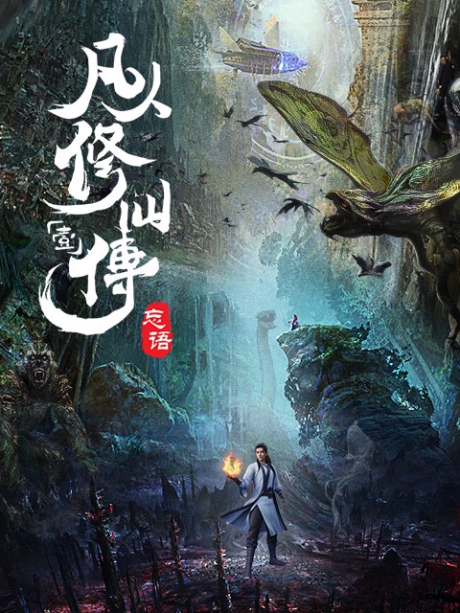
凡人修仙传的逻辑漏洞与可能解释
任何体量达数百万字的长篇小说,都难免存在前后不一的疏漏之处。《凡人修仙传》作为忘语历时多年的心血之作,整体质量在网络修仙小说中堪称上乘,但也并非无懈可击。本文将以公允的态度,逐一审视原著中较为显著的逻辑问题,并尝试从文本内部和写作背景两个维度给出可能的解释。
一、战力体系的波动
问题:越级战斗的标准不统一
韩立在不同阶段的越级战斗能力存在明显波动。在人间界时期,他凭借丰富的法宝和灵兽储备,多次以低境界击败高境界敌人,战力优势非常突出。然而进入灵界后,尽管他拥有的手段更加丰富,越级战斗的难度反而大幅增加,有时甚至面对同阶修士也需要苦战。
更突出的矛盾是,某些配角的战力表现前后差距悬殊。一位在早期被描述为"实力强横"的修士,可能在后续剧情中被远低于预期境界的对手轻易击败,或者在需要他发挥作用时突然"实力不济"。
可能的解释
从设定角度来看,灵界和人间界的修士质量有本质差异。人间界修士普遍资源匮乏、功法不全,因此同境界战力远低于灵界修士。韩立在人间界的越级优势,很大程度上源于他拥有在该世界属于"降维打击"级别的资源。进入灵界后,所有修士的基础水平提高,韩立的相对优势自然缩小。
从写作角度看,忘语需要不断制造紧张感,如果主角始终碾压同阶,剧情张力就会丧失。战力的适度波动是长篇连载中维持叙事节奏的必要手段。
二、时间线的模糊地带
问题:修炼时间与年龄的偶尔矛盾
修仙小说的时间跨度极大,韩立从凡人到飞升经历了数百年。在这漫长的时间线中,某些闭关修炼的时长与前后文对照时会出现不一致。例如,某次闭关被描述为"数十年",但前后事件的衔接似乎只过了数年。还有一些角色在韩立闭关期间的衰老程度与时间跨度不完全匹配。
可能的解释
忘语在创作过程中显然做了大量时间线笔记,因为绝大多数时间节点是准确的。偶尔出现的矛盾很可能是连载过程中的疏漏——每日更新的写作节奏下,跨越数百章的时间计算出现误差在所难免。此外,修仙世界中"洞天福地"的时间流速可能与外界不同,这为某些时间矛盾提供了设定层面的解释空间。
三、被淡化的设定
问题:五行灵根设定的后期弱化
在小说前期,灵根属性是决定修士发展方向的核心设定。韩立的木属性灵根对他的功法选择和战斗风格产生了深远影响。然而到了中后期,灵根属性的重要性被大幅淡化,取而代之的是各种机缘、功法、神通的综合比拼。许多后期出场的强者甚至很少提及其灵根属性。
可能的解释
这实际上可以理解为一种合理的设定演进:低阶修士受灵根限制大,因为他们需要依赖灵根来感应天地灵气;而高阶修士已经超越了这一层次,灵根不再是瓶颈。正如现实中,天赋对初学者影响巨大,但到了顶尖领域,努力、机遇和选择的权重往往更高。这种设定弱化或许不是漏洞,而是暗含的世界观逻辑。
问题:炼器和阵法知识的断续
韩立在不同阶段都展现过炼器和布阵的能力,但这些技能的运用非常不均匀。有时他会花大量精力炼制法宝或布置阵法,有时又完全不提这些技能,直到剧情需要时才突然"想起来"。
可能的解释
作为一部以冒险和战斗为主线的小说,炼器和阵法属于辅助技能线。忘语需要在有限的篇幅内推进主线剧情,不可能每次都详细描写韩立的日常修炼内容。合理的推测是韩立在"镜头之外"持续精进这些技能,只是作者选择性地展示其中最关键的节点。
四、角色行为的前后矛盾
问题:某些反派的"降智"表现
部分反派角色在初次登场时被描绘为老谋深算之辈,但在与韩立的对决中却犯下不合身份的低级错误。最典型的表现是明明有机会一击毙命,却选择"先说两句狠话",给了韩立逃脱或反击的机会。
可能的解释
这是整个修仙小说类型的通病,并非忘语独有的问题。不过在《凡人修仙传》中,这种情况相对少见,忘语已经比同时期大多数作者更加注意反派的合理性。从设定角度看,修仙者动辄活数百年,养成了自信甚至傲慢的性格,面对低阶修士时掉以轻心也符合人性。韩立自己也承认,他能多次死里逃生,很大程度上得益于敌人的轻视。
问题:韩立的情感表达不一致
韩立被定位为"重情重义但理智冷静"的角色,但在不同情节中,他对同伴的态度似乎存在落差。有时他会冒生命危险救助朋友,有时又对旧识的困境表现得相当冷淡。
可能的解释
这恰恰可能是忘语最出色的角色塑造之一。韩立不是一个道德完人,他的行为受到当时处境和利害判断的影响。当他有能力帮助时,他愿意伸出援手;当帮助他人意味着自身毁灭时,他会选择自保。这种"有限度的善良"正是"凡人"二字的精髓——他不是圣人,而是一个在残酷修仙世界中努力保持底线的普通人。将这视为"矛盾",不如说是对人性复杂性的真实呈现。
五、世界观层面的疑问
问题:各界之间的实力断层过于悬殊
从人间界到灵界,再到仙界,每一层世界的实力水准都是指数级提升。人间界元婴期已是顶尖,灵界元婴期只是中等偏下,仙界则真仙遍地走。这种设计在制造升级快感的同时,也让人间界的一切显得极其渺小和无意义。
可能的解释
这种"阶梯式世界观"是忘语为长篇连载量身定制的结构。每次世界升级都相当于"重置"紧张感,让读者重新体验主角从弱到强的成长快感。从设定角度说,各界天地灵气浓度的巨大差异合理解释了修士质量的差距——灵气匮乏的人间界自然无法培育出与灵界匹敌的强者。
客观总结
总的来看,《凡人修仙传》的逻辑问题多数属于长篇连载难以完全避免的技术性瑕疵,而非根本性的世界观崩坏。忘语在修仙小说中展现了远超平均水准的严谨态度,尤其在战力体系的大框架和主线剧情的逻辑链上做得相当扎实。上述问题更像是巨幅画卷上的几处微小色差,不影响整体画面的壮阔与精美。
真正值得尊重的是忘语面对这些问题的态度——在可控范围内尽力弥补,而不是越补越乱。在网络文学的创作环境中,这已经是非常难得的品质。
Plot Holes in A Record of a Mortal's Journey to Immortality and Possible Explanations
Any novel spanning millions of words will inevitably contain inconsistencies. A Record of a Mortal's Journey to Immortality, the magnum opus that author Wang Yu (忘语) labored on for years, stands as one of the finest works in the web novel cultivation genre -- but it is not without its flaws. This article will examine the novel's most notable logical issues with a fair-minded approach, while attempting to provide possible explanations from both textual and creative perspectives.
I. Fluctuations in the Power System
The Problem: Inconsistent Standards for Cross-Realm Combat
Han Li's (韩立) ability to fight opponents above his level fluctuates noticeably across different arcs. During the Mortal Realm period, his rich arsenal of magical artifacts and spirit beasts allowed him to repeatedly defeat higher-realm enemies, giving him a pronounced combat advantage. Yet upon entering the Spirit Realm, despite having even more tools at his disposal, cross-realm combat becomes significantly harder -- sometimes he even struggles against cultivators of the same level.
An even more glaring contradiction involves certain supporting characters whose combat prowess varies wildly. A cultivator described as "formidably powerful" early on might later be easily defeated by an opponent far below expected strength, or suddenly become "inadequate" precisely when the plot needs them to step up.
Possible Explanations
From a worldbuilding perspective, there is a fundamental difference in cultivator quality between the Spirit Realm and the Mortal Realm. Mortal Realm cultivators generally suffer from scarce resources and incomplete cultivation methods, so their combat power at the same realm is far inferior to Spirit Realm cultivators. Han Li's cross-realm advantage in the Mortal Realm largely stemmed from possessing resources that were essentially "overpowered" for that world. Once in the Spirit Realm, where every cultivator's baseline improves, Han Li's relative edge naturally shrinks.
From a writing perspective, Wang Yu needs to continually create tension. If the protagonist always steamrolls same-level opponents, dramatic stakes evaporate. Moderate power fluctuations are a necessary tool for maintaining narrative rhythm in a long-running serialized novel.
II. Timeline Gray Areas
The Problem: Occasional Contradictions Between Cultivation Duration and Age
Cultivation novels span enormous timescales -- Han Li's journey from mortal to ascension covers several centuries. Within this vast timeline, certain closed-door cultivation periods don't quite align when cross-referenced with surrounding events. For example, a retreat described as "several decades" may be followed by narrative events that seem only a few years apart. Some characters also age in ways that don't perfectly match the stated time spans during Han Li's seclusions.
Possible Explanations
Wang Yu clearly maintained extensive timeline notes during the creative process, as the vast majority of temporal markers are accurate. The occasional contradictions are most likely oversights in the serialization process -- under the pressure of daily chapter updates, calculation errors across hundreds of chapters are virtually unavoidable. Additionally, "blessed grounds" (洞天福地) in the cultivation world may have different time flow rates than the outside world, providing an in-universe explanation for some temporal discrepancies.
III. Fading Settings
The Problem: The Diminishing Importance of Spirit Root Attributes in Later Arcs
In the novel's early stages, spirit root attributes are the core setting determining a cultivator's developmental path. Han Li's Wood-attribute spirit root profoundly influenced his cultivation method choices and combat style. However, by the middle and later portions, the importance of spirit root attributes fades dramatically, replaced by a comprehensive competition of opportunities, cultivation methods, and divine abilities. Many powerful figures who appear later rarely even mention their spirit root attributes.
For context: "Spirit roots" (灵根) are innate elemental affinities that determine a person's ability to cultivate in this fictional universe -- somewhat analogous to natural talent or genetic predisposition in real-world terms.
Possible Explanations
This can actually be understood as a logical evolution of the setting: low-level cultivators are heavily constrained by spirit roots because they rely on them to sense the spiritual energy of heaven and earth. Higher-level cultivators have transcended this limitation, and spirit roots are no longer a bottleneck. Much like in the real world, natural talent has an enormous impact on beginners, but at the pinnacle, effort, opportunity, and choices often carry far greater weight. This fading emphasis may not be a plot hole at all, but rather an implicit piece of worldbuilding logic.
The Problem: Inconsistent Use of Artifact Refining and Formation Knowledge
Han Li demonstrates artifact refining and formation array skills at various stages, but the application of these abilities is very uneven. Sometimes he devotes great effort to crafting magical artifacts or setting up formations; other times these skills go completely unmentioned until the plot suddenly requires him to "remember" them.
Possible Explanations
As a novel primarily driven by adventure and combat, artifact refining and formation arrays are auxiliary skill lines. Wang Yu needs to advance the main storyline within limited space and cannot describe Han Li's daily cultivation routine every time. The reasonable inference is that Han Li continues honing these skills "off-screen," and the author selectively showcases only the most critical milestones.
IV. Character Behavior Inconsistencies
The Problem: Villains Suffering from "Plot Stupidity"
Some antagonists are portrayed as cunning and calculating upon their debut, yet make embarrassingly basic mistakes when confronting Han Li. The most typical manifestation: having a clear opportunity to deliver a killing blow, they instead choose to "monologue threateningly" first, giving Han Li a chance to escape or counterattack.
This is a well-known trope sometimes called the "villain monologue" problem, common across many genres of fiction, not just Chinese web novels.
Possible Explanations
This is a common pitfall across the entire cultivation novel genre, not unique to Wang Yu. That said, such instances are relatively rare in A Record of a Mortal's Journey to Immortality -- Wang Yu already pays far more attention to antagonist plausibility than most contemporaries. From an in-universe perspective, cultivators who have lived for centuries inevitably develop confidence bordering on arrogance. Letting their guard down against lower-realm cultivators is consistent with human nature. Han Li himself acknowledges that many of his narrow escapes were largely due to his enemies underestimating him.
The Problem: Inconsistency in Han Li's Emotional Expression
Han Li is positioned as someone "loyal and righteous but rationally cool-headed," yet his attitude toward companions seems to vary in different arcs. Sometimes he risks his life to save friends; other times he responds quite coldly to old acquaintances' plights.
Possible Explanations
This may actually be one of Wang Yu's finest achievements in character writing. Han Li is not a moral paragon -- his behavior is influenced by his current circumstances and risk-benefit calculations. When he has the ability to help, he willingly extends a hand; when helping others means his own destruction, he chooses self-preservation. This "bounded goodness" is the very essence of the word "mortal" -- he is not a saint, but an ordinary person trying to maintain a moral baseline in a ruthless cultivation world. Rather than viewing this as a "contradiction," it is better understood as a truthful portrayal of human complexity.
V. Worldbuilding Questions
The Problem: The Extreme Power Gap Between Realms
From the Mortal Realm to the Spirit Realm, then to the Immortal Realm, each successive world represents an exponential leap in power levels. A Nascent Soul cultivator is already top-tier in the Mortal Realm, merely below-average in the Spirit Realm, and commonplace in the Immortal Realm. While this design creates upgrade excitement, it also makes everything in the Mortal Realm seem infinitely insignificant.
Possible Explanations
This "tiered worldview" is a structure Wang Yu custom-built for long-form serialization. Each world upgrade essentially "resets" the tension, allowing readers to re-experience the thrill of the protagonist growing from weak to strong. From a setting perspective, the vast differences in spiritual energy concentration between realms logically explain the gap in cultivator quality -- the spiritually barren Mortal Realm naturally cannot produce cultivators who rival those of the Spirit Realm.
An Objective Summary
Overall, the logical issues in A Record of a Mortal's Journey to Immortality are mostly technical blemishes that are nearly impossible to avoid in long-form serialization, rather than fundamental worldbuilding collapses. Wang Yu demonstrates a level of rigor far above the average for cultivation novels, particularly in the overall framework of the power system and the logical chain of the main plot. The issues discussed above are more like a few minor color discrepancies on a vast canvas -- they don't diminish the grandeur and beauty of the whole picture.
What truly deserves respect is Wang Yu's attitude toward these issues -- doing his best to address them within manageable scope rather than making things worse with ill-considered patches. In the creative environment of web literature, this is a remarkably rare quality.