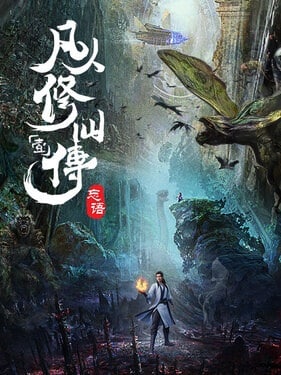
引言:修仙界也逃不开经济规律
凡人修仙传之所以被誉为"修仙界的现实主义作品",一个重要原因在于它对修仙世界经济运行的深度描写。忘语笔下的修仙界绝非仙气飘飘的世外桃源,而是一个资源高度稀缺、竞争无比残酷的经济体。在这个体系中,灵石就是硬通货,修炼资源就是核心资产,而修为等级则直接决定了个体在经济活动中的议价能力。
灵石:修仙界的货币体系
灵石的货币属性
灵石在凡人修仙传中承担了通货的几乎全部功能——计价单位、交换媒介、价值储藏。低阶灵石、中阶灵石、上品灵石构成了类似金银铜的多级货币结构。值得注意的是,灵石本身还具有使用价值——修士可以直接吸取其中的灵气辅助修炼,这使得灵石兼具"商品货币"和"信用货币"的双重属性。
这一设定带来一个深刻的经济学含义:灵石永远不会"贬值"。凡人世界中,黄金可能因为新矿脉的发现而贬值,纸币更是可以无限印刷。但灵石因其本身的修炼价值,维持了内在购买力的稳定性。这也解释了为什么灵石能跨越地域、门派甚至人妖界限成为通用货币。
灵石的流通与积累
韩立早期的经历完美展示了底层修士的灵石困境。在七玄门时期,韩立获取灵石的渠道极其有限——宗门分配少得可怜,只能通过执行任务、交易丹药等方式艰难积累。这与现实世界中底层劳动者面临的"流动性陷阱"如出一辙:越是缺乏资本,就越难以积累资本。
反观大宗门的元婴期老祖,动辄以数万灵石进行交易,且坐拥灵脉产出的稳定收入。修仙界的财富分配遵循着比现实世界更极端的幂律分布——少数高阶修士掌控了绝大部分资源。
宗门经济:一个微型计划经济体
内门与外门:制度化的不平等
每个宗门本质上都是一个计划经济体,而内门弟子与外门弟子的划分则是这种经济体制中最核心的分配机制。以黄枫谷为例:
- 外门弟子:领取基本的修炼资源配给,需要完成大量任务换取额外灵石,修炼功法受限
- 内门弟子:资源配给远超外门,有权进入灵脉区域修炼,获得长老亲自指导
这种分配模式的经济学逻辑在于"投资回报率"——宗门将有限资源集中投入到资质更优的内门弟子身上,期望获得更高的修为产出。从宏观角度看,这是一种理性的资源配置策略。但从微观角度看,它制造了巨大的不公——许多外门弟子终生困于低阶,并非因为努力不足,而是因为资源不足。
韩立在黄枫谷从外门弟子到内门弟子的跃迁,本质上是一次阶层跨越。而这种跨越之所以困难,恰恰因为制度本身就在固化不平等。
灵脉:不可再生的核心资产
宗门选址必据灵脉,灵脉的品质直接决定了宗门的上限。这使得灵脉成为修仙界最重要的"不动产"。围绕灵脉的争夺,是大量宗门战争的直接导火索。天南修仙界正道与魔道的对峙,表面是道统之争,底层是灵脉和修炼区域的资源争夺。
灵脉还催生了"资源诅咒"现象:拥有顶级灵脉的宗门反而可能因为资源丰裕而内部腐化,弟子缺乏危机意识。这在某些大宗门的衰落历程中得到了印证。
散修经济:弱肉强食的自由市场
坊市:修仙界的自由贸易区
如果宗门是计划经济体,那坊市就是修仙界的自由市场。韩立多次在坊市中进行交易,从丹药、法器到功法秘籍,几乎所有修炼资源都能在坊市中找到。
坊市的经济学特征极为鲜明:信息严重不对称(卖方往往比买方更了解商品价值)、缺乏有效的合约执行机制(交易后反悔甚至杀人夺宝时有发生)、且存在大量灰色交易。这与早期人类社会的集市贸易惊人地相似。
散修的生存困境
没有宗门依托的散修,面临着比外门弟子更严峻的经济困境。他们没有稳定的资源配给,必须在危险的野外采集灵药、猎杀妖兽来换取灵石。许多散修被迫铤而走险进入秘境或从事非法交易,这也是修仙界"乱象"的经济根源。
韩立在乱星海时期以散修身份活动的经历,充分展现了散修经济的残酷性。没有背景的散修就像没有工会保护的零工劳动者,随时可能被更强大的势力掠夺。
经济因素驱动的核心冲突
资源稀缺与修为瓶颈
凡人修仙传中几乎每一次重大冲突都可以追溯到经济根源。韩立早期冒险进入禁地,是因为缺乏突破瓶颈所需的灵药。南宫候的堕落,部分原因是为了获取突破化神期所需的天材地宝。即便是正魔大战,其深层动因也是对修炼资源日趋紧张的争夺。
忘语通过这些情节揭示了一个深刻的道理:在资源有限的世界里,道德往往是奢侈品。修士们并非天生残忍,而是稀缺性迫使他们做出残酷的选择。
炼丹术:唯一的"生产革命"
在整个修仙经济体系中,炼丹术是最接近"科技进步"的存在。一位高阶炼丹师能将低价值的灵草转化为高价值的丹药,实现真正的价值创造。韩立依靠小瓶催熟灵草、批量炼制丹药的能力,本质上掌握了一条独特的"产业链",这是他能从底层散修崛起的经济基础。
如果用现代经济学术语来描述,韩立的小瓶就是一项颠覆性技术——它打破了灵草生长周期的自然约束,实现了"农业革命"级别的产出提升。
结语
凡人修仙传的世界观之所以令人信服,很大程度上是因为它构建了一套自洽的经济系统。灵石货币、宗门分配、坊市交易、散修生存——这些经济要素不是背景板,而是驱动情节发展的底层引擎。韩立的修仙之路,从经济学视角来看,就是一个资源匮乏的底层个体,通过独特的"技术优势"不断积累资本、突破阶层壁垒的过程。这种叙事之所以打动人心,恰恰因为它映射了现实世界中每个普通人面临的相同困境。
Introduction: Even the Cultivation World Cannot Escape Economics
One of the key reasons A Record of a Mortal's Journey to Immortality is hailed as "the realist novel of cultivation fiction" lies in its deep portrayal of how the cultivation world's economy operates. Under Wang Yu's (忘语) pen, the cultivation world is far from an ethereal paradise of floating immortals -- it is an economic system defined by extreme resource scarcity and ruthless competition. In this system, spirit stones are hard currency, cultivation resources are core assets, and a cultivator's realm directly determines their bargaining power in economic activity.
Spirit Stones: The Monetary System of the Cultivation World
The Monetary Properties of Spirit Stones
Spirit stones in the novel fulfill nearly every function of currency -- unit of account, medium of exchange, and store of value. Low-grade, mid-grade, and high-grade spirit stones form a multi-tiered monetary structure similar to copper, silver, and gold coins. Notably, spirit stones also have intrinsic use value -- cultivators can directly absorb the spiritual energy (lingqi) within them to aid cultivation, giving spirit stones the dual properties of both "commodity money" and "fiat money."
This design carries a profound economic implication: spirit stones can never truly "depreciate." In the mortal world, gold might lose value with the discovery of new mines, and paper money can be printed without limit. But because spirit stones retain inherent cultivation value, their purchasing power remains fundamentally stable. This also explains why spirit stones can serve as universal currency across regions, sects, and even the boundary between humans and demon beasts.
Circulation and Accumulation of Spirit Stones
Han Li's (韩立) early experiences perfectly illustrate the spirit stone dilemma facing low-level cultivators. During his time at the Seven Mysteries Sect (七玄门), his channels for acquiring spirit stones were extremely limited -- sect allocations were pitiful, and he could only accumulate them painstakingly through completing missions and trading pills. This mirrors the "liquidity trap" faced by laborers at the bottom of real-world economies: the less capital you have, the harder it is to accumulate more.
By contrast, Nascent Soul (元婴, Yuanying) patriarchs of major sects casually transact in tens of thousands of spirit stones while enjoying steady income from spirit vein production. Wealth distribution in the cultivation world follows a power law even more extreme than the real world -- a handful of high-level cultivators control the vast majority of resources.
Sect Economics: A Micro-Scale Planned Economy
Inner and Outer Disciples: Institutionalized Inequality
Every sect is essentially a planned economy, and the division between inner and outer disciples is the most fundamental allocation mechanism within this system. Taking Yellow Maple Valley (黄枫谷, Huang Feng Gu) as an example:
- Outer disciples: Receive basic cultivation resource rations, must complete large numbers of missions for additional spirit stones, and face restrictions on cultivation techniques
- Inner disciples: Receive far greater resource allocations, have access to spirit vein cultivation areas, and receive personal guidance from elders
The economic logic behind this allocation model is "return on investment" -- sects concentrate limited resources on inner disciples with superior aptitude, expecting higher cultivation output. From a macro perspective, this is a rational resource allocation strategy. But from the micro perspective, it creates enormous unfairness -- many outer disciples remain trapped at low levels for life, not because they lack effort, but because they lack resources.
Han Li's leap from outer to inner disciple at Yellow Maple Valley was essentially a class transition. And such transitions are difficult precisely because the system itself entrenches inequality.
Spirit Veins: Non-Renewable Core Assets
Sects must be established atop spirit veins (lingmai), and the quality of a spirit vein directly determines a sect's ceiling. This makes spirit veins the most important "real estate" in the cultivation world. Disputes over spirit veins are the direct trigger for countless sect wars. The confrontation between the righteous and demonic paths in the Tian Nan (天南) cultivation world may appear to be an ideological conflict on the surface, but at its core, it is a struggle over spirit veins and cultivation territory.
Spirit veins also give rise to a "resource curse" phenomenon: sects possessing top-tier spirit veins may actually suffer internal corruption due to resource abundance, with disciples lacking any sense of crisis. This pattern is confirmed in the decline of certain major sects.
Independent Cultivator Economics: A Survival-of-the-Fittest Free Market
Market Towns: The Cultivation World's Free Trade Zones
If sects are planned economies, then market towns (fangshi) are the cultivation world's free markets. Han Li conducts transactions at market towns on numerous occasions, trading everything from pills and magical tools to technique manuals -- virtually all cultivation resources can be found there.
The economic characteristics of market towns are striking: severe information asymmetry (sellers typically know far more about an item's value than buyers), lack of effective contract enforcement mechanisms (post-transaction betrayal and even murder for treasure are common occurrences), and widespread gray-market dealings. This bears a remarkable resemblance to marketplace trade in early human societies.
The Survival Dilemma of Independent Cultivators
Independent cultivators (sanxiu) without sect backing face an even harsher economic predicament than outer disciples. They have no stable resource allocations and must venture into dangerous wilderness to gather spirit herbs and hunt demon beasts for spirit stones. Many independent cultivators are forced to take desperate risks entering secret realms or engaging in illicit trade -- this is the economic root of the cultivation world's "chaos."
Han Li's experiences operating as an independent cultivator in the Scattered Star Seas (乱星海, Luan Xing Hai) fully demonstrate the brutality of the independent cultivator economy. An unaffiliated cultivator is like a gig worker without union protection -- vulnerable to exploitation by more powerful forces at any moment.
Core Conflicts Driven by Economics
Resource Scarcity and Cultivation Bottlenecks
Nearly every major conflict in the novel can be traced back to economic roots. Han Li's early ventures into forbidden grounds were driven by his lack of the spirit medicines needed to break through bottlenecks. Nangong Hou's (南宫候) fall was partly due to his pursuit of heavenly treasures needed to break through to the Deity Transformation (化神, Huashen) stage. Even the great war between the righteous and demonic factions had resource competition as its deeper motivation.
Through these plot lines, Wang Yu reveals a profound truth: in a world of limited resources, morality is often a luxury. Cultivators are not inherently cruel -- it is scarcity that forces them to make ruthless choices.
Alchemy: The Only "Industrial Revolution"
Within the entire cultivation economic system, alchemy is the closest thing to "technological progress." A high-level alchemist can transform low-value spirit herbs into high-value pills, achieving genuine value creation. Han Li's ability to use his mysterious small bottle to accelerate spirit herb growth and mass-produce pills essentially gave him control of a unique "supply chain" -- this was the economic foundation that enabled him to rise from a bottom-tier independent cultivator.
In modern economic terms, Han Li's small bottle is a disruptive technology -- it broke the natural constraint of spirit herb growth cycles, achieving an output increase on par with an "agricultural revolution."
Conclusion
The worldbuilding of A Record of a Mortal's Journey to Immortality is compelling in large part because it constructs a self-consistent economic system. Spirit stone currency, sect allocation, market town trade, independent cultivator survival -- these economic elements are not mere backdrop but the underlying engine driving the plot forward. From an economic perspective, Han Li's path of cultivation is the story of a resource-starved individual from the bottom using a unique "technological advantage" to continuously accumulate capital and break through class barriers. This narrative resonates precisely because it mirrors the same struggles every ordinary person faces in the real world.