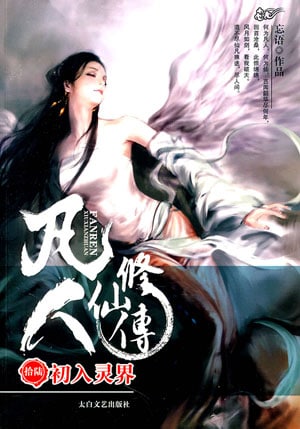
引言:修仙小说的世界观光谱
修仙小说发展至今,已形成了极为丰富的世界观光谱。从忘语的凡人修仙传到耳根的仙逆、辰东的遮天、天蚕土豆的斗破苍穹,每部作品都构建了独特的修仙宇宙。将凡人修仙传的世界观放入这个光谱中进行比较,不仅能更清晰地看到它的独特之处,也能加深我们对修仙小说世界观设计范式的理解。
修炼体系对比
凡人修仙传:资源驱动的渐进体系
凡人修仙传的修炼体系以"资源积累"为核心驱动力。从炼气到渡劫,每一步突破都需要大量的灵石、灵药、功法和时间。修为的提升更像是一个投资回报过程——投入足够的资源和努力,才能获得相应的修为回报。
这种体系的特点是可预测性强。一位修士只要拥有足够的资源和资质,他的修炼路径是大致可以规划的。韩立正是这种体系的典型受益者——他的每一次突破都建立在长期的资源积累之上,几乎不依赖突然的"顿悟"或"血脉觉醒"。
仙逆:意志与道的哲学体系
耳根的仙逆将修炼与"道"的领悟深度绑定。王林的修仙之路不仅是实力的提升,更是对天道、命运、因果等哲学命题的不断思考和突破。仙逆的修炼体系中,"悟道"的重要性往往超过资源积累——一次深刻的领悟可能带来跨越数个大境界的飞跃。
与凡人修仙传相比,仙逆的修炼体系更加"唯心"——修士的心境和意志力是决定性因素。这使得仙逆的战斗更具戏剧性(逆境中悟道逆转战局),但也在合理性上稍显不足。
遮天:血脉与天命的宏大体系
辰东的遮天构建了一个以"帝"为最高层级的修炼体系。在这个体系中,血脉传承和天命选择扮演了极其重要的角色。拥有特殊体质或远古血脉的修士天然就在修炼道路上领先数个身位。
遮天的修炼体系最显著的特征是天花板极高。从仙到帝,从帝到至高无上的存在,力量的上限被不断推高。这种设计带来了极强的史诗感,但也导致了"战力膨胀"的问题——早期令人惊叹的强者在后期可能变得微不足道。
斗破苍穹:异火系统的游戏化体系
天蚕土豆的斗破苍穹以"异火"为核心构建了一套高度游戏化的修炼体系。异火排行榜、丹会竞赛、家族势力等设定使得修炼过程更像一个角色扮演游戏——目标明确,进度可视。
斗破苍穹的修炼体系最大的优点是直观易懂,读者能清楚地感知主角的成长进度。但其代价是世界观的深度相对有限——修炼更多是力量的叠加,而非对世界本质的探索。
世界观结构对比
空间层次
四部作品在空间结构上呈现出不同的设计思路:
| 作品 | 空间结构 | 特点 |
|---|---|---|
| 凡人修仙传 | 人界→灵界→仙界 | 层层递进,每一界都有完整生态 |
| 仙逆 | 凡界→修真界→仙界→更高层次 | 嵌套结构,暗含"天外有天"的哲学 |
| 遮天 | 五域→大宇宙→更高维度 | 横向铺展,地域辽阔 |
| 斗破苍穹 | 斗气大陆→中州→古族领地 | 同一平面的层级递进 |
凡人修仙传的空间设计最为"质朴"——每一界的差异主要体现在灵气浓度和修士层次上,而非本质性的法则变化。这种设计虽然不如遮天那般恢弘,却保证了世界观的一致性和可信度。
社会生态
凡人修仙传在社会生态的构建上远超同类作品。忘语详细描绘了宗门的运作机制、散修的生存状态、坊市的交易规则、宗门之间的外交博弈——这些细节构成了一个令人信服的"修仙社会"。
相比之下,仙逆更侧重于个体修士的精神世界,对社会结构的描写较为粗略。遮天的社会生态宏大但偏于概念化——圣地、帝族、神朝等概念令人印象深刻,但具体的运作细节较少。斗破苍穹的社会结构最为简单直接——家族、宗门、帝国的层级清晰,但缺乏凡人修仙传那种"经济学"层面的深度。
历史纵深
四部作品都运用了"上古文明"的设定来增加世界观的历史厚度,但处理方式各有不同:
凡人修仙传的上古历史是碎片化的——通过秘境遗迹、古籍残篇、老怪物的只言片语拼凑出远古的轮廓。这种处理方式非常克制,保留了大量的想象空间,也避免了过度解释带来的逻辑漏洞。
仙逆的历史线索与主线情节深度交织,远古的真相往往是推动剧情发展的关键动力。遮天的历史叙事最为宏大,从远古到太古再到荒古,时间跨度以纪元计量,历史本身成为了世界观中最壮观的部分。斗破苍穹的上古历史相对薄弱,主要服务于解释特定设定(如远古八族)的来源。
主角与世界的关系
韩立:世界的参与者
韩立与其所处世界的关系是"参与者"而非"改变者"。他在世界的规则框架内行动,利用规则而非打破规则。即便修为达到极高境界,韩立也没有试图重塑世界秩序——他始终是一个在既有体系中寻求生存和发展空间的个体。
这种定位使得凡人修仙传的世界观保持了独立于主角的完整性——世界不是为韩立而存在的,韩立只是这个世界中无数修士之一。
对比:改变者与天命之子
王林(仙逆)与世界的关系更具对抗性——他质疑天道、挑战命运,最终试图改写世界的底层规则。叶凡(遮天)则是"天命之子"模式的典型——他的存在本身就与世界的终极秘密相关联。萧炎(斗破苍穹)的成长路线最为传统——从弱到强,逐步征服更大的世界。
这种比较揭示了凡人修仙传在修仙小说中的独特定位:它是一部世界观优先于主角的作品。忘语先构建了一个自洽的世界,然后让韩立在其中自然行动,而非围绕主角的成长需求来反向设计世界。
凡人修仙传的独特贡献
"凡人视角"的革命
在凡人修仙传之前,修仙小说的主角大多具备某种先天优势——特殊体质、远古传承、神秘师父。忘语选择了一个灵根平庸、出身贫寒、没有任何先天优势的"凡人"作为主角,这不仅是人设层面的创新,更是世界观设计理念的根本变革。
因为主角是"凡人",所以世界观必须足够真实——不能存在只有主角才能触发的特殊机制,不能有只服务于主角成长的"巧合"。这种约束反过来推动忘语构建了一个更加严谨和自洽的修仙世界。
经济系统的开创
凡人修仙传可能是第一部认真对待修仙世界经济系统的网络小说。灵石货币、资源分配、宗门经济——这些在其他作品中一笔带过的设定,在凡人修仙传中被发展为影响情节走向的核心要素。
克制的美学
与遮天的恢弘壮阔、仙逆的哲学深邃、斗破苍穹的热血爽快相比,凡人修仙传的世界观设计体现了一种"克制的美学"。它不追求力量的无限升级,不构建宇宙级别的终极冲突,而是在一个相对有限的框架内追求最大程度的真实感和逻辑自洽。
这种克制使得凡人修仙传在"爽感"上可能不如某些同类作品,但在世界观的经得起推敲方面,几乎没有竞争对手。
结语
将凡人修仙传置于修仙小说的世界观光谱中审视,它的独特性愈加清晰:这是一部以"真实感"为最高追求的修仙作品。天南修仙界不是最宏大的世界,不是最神秘的世界,但可能是最"真实"的世界——在这里,经济规律有效,社会阶层存在,个体的选择受到客观条件的严格约束。正是这种扎根于现实逻辑的世界观设计,使得凡人修仙传在众多修仙小说中独树一帜,成为"凡人流"的开山之作和不可逾越的标杆。
Introduction: The Worldbuilding Spectrum of Cultivation Fiction
Cultivation fiction (xianxia/xiuxian novels) has developed an extraordinarily rich spectrum of worldbuilding. From Wang Yu's (忘语) A Record of a Mortal's Journey to Immortality to Er Gen's (耳根) Renegade Immortal (仙逆), Chen Dong's (辰东) Shrouding the Heavens (遮天), and Heavenly Silkworm Potato's (天蚕土豆) Battle Through the Heavens (斗破苍穹), each work constructs a unique cultivation universe. Placing A Record of a Mortal's Journey to Immortality's worldbuilding within this spectrum not only clarifies its distinctive qualities but also deepens our understanding of worldbuilding paradigms in cultivation fiction.
Note for Western readers: Cultivation fiction (xiuxian xiaoshuo) is a major genre of Chinese fantasy literature where characters pursue immortality through martial and spiritual practices. "Xianxia" literally means "immortal hero" and blends Daoist philosophy, martial arts, and fantasy elements.
Cultivation System Comparison
A Record of a Mortal's Journey to Immortality: A Resource-Driven Incremental System
The cultivation system in Mortal's Journey is driven by "resource accumulation" at its core. From Qi Refining (炼气) to Tribulation Transcendence (渡劫), every breakthrough requires vast quantities of spirit stones, spirit medicines, techniques, and time. Cultivation advancement resembles an investment return process -- invest sufficient resources and effort, receive corresponding cultivation returns.
This system's defining characteristic is high predictability. A cultivator with sufficient resources and aptitude can roughly plan their cultivation path. Han Li (韩立) exemplifies this system -- each of his breakthroughs was built on long-term resource accumulation, with almost no reliance on sudden "epiphanies" or "bloodline awakenings."
Renegade Immortal: A Philosophical System of Will and Dao
Er Gen's Renegade Immortal deeply binds cultivation to comprehension of the "Dao" (道, the Way). Wang Lin's cultivation journey is not merely a growth in power but continuous contemplation and breakthroughs regarding philosophical questions of heavenly law, fate, and causality. In Renegade Immortal's cultivation system, "Dao comprehension" often outweighs resource accumulation -- a single profound realization can trigger a leap across several major realms.
Compared to Mortal's Journey, Renegade Immortal's system is more "idealistic" -- a cultivator's mental state and willpower are the decisive factors. This makes Renegade Immortal's combat scenes more dramatic (achieving breakthroughs through adversity-driven enlightenment), though somewhat less rigorous in terms of logical consistency.
Shrouding the Heavens: A Grand System of Bloodlines and Destiny
Chen Dong's Shrouding the Heavens constructs a cultivation system with "Emperor" (帝, Di) as its apex tier. Bloodline inheritance and destined selection play extremely important roles. Cultivators possessing special constitutions or ancient bloodlines inherently start several steps ahead on the cultivation path.
The most notable feature of Shrouding the Heavens' system is its extremely high ceiling. From Immortal to Emperor, from Emperor to supreme beings beyond -- the upper limits of power are continuously pushed higher. This design creates a powerful epic feel but also leads to "power inflation" -- powerhouses who seemed awe-inspiring in early chapters may become insignificant later.
Battle Through the Heavens: A Gamified System Built Around Heavenly Flames
Heavenly Silkworm Potato's Battle Through the Heavens constructs a highly gamified cultivation system centered on "Heavenly Flames" (异火). The Heavenly Flame rankings, alchemist competitions, and clan power dynamics make the cultivation process feel like a role-playing game -- clear objectives and visible progress.
The greatest strength of Battle Through the Heavens' system is its intuitive accessibility, allowing readers to clearly perceive the protagonist's growth. But the tradeoff is relatively limited worldbuilding depth -- cultivation is primarily an accumulation of power rather than an exploration of the world's fundamental nature.
Worldbuilding Structure Comparison
Spatial Dimensions
The four works exhibit different design philosophies in spatial structure:
| Work | Spatial Structure | Characteristics |
|---|---|---|
| Mortal's Journey | Mortal Realm -> Spirit Realm -> Immortal Realm | Progressive layers, each realm with a complete ecosystem |
| Renegade Immortal | Mortal World -> Cultivation World -> Immortal Realm -> Higher Planes | Nested structure, implying "heavens beyond heavens" |
| Shrouding the Heavens | Five Domains -> Greater Universe -> Higher Dimensions | Horizontal expansion, vast territories |
| Battle Through the Heavens | Dou Qi Continent -> Central Region -> Ancient Clan Domains | Tiered progression on a single plane |
Mortal's Journey's spatial design is the most "grounded" -- differences between realms are primarily expressed through spiritual energy concentration and cultivator tiers rather than fundamental changes in natural law. While not as grandiose as Shrouding the Heavens, this design ensures worldbuilding consistency and credibility.
Social Ecology
Mortal's Journey far surpasses its peers in social ecology construction. Wang Yu meticulously depicts sect operational mechanisms, independent cultivator survival conditions, market town trading rules, and inter-sect diplomatic maneuvering -- these details constitute a convincing "cultivation society."
By comparison, Renegade Immortal focuses more on individual cultivators' spiritual worlds, with relatively sketchy social structure descriptions. Shrouding the Heavens' social ecology is grand but conceptually oriented -- Holy Lands, Imperial Clans, and Divine Dynasties are impressive concepts but lack operational details. Battle Through the Heavens has the simplest social structure -- clans, sects, and empires form clear tiers but lack Mortal's Journey's "economics-level" depth.
Historical Depth
All four works employ "ancient civilization" settings to add historical richness, but each handles this differently:
Mortal's Journey's ancient history is fragmented -- pieced together through secret realm ruins, surviving ancient texts, and scattered remarks from old monsters. This restrained approach preserves ample imaginative space while avoiding logical inconsistencies that overexplanation might create.
Renegade Immortal deeply interweaves historical threads with its main plot, with ancient truths often serving as key drivers of narrative development. Shrouding the Heavens has the most grandiose historical narrative, with timescales measured in epochs spanning from the Remote Antiquity to the Desolate Era, making history itself the most spectacular part of the worldbuilding. Battle Through the Heavens' ancient history is relatively thin, primarily serving to explain specific settings (such as the origins of the Ancient Eight Clans).
The Protagonist's Relationship with the World
Han Li: A Participant in the World
Han Li's relationship with his world is that of a "participant" rather than a "changer." He operates within the world's existing rules, utilizing them rather than breaking them. Even at the highest cultivation levels, Han Li never attempted to reshape the world order -- he remained an individual seeking survival and development within the existing system.
This positioning allows Mortal's Journey's world to maintain an integrity independent of the protagonist -- the world does not exist for Han Li; Han Li is merely one of countless cultivators within it.
Comparison: Changers and Children of Destiny
Wang Lin (Renegade Immortal) has a more confrontational relationship with his world -- he questions heavenly law, challenges fate, and ultimately seeks to rewrite the world's underlying rules. Ye Fan (Shrouding the Heavens) is the quintessential "child of destiny" -- his very existence is linked to the world's ultimate secrets. Xiao Yan (Battle Through the Heavens) follows the most traditional growth arc -- from weak to strong, progressively conquering a larger world.
This comparison reveals Mortal's Journey's unique position in the cultivation fiction landscape: it is a work where worldbuilding takes priority over the protagonist. Wang Yu first constructed a self-consistent world, then let Han Li act naturally within it, rather than reverse-engineering the world around the protagonist's growth needs.
The Unique Contributions of A Record of a Mortal's Journey to Immortality
The Revolution of the "Mortal's Perspective"
Before Mortal's Journey, most cultivation novel protagonists possessed some innate advantage -- a special constitution, ancient inheritance, or mysterious master. Wang Yu's choice of a protagonist with mediocre spiritual roots, impoverished origins, and zero innate advantages was not merely a character design innovation but a fundamental shift in worldbuilding philosophy.
Because the protagonist is a "mortal," the worldbuilding must be sufficiently realistic -- there can be no special mechanisms triggered only by the protagonist, no "coincidences" existing solely to serve the protagonist's growth. This constraint in turn drove Wang Yu to build a more rigorous and self-consistent cultivation world.
Pioneering the Economic System
Mortal's Journey may be the first web novel to seriously engage with the cultivation world's economic system. Spirit stone currency, resource allocation, sect economics -- settings that other works gloss over in a sentence are developed in Mortal's Journey into core elements that influence the direction of the plot.
The Aesthetics of Restraint
Compared to Shrouding the Heavens' epic grandeur, Renegade Immortal's philosophical depth, and Battle Through the Heavens' hot-blooded excitement, Mortal's Journey's worldbuilding embodies an "aesthetics of restraint." It does not pursue infinite power escalation or construct cosmos-level ultimate conflicts, but instead pursues maximum realism and logical consistency within a relatively bounded framework.
This restraint may make Mortal's Journey less "thrilling" than certain peers, but in terms of worldbuilding that holds up under scrutiny, it has virtually no competitors.
Conclusion
Placing A Record of a Mortal's Journey to Immortality within the cultivation fiction worldbuilding spectrum makes its uniqueness increasingly clear: this is a cultivation work that pursues "realism" as its highest ideal. Tian Nan's cultivation world is not the grandest, not the most mysterious, but is perhaps the most "real" -- here, economic laws function, social stratification exists, and individual choices are strictly constrained by objective conditions. It is precisely this worldbuilding grounded in realistic logic that sets Mortal's Journey apart from the multitude of cultivation novels, making it the founding work of the "mortal protagonist" subgenre and an unsurpassed benchmark.