引言:无政府不等于无秩序
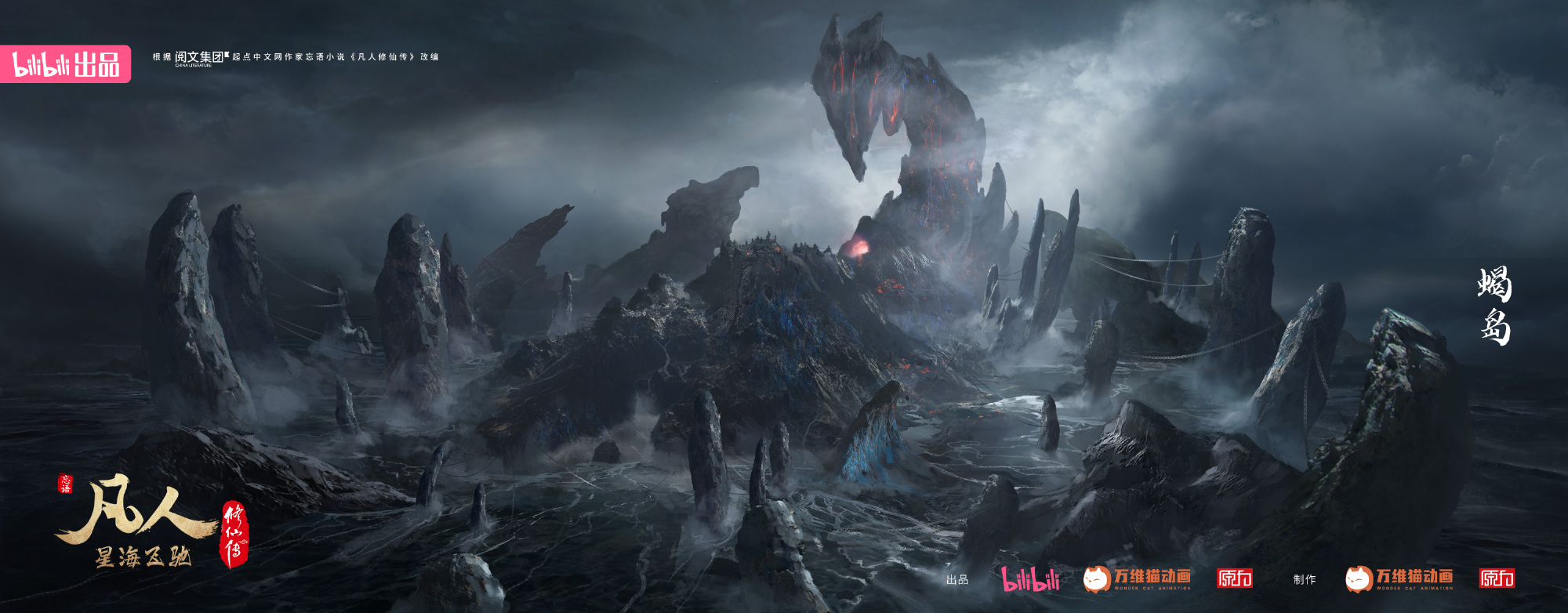
乱星海,名如其实——这片散布着无数岛屿的辽阔海域,没有统一的法律、没有公认的政府、没有成文的国际规则。然而,任何认为乱星海是一片纯粹混乱的人都犯了一个根本性的错误。政治学家们早已证明,无政府状态(anarchy)并不等同于混乱(chaos)——它只是意味着没有"凌驾于各方之上"的中央权威。在这种状态下,秩序依然会涌现,只不过它建立在力量、信誉和自发制度之上,而非成文法和官僚体系之上。
乱星海正是这种"自发秩序"的绝佳案例。
地理决定命运
乱星海的无政府状态并非偶然形成,而是由其地理条件所决定。数以万计的岛屿散布在茫茫大海之中,彼此间距离遥远,任何单一势力都无法有效控制全部领域。这与陆地上的修仙势力截然不同——天南的宗门可以通过占据灵脉来控制领土,但在乱星海,灵脉分散于各个岛屿,集中控制的成本远高于收益。
这种地理格局天然地促成了去中心化的权力结构。每个大岛就是一个独立的政治单元,岛上势力或宗门拥有事实上的主权。小岛则往往成为散修的栖息地、海盗的巢穴或走私者的中转站。岛屿之间的广阔海域构成了天然的缓冲区,使得战争的成本极高而收益不确定——你可以花费巨大代价攻下一个岛屿,但很难在远离本岛的地方维持长期占领。
双极体系:星宫与天星双圣
尽管没有中央权威,乱星海并非完全的群雄割据。在韩立到达乱星海的时代,这片海域已经形成了以星宫和天星双圣为两极的准双极体系。
星宫是乱星海最大的修仙势力,拥有多名元婴修士和庞大的附属势力网络。它的权力基础不仅在于军事实力,更在于其对贸易网络的控制。星宫控制着乱星海最重要的几条贸易航线和交易集市,通过征收过路费和交易税来维持自身运转。从某种意义上说,星宫不是乱星海的"政府",而是乱星海的"基础设施提供商"——它提供安全的交易环境,以此换取经济利益。
天星双圣则代表了另一种权力模式。他们的权力更多建立在个人的绝对武力之上——作为乱星海修为最高的存在之一,天星双圣本身就是一支战略力量。他们麾下聚集了大量追随者,形成了足以与星宫分庭抗礼的势力集团。这种以个人武力为核心的权力模式在有中央权威的社会中并不稳定,但在无政府状态下却有其独特的优势:决策迅速、行动果断、不受官僚体制的束缚。
两极之间的博弈塑造了乱星海的基本秩序。双方都清楚,全面战争将导致两败俱伤,因此维持了一种紧张但可控的对峙状态。这种双极对峙为整个乱星海提供了一个粗略的安全框架——虽然不能阻止所有冲突,但至少阻止了大规模的毁灭性战争。
海盗经济学
乱星海最引人注目的特征之一是其猖獗的海盗活动。从经济学角度看,海盗并非简单的暴力犯罪,而是无政府状态下一种理性的经济行为。
当没有中央权威来保护产权和执行合同时,暴力就成为最基本的经济手段。修士投入修炼资源来提升实力,然后通过劫掠来获取回报——这与投入资本进行商业投资在逻辑上并无本质区别,只是手段不同。更重要的是,在乱星海,"海盗"与"商人"的界限极其模糊。许多修士在实力占优时选择劫掠,在实力不足时选择贸易,在特定场合则两者兼施。
韩立初入乱星海时的经历完美地展示了这种逻辑。在这里,每一次出行都是一次风险投资——你可能发现珍贵的灵矿,也可能遭遇强敌。生存的关键不在于你有多强,而在于你能否准确评估风险并做出正确的选择。韩立的成功很大程度上归功于他对风险的精确计算:何时战、何时退、何时隐、何时显,每一步都是精算后的理性选择。
贸易网络与信任机制
尽管暴力横行,乱星海依然存在着活跃的贸易网络。这看似矛盾,实则合理——贸易带来的收益往往高于劫掠,前提是交易双方能建立最基本的信任。
在缺乏法律保障的环境中,信任的建立依赖于三种替代机制:
声誉系统。 长期活跃于乱星海的商人和宗门会积累声誉,而声誉本身就是一种有价值的资产。背信弃义者会被列入黑名单,失去未来的交易机会。这种分布式的信誉机制虽然远不如法律体系完善,但在熟人网络中依然有效。
实力担保。 当交易双方实力差距悬殊时,强者的"自我约束"本身就构成信任——一个元婴修士不太可能为了几颗灵石而损害自己的声誉去欺骗一个筑基修士。实力越强,违约的机会成本越高。
第三方仲裁。 星宫在其控制的交易市场中事实上扮演着仲裁者的角色。在星宫的市场中交易虽然需要缴纳费用,但交易安全得到了一定保障。这使得星宫的市场成为乱星海最重要的贸易节点——修士们愿意为安全和确定性支付溢价。
韩立在乱星海:个体与体系的互动
韩立在乱星海的经历是一个个体如何适应无政府体系的经典案例。他没有依附于任何一方势力,而是以独立修士的身份在各方势力间游走。这种策略在无政府状态下有其独特的优势:没有组织的束缚意味着最大的灵活性,而灵活性在混乱的环境中往往比规模更重要。
韩立参与星宫与天星双圣的冲突,并非出于对某方的忠诚,而是基于利益的理性计算。当他判断参与某一方能为自己带来最大收益时,他会果断行动;当局势不利时,他也会毫不犹豫地抽身而退。这种彻底的实用主义在宗门体系中可能被视为不忠,但在乱星海的无政府环境中,它是最优的生存策略。
更深层地看,韩立在乱星海的崛起改变了当地的权力平衡。一个新晋元婴修士的出现,就足以改变整个海域的力量格局——这正说明了无政府体系的脆弱性:它缺乏吸收冲击的制度缓冲,任何一个强大个体的加入或退出都可能引发连锁反应。
乱星海模式的启示
乱星海的存在提出了一个根本性问题:秩序是否必须依赖中央权威?凡人修仙传给出的答案是复杂的——乱星海确实在没有中央权威的情况下维持了基本的秩序,但这种秩序是脆弱的、不均匀的、对弱者极不友好的。低阶修士在这里的处境远比在天南更为险恶,因为没有宗门体系提供的最基本保护。
从这个意义上说,乱星海是修仙世界丛林法则的最纯粹表达:实力就是一切,弱者没有权利,秩序是强者为了自身利益而提供的公共产品。它让我们看到了一个没有伪装的世界——天南的正道宗门至少会用道德叙事来修饰赤裸裸的权力关系,而乱星海连这层遮羞布都不需要。
这或许就是韩立在乱星海的最大收获:不是某件法宝或某门功法,而是对修仙世界本质的更深刻认知——一切秩序的根基,终究是力量。
Introduction: Anarchy Does Not Equal Disorder
The Scattered Star Seas (乱星海, Luan Xing Hai) -- a name that lives up to its meaning. This vast expanse of ocean scattered with countless islands has no unified law, no recognized government, and no written international rules. Yet anyone who thinks the Scattered Star Seas is a place of pure chaos makes a fundamental error. Political scientists have long demonstrated that anarchy does not equate to chaos -- it merely means the absence of a central authority "above all parties." In such a state, order still emerges; it simply rests on power, reputation, and spontaneous institutions rather than codified law and bureaucracy.
The Scattered Star Seas is an excellent case study in this kind of "spontaneous order."
Geography Determines Destiny
The anarchic state of the Scattered Star Seas was not formed by accident but dictated by its geographic conditions. Tens of thousands of islands are scattered across a vast ocean, separated by great distances. No single force can effectively control the entire domain. This stands in stark contrast to mainland cultivation powers -- Tian Nan (天南) sects can control territory by occupying spirit veins, but in the Scattered Star Seas, spirit veins are dispersed across individual islands, making the cost of centralized control far greater than the benefits.
This geographic layout naturally promotes a decentralized power structure. Each major island functions as an independent political unit, with the island's dominant force or sect holding de facto sovereignty. Smaller islands often serve as habitats for independent cultivators, pirate lairs, or smuggling waypoints. The vast stretches of open sea between islands act as natural buffer zones, making war extremely costly with uncertain returns -- you can expend enormous resources to conquer an island, but maintaining long-term occupation far from your home base is near-impossible.
The Bipolar System: Star Palace and the Starry Sky Sages
Despite the absence of central authority, the Scattered Star Seas was not a pure free-for-all. By the time Han Li (韩立) arrived, the region had developed into a quasi-bipolar system centered on Star Palace (星宫, Xing Gong) and the Starry Sky Sages (天星双圣, Tianxing Shuangsheng).
Star Palace was the largest cultivation force in the Scattered Star Seas, possessing multiple Nascent Soul (元婴) cultivators and a vast network of subordinate forces. Its power base rested not only on military strength but more critically on its control of trade networks. Star Palace controlled the most important trade routes and marketplaces, sustaining itself through transit tolls and transaction taxes. In a sense, Star Palace was not the "government" of the Scattered Star Seas but its "infrastructure provider" -- it offered a secure trading environment in exchange for economic benefits.
The Starry Sky Sages represented a different model of power. Their authority was built more on absolute personal military force -- as among the highest-level cultivators in the Scattered Star Seas, the Sages themselves constituted a strategic force. They attracted large numbers of followers, forming a power bloc capable of rivaling Star Palace. This power model centered on individual martial prowess is typically unstable in societies with central authority, but in an anarchic state, it has unique advantages: rapid decision-making, decisive action, and freedom from bureaucratic constraints.
The rivalry between these two poles shaped the Scattered Star Seas' basic order. Both sides understood that total war would result in mutual destruction, thus maintaining a tense but manageable standoff. This bipolar standoff provided a rough security framework for the entire region -- while it could not prevent all conflicts, it at least prevented large-scale destructive wars.
Pirate Economics
One of the Scattered Star Seas' most striking features was its rampant piracy. From an economic perspective, piracy was not simple violent crime but a rational economic behavior under anarchic conditions.
Without central authority to protect property rights and enforce contracts, violence becomes the most basic economic tool. Cultivators invest resources to enhance their strength, then seek returns through plunder -- logically, this is no different from investing capital in commercial ventures; only the methods differ. More importantly, in the Scattered Star Seas, the line between "pirate" and "merchant" was extremely blurred. Many cultivators chose plunder when they held the advantage in strength, trade when they did not, and sometimes employed both simultaneously.
Han Li's early experiences in the Scattered Star Seas perfectly demonstrated this logic. Here, every expedition was a venture investment -- you might discover precious spirit ore, or you might encounter a powerful enemy. The key to survival was not how strong you were, but whether you could accurately assess risks and make correct choices. Han Li's success owed much to his precise risk calculus: when to fight, when to retreat, when to hide, when to reveal himself -- every step was a rational choice made after careful calculation.
Trade Networks and Trust Mechanisms
Despite the prevalence of violence, an active trade network still existed in the Scattered Star Seas. This seems contradictory but is actually logical -- trade returns often exceed those from plunder, provided the parties can establish minimal trust.
In an environment lacking legal protections, trust-building relied on three substitute mechanisms:
Reputation systems. Merchants and sects active in the Scattered Star Seas over extended periods accumulated reputations, and reputation itself was a valuable asset. Those who broke faith would be blacklisted, losing future trading opportunities. This distributed reputation mechanism, while far less refined than a legal system, remained effective within networks of acquaintances.
Strength guarantees. When the power gap between trading parties was enormous, the stronger party's "self-restraint" itself constituted trust -- a Nascent Soul cultivator was unlikely to damage their reputation by cheating a Foundation Establishment (筑基) cultivator over a few spirit stones. The stronger one was, the higher the opportunity cost of defaulting.
Third-party arbitration. Star Palace effectively played the role of arbitrator in the marketplaces it controlled. While trading in Star Palace markets required fees, transaction security was reasonably guaranteed. This made Star Palace's markets the most important trade nodes in the Scattered Star Seas -- cultivators were willing to pay a premium for safety and certainty.
Han Li in the Scattered Star Seas: Individual and System
Han Li's experience in the Scattered Star Seas is a classic case of how an individual adapts to an anarchic system. He aligned himself with no faction, instead navigating between various powers as an independent cultivator. This strategy had unique advantages in an anarchic state: freedom from organizational constraints meant maximum flexibility, and in chaotic environments, flexibility often matters more than scale.
Han Li's involvement in the conflict between Star Palace and the Starry Sky Sages was not driven by loyalty to either side but by rational interest calculation. When he judged that joining one side would bring maximum benefit, he acted decisively; when the situation turned unfavorable, he withdrew without hesitation. This thoroughgoing pragmatism might be viewed as disloyalty within a sect system, but in the anarchic environment of the Scattered Star Seas, it was the optimal survival strategy.
At a deeper level, Han Li's rise in the Scattered Star Seas altered the local power balance. The appearance of a single newly advanced Nascent Soul cultivator was enough to shift the entire region's power structure -- a testament to the fragility of anarchic systems: they lack institutional buffers to absorb shocks, meaning any powerful individual's entry or exit can trigger chain reactions.
Lessons from the Scattered Star Seas Model
The Scattered Star Seas raises a fundamental question: must order depend on central authority? A Record of a Mortal's Journey to Immortality gives a complex answer -- the Scattered Star Seas did maintain basic order without central authority, but that order was fragile, uneven, and extremely hostile to the weak. Low-level cultivators fared far worse here than in Tian Nan, because no sect system provided even the most basic protections.
In this sense, the Scattered Star Seas is the purest expression of the cultivation world's law of the jungle: strength is everything, the weak have no rights, and order is a public good provided by the strong for their own benefit. It shows us a world without pretense -- the righteous sects of Tian Nan at least used moral narratives to dress up naked power relations, while the Scattered Star Seas did not even need that fig leaf.
This was perhaps Han Li's greatest takeaway from the Scattered Star Seas: not any particular magical treasure or technique, but a deeper understanding of the cultivation world's true nature -- that the foundation of all order is, ultimately, power.