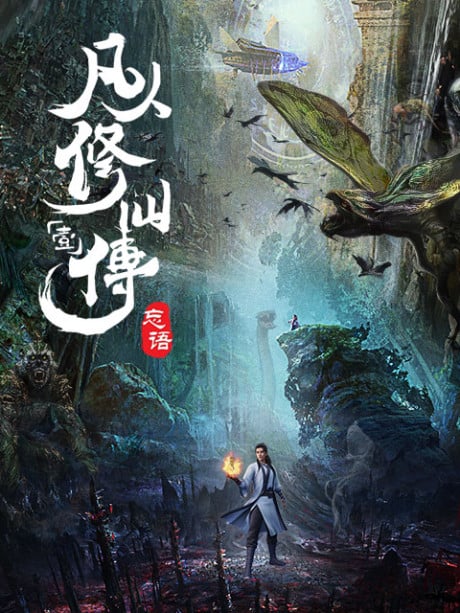
人界篇完整剧情梳理
总览:一部凡人的史诗
人界篇是《凡人修仙传》的根基与灵魂,涵盖了从韩立入七玄门到飞升灵界的全部历程。这段叙事横跨数百年修炼岁月,却始终保持着"凡人视角"的核心基调。忘语在人界篇中构建了一套极为成熟的叙事节奏系统——松弛有度、层层递进,使得读者在漫长的阅读过程中始终保持紧迫感与沉浸感。
第一阶段:七玄门与江湖试炼(开篇至炼气期)
故事以韩立被墨大夫收入七玄门为起点。这一阶段的叙事节奏极为克制,忘语刻意用大量笔墨描写韩立在七玄门中学艺、种药、与张铁等人交往的日常。这种"慢热"开局在修仙小说中极为罕见,但恰恰奠定了全书的写实基调。
关键转折:韩立发现自己修炼资质低下,无法突破炼气第四层。这个设定是全书最重要的叙事引擎——它直接驱动了韩立对外物辅助(丹药、灵药、奇遇)的持续追求,也为后续所有"以弱胜强"的桥段提供了合理性基础。
七玄门血夜之变是人界篇第一个真正的高潮。墨大夫的真实身份揭露,韩立被迫卷入江湖仇杀,被迫服下毒丹,由此开始了流亡生涯。这个转折的精妙之处在于:它将修仙世界的残酷性在极早期就展现给读者,同时也展现给韩立本人。
第二阶段:黄枫谷与修仙界初探(筑基至结丹)
进入修仙界后,叙事节奏明显加快。韩立加入黄枫谷,参加血色试炼,与厉飞雨等人的互动开始展现修仙界的门派政治生态。这一阶段的叙事特点是"探索式推进"——韩立作为一个低阶修士,对修仙界的了解与读者同步增长。
节奏分析:忘语在这一阶段采用了"任务驱动"的叙事模式。每一次外出历练都围绕一个明确目标——寻找筑基丹材料、参与血色试炼、执行门派任务。这种模式让叙事始终有明确的方向感,避免了修仙小说常见的"无目的升级"弊病。
乱星海历练是这一阶段的核心大事件。韩立在此结识了多位重要配角,获得了天雷竹等关键资源,更重要的是,他的处事风格在此阶段基本定型——谨慎、务实、不轻信任何人。
第三阶段:元婴期与天南大战
结丹之后的叙事发生了质变。韩立不再是被动应对的小角色,开始主动介入天南修仙界的格局。天南大战是人界篇中规模最大的群体冲突,魔道入侵的叙事线将数十个此前零散出现的角色和势力串联起来。
结构精妙之处:天南大战并非突然爆发,而是通过前期数百章的铺垫逐步酝酿。魔道修士的渗透、正道联盟的组建、各门派的算计,这些线索在战争爆发前已经埋设完毕。这种"慢火煮沸"的叙事方式使得大战爆发时具有强烈的宿命感。
韩立在大战中的定位非常精准——他既是关键战力,又不是决定胜负的唯一因素。这种平衡感是忘语叙事能力的集中体现。
第四阶段:化神期与飞升准备
突破元婴后期直至化神期,叙事重心从门派争斗转向个人修炼与天地探索。韩立前往大晋、星海等地的经历,在地理空间上极大拓展了人界的世界观。与此同时,古魔的威胁为即将结束的人界篇提供了终极危机。
飞升前的叙事收束:忘语在韩立飞升前精心安排了一系列告别——与南宫婉的重逢、对黄枫谷的最后回望、与故人的道别。这些安排使得飞升不仅是修为的突破,更是一个人生阶段的完整终结。
为何人界篇经久不衰
人界篇的持久魅力源于三个核心要素。其一,成长的真实感。韩立的每一次进步都有迹可循,没有无缘由的暴涨,没有突兀的金手指。其二,世界观的渐次展开。从小小的七玄门到天南修仙界,再到整个人界版图,世界观的扩展与主角实力的增长完美同步。其三,人际关系的厚度。韩立与墨彩环、南宫婉、厉飞雨等人的关系发展跨越百年,这种时间尺度赋予了人物关系独特的分量。
从叙事结构看,人界篇本质上是一个经典的"英雄之旅"——离开家乡、试炼成长、获得力量、面对终极考验、踏上新征程。但忘语通过"凡人"这一核心设定,将这个古老的叙事模式注入了全新的生命力。韩立不是天选之子,他的每一步都充满不确定性,这种不确定性正是人界篇最令人着迷的叙事张力。
Complete Plot Analysis of the Mortal Realm Arc
Overview: An Epic of the Ordinary
The Mortal Realm Arc is the foundation and soul of A Record of a Mortal's Journey to Immortality (凡人修仙传). It encompasses Han Li's (韩立) entire journey from entering the Seven Mysteries Sect to ascending to the Spirit Realm. This narrative spans hundreds of years of cultivation, yet consistently maintains the core tone of a "mortal's perspective." In the Mortal Realm Arc, the author Wang Yu (忘语, literally "Forgotten Words") constructed a remarkably mature narrative pacing system — measured and progressive — keeping readers engaged with a sense of urgency and immersion throughout the lengthy reading experience.
Phase One: The Seven Mysteries Sect and Jianghu Trials (Opening to Qi Condensation)
The story begins with Han Li being taken in by Doctor Mo (墨大夫, Mo Dafu) and admitted to the Seven Mysteries Sect (七玄门). The narrative pacing of this phase is extremely restrained. Wang Yu deliberately devotes substantial attention to Han Li's daily life at the sect — studying martial arts, tending medicinal herbs, and interacting with peers like Zhang Tie (张铁). This "slow burn" opening is exceedingly rare in cultivation novels, yet it establishes the realistic tone that defines the entire work.
Cultural Context: In xianxia fiction, the jianghu (江湖, literally "rivers and lakes") refers to the broader martial world — a semi-lawless realm of wandering fighters, sects, and feuds. It functions much like the "underworld" in Western fiction, operating outside normal society's rules.
Key Turning Point: Han Li discovers that his cultivation aptitude is mediocre — he cannot break through the fourth layer of Qi Condensation. This setting is the novel's most important narrative engine. It directly drives Han Li's relentless pursuit of external aids (pills, spiritual herbs, fortunate encounters) and provides a logical foundation for all subsequent "defeating the strong while weak" scenarios.
The Bloody Night of the Seven Mysteries Sect is the first true climax of the Mortal Realm Arc. Doctor Mo's true identity is exposed, Han Li is dragged into a deadly feud, and he is forced to consume a poisoned pill, thus beginning his life as a fugitive. The brilliance of this turning point lies in how it reveals the cruelty of the cultivation world at an extremely early stage — both to the reader and to Han Li himself.
Phase Two: Yellow Maple Valley and First Steps into the Cultivation World (Foundation Establishment to Core Formation)
After entering the cultivation world, the narrative pace noticeably quickens. Han Li joins Yellow Maple Valley (黄枫谷, Huang Feng Gu), participates in the Scarlet Trial, and his interactions with Li Feiyu (厉飞雨) begin to reveal the political ecosystem of cultivation sects. The narrative hallmark of this phase is "exploration-driven progression" — as a low-ranking cultivator, Han Li's understanding of the cultivation world grows in lockstep with the reader's.
Pacing Analysis: During this phase, Wang Yu employs a "mission-driven" narrative mode. Each outing revolves around a clear objective — searching for Foundation Establishment Pill ingredients, participating in the Scarlet Trial, carrying out sect missions. This approach gives the narrative a constant sense of direction, avoiding the common cultivation novel pitfall of "aimless power-leveling."
The Scattered Star Seas adventure is the central event of this phase. Here, Han Li meets several important supporting characters, acquires key resources like the Heavenly Lightning Bamboo (天雷竹), and more importantly, his behavioral style crystallizes — cautious, pragmatic, and trusting no one.
Phase Three: Nascent Soul Stage and the Great Battle of Tiannan
After Core Formation, the narrative undergoes a qualitative shift. Han Li is no longer a passive reactor; he begins to actively shape the dynamics of the Tiannan (天南, "Southern Sky") cultivation world. The Great Battle of Tiannan is the largest group conflict in the Mortal Realm Arc, with the Demonic Dao invasion weaving together dozens of previously scattered characters and factions into a single narrative thread.
Structural Brilliance: The Great Battle of Tiannan doesn't erupt suddenly — it simmers through hundreds of chapters of buildup. The infiltration of Demonic Dao cultivators, the formation of the Righteous Alliance, the scheming of various sects — all these threads are laid well before the war breaks out. This "slow boil" narrative approach gives the eruption of war a powerful sense of inevitability.
Han Li's positioning during the war is precisely calibrated — he is a key combat asset, yet not the sole factor determining victory or defeat. This balance is a concentrated demonstration of Wang Yu's narrative craft.
Phase Four: Deity Transformation Stage and Preparation for Ascension
From late Nascent Soul breakthroughs through Deity Transformation, the narrative focus shifts from sect rivalries to personal cultivation and exploration of heaven and earth. Han Li's journeys to Da Jin (大晋) and the Star Sea vastly expand the Mortal Realm's worldbuilding. Simultaneously, the threat of the Ancient Demons provides an ultimate crisis for the concluding arc.
Narrative Convergence Before Ascension: Before Han Li's ascension, Wang Yu carefully arranges a series of farewells — his reunion with Nangong Wan (南宫婉), a final look back at Yellow Maple Valley, and goodbyes to old friends. These arrangements ensure that the ascension represents not merely a cultivation breakthrough, but the complete conclusion of an entire chapter of life.
Why the Mortal Realm Arc Endures
The lasting appeal of the Mortal Realm Arc stems from three core elements. First, the authenticity of growth. Every step of Han Li's progress can be traced — there are no unexplained power surges, no jarring plot devices. Second, the gradual unfolding of the world. From the tiny Seven Mysteries Sect to the entire Tiannan cultivation world, then to the full map of the Mortal Realm — the world's expansion perfectly synchronizes with the protagonist's growing strength. Third, the depth of relationships. Han Li's bonds with Mo Caihuan (墨彩环), Nangong Wan, Li Feiyu, and others develop across centuries, and this time scale imbues each relationship with extraordinary weight.
From a narrative structure perspective, the Mortal Realm Arc is essentially a classic "Hero's Journey" — leaving home, trials and growth, gaining power, facing the ultimate test, and setting out on a new path. But through the core premise of "mortal," Wang Yu infuses this ancient narrative template with fresh vitality. Han Li is not a chosen one. Every step he takes is fraught with uncertainty, and that uncertainty is the most captivating source of narrative tension in the Mortal Realm Arc.