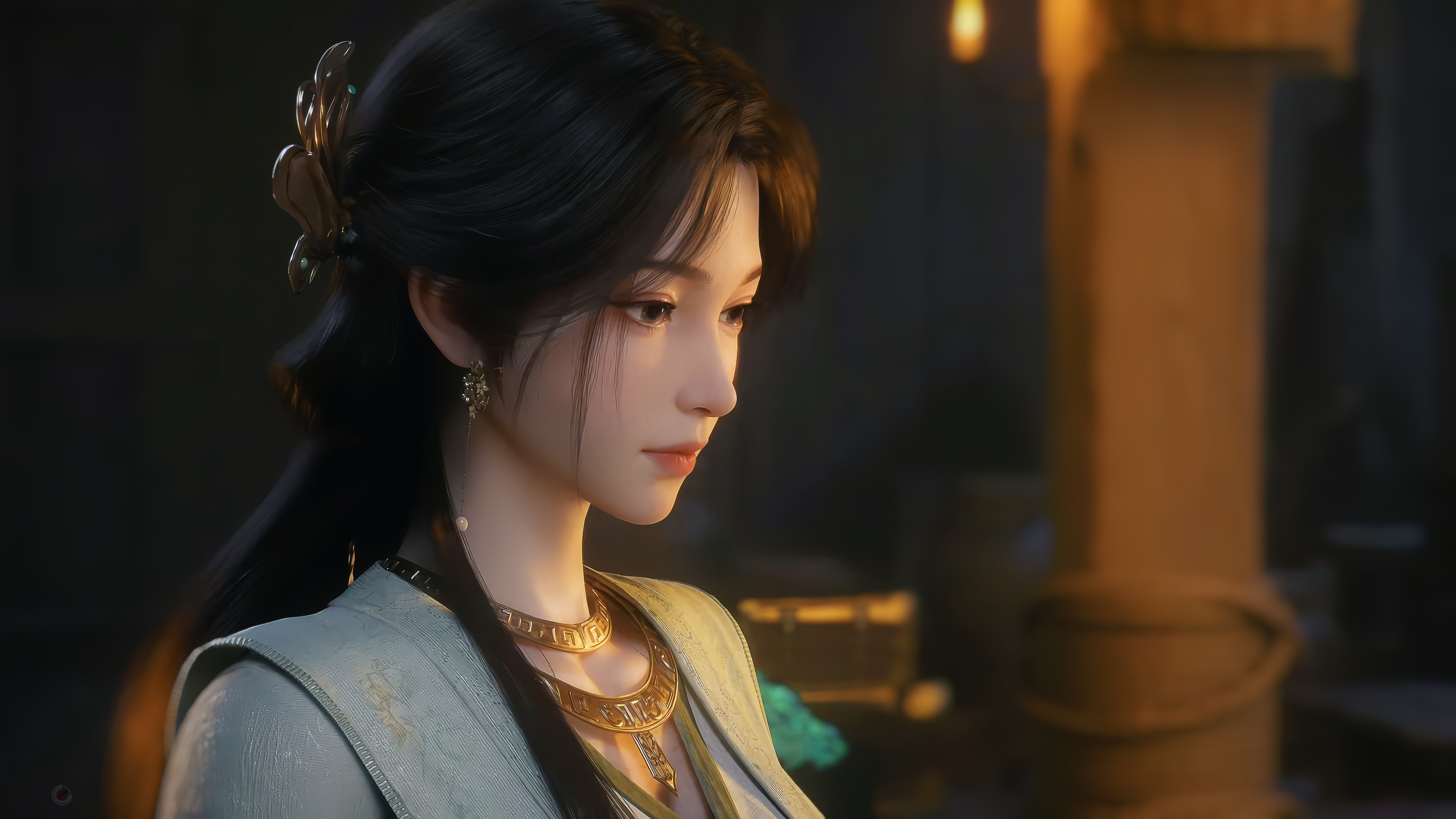
感情线时间交织图
前言:修仙者的情感困境
《凡人修仙传》中的感情描写在修仙小说中独树一帜。忘语没有走"后宫收集"的路线,也没有走"一生一世一双人"的理想化路线,而是呈现了一种冷峻而真实的修仙者情感状态——当寿命以百年计、当实力差距可以跨越生死时,感情会呈现出怎样的形态?
墨彩环:青涩年代的初次心动
时间线
- 韩立约十至十五岁:在七玄门与墨彩环相识
- 七玄门血夜期间:短暂的接触与分离
- 此后数十年:完全断联
分析
墨彩环是韩立感情线的起点,但严格来说,这更接近于少年时代的懵懂好感,而非真正的爱情。忘语对这段关系的处理极为克制——没有海誓山盟,没有生死相许,只有一个普通少年对同龄少女的朦胧情愫。
这段关系的叙事价值在于"对照"。它代表了韩立作为凡人的情感可能性——如果他没有走上修仙之路,他的感情生活或许就是这样普通而温暖。修仙之路剥夺了这种可能性,这也是"凡人修仙"这一命题中常被忽视的代价。
陈巧倩:利用与被利用的交错
时间线
- 韩立筑基期:在某次历练中与陈巧倩相遇
- 后续数次交集:围绕特定利益的合作与博弈
分析
陈巧倩与韩立的关系建立在相互利用的基础上,这种关系模式在修仙界是常态。忘语通过这段关系展示了修仙世界的人际真相:当双方都拥有足够长的寿命和各自的利益诉求时,纯粹的感情很难成为关系的基础。
紫灵:短暂的交集与长久的遗憾
时间线
- 韩立结丹期:在落云宗附近与紫灵相识
- 合作历练期间:产生好感
- 紫灵离开后:长期分离
分析
紫灵是韩立感情线中最具"遗憾感"的角色。她与韩立之间存在真实的情感基础——共同冒险中建立的信任和默契。然而,修炼道路的分歧和各自的际遇使得两人始终未能走到一起。
叙事功能:紫灵的存在揭示了修仙者感情的核心矛盾——修炼之路的个人性与感情关系的共同性之间的冲突。修仙者必须将大部分时间和精力投入修炼,留给感情的空间极为有限。紫灵与韩立的分离不是因为不够相爱,而是因为修仙之路本身就是一条孤独的路。
南宫婉:跨越百年的知己之情
时间线
- 韩立结丹期:初次与南宫婉相遇
- 结丹后期至元婴初期:逐渐建立了解与信任
- 天南大战期间:关系深化
- 韩立元婴中期:正式确立关系
- 韩立化神期:南宫婉因修为不足面临寿限问题
- 飞升前夕:韩立助南宫婉延寿,但两人终须分离
分析
南宫婉是韩立感情线中最重要、也是塑造最成功的角色。这段关系的独特之处在于它的"成熟感"。韩立与南宫婉的感情不是一见钟情式的爆发,而是在长达数十年的交往中缓慢生长——从同门的客气、到并肩作战的默契、到彼此了解后的信任、最终到超越利益的真挚情感。
时间维度的独特性:韩立与南宫婉的关系跨越了百余年。在凡人的尺度上,这是数代人的时间;在修仙者的尺度上,这不过是漫长修炼生涯中的一段。忘语利用这种时间尺度的差异,创造了一种独特的爱情叙事——既有凡人爱情的真挚,又有修仙者爱情的无奈。
核心矛盾:韩立与南宫婉感情线的核心矛盾是修为差距。韩立的修炼速度远超南宫婉,两人之间的实力差距随时间不断扩大。当韩立已经触摸到飞升的门槛时,南宫婉甚至面临寿元将尽的危机。这种因实力差距而产生的不对等,是修仙爱情中最残酷也最真实的命题。
感情线的时间交织
将以上所有感情线叠放在同一时间轴上,可以看到一个有趣的模式:
重叠极少。韩立的各段感情关系在时间上几乎不存在重叠。这不是刻意的"专一"设计,而是修仙者生活方式的自然结果——数十年的闭关修炼、跨越大陆的历练、生死未卜的战斗,使得维持多段并行的感情关系几乎不可能。
间隔递增。从墨彩环到南宫婉,韩立进入新感情关系的间隔越来越长。这反映了一个深层逻辑——随着修为的提升和年龄的增长,韩立对感情的态度越来越审慎,能够触动他的人越来越少。
深度递增。早期的感情关系浅淡如水,后期的关系则沉重如山。忘语通过这种递增的情感深度,展示了韩立从一个不解风情的少年到一个懂得珍惜的修者的内心成长。
结语:孤独是修仙的底色
《凡人修仙传》的感情线叙事,最终指向的是一个略带悲凉的结论——修仙之路本质上是孤独的。无论韩立与谁建立了怎样的情感联结,他最终都要独自面对飞升的选择。南宫婉留在人界,韩立独自踏入灵界;灵界的伙伴留在灵界,韩立独自飞升仙界。
这种孤独不是冷漠,而是修仙者追求长生的必然代价。忘语没有回避这个代价,也没有用廉价的团圆来消解它。这种诚实,正是《凡人修仙传》感情叙事的最大价值。
Interwoven Relationship Timeline
Foreword: The Emotional Dilemma of Cultivators
The romantic portrayal in A Record of a Mortal's Journey to Immortality stands apart in the cultivation genre. Wang Yu (忘语) neither takes the "harem collection" route nor the idealized "one love for all eternity" path. Instead, he presents a stark and authentic depiction of a cultivator's emotional reality — when lifespans are measured in centuries and power gaps can cross the boundary between life and death, what form does love take?
Cultural Context: Many Chinese xianxia novels feature "harem" dynamics where the protagonist accumulates multiple romantic partners. Wang Yu deliberately subverts this trope, using the extreme time scales of cultivation to explore how human connection frays under the weight of immortality's demands.
Mo Caihuan (墨彩环): First Stirrings in the Innocent Years
Timeline
- Han Li, approximately ages 10 to 15: Meets Mo Caihuan at the Seven Mysteries Sect
- During the Bloody Night of the Seven Mysteries Sect: Brief contact and separation
- Decades afterward: Complete loss of contact
Analysis
Mo Caihuan (墨彩环) represents the starting point of Han Li's romantic arc, though strictly speaking, this is closer to a young boy's vague affection than genuine love. Wang Yu handles this relationship with extreme restraint — no vows of eternal devotion, no life-or-death promises, just a normal boy's hazy feelings for a girl his age.
The narrative value of this relationship lies in "contrast." It represents the emotional possibilities available to Han Li as an ordinary person — had he never embarked on the path of cultivation, his love life might have been this simple and warm. The cultivation path stripped away that possibility, and this is an often-overlooked cost of the "mortal's journey to immortality."
Chen Qiaoqian (陈巧倩): Mutual Exploitation Intertwined
Timeline
- Han Li, Foundation Establishment stage: Encounters Chen Qiaoqian during an expedition
- Subsequent intersections: Cooperation and strategic maneuvering around specific interests
Analysis
The relationship between Chen Qiaoqian (陈巧倩) and Han Li is built on mutual utility — and this is the norm in the cultivation world. Through this relationship, Wang Yu demonstrates the interpersonal reality of cultivation society: when both parties possess lifespans measured in centuries and each has their own agenda, pure emotion alone can rarely serve as the foundation for a relationship.
Zi Ling (紫灵): A Brief Encounter and Lasting Regret
Timeline
- Han Li, Core Formation stage: Meets Zi Ling near the Drifting Cloud Sect (落云宗)
- During joint expeditions: Mutual affection develops
- After Zi Ling's departure: Long-term separation
Analysis
Zi Ling (紫灵) is the most "bittersweet" figure in Han Li's romantic arc. A genuine emotional foundation exists between them — trust and rapport built through shared danger. Yet diverging cultivation paths and their respective circumstances prevent them from ever truly coming together.
Narrative Function: Zi Ling's existence reveals the core contradiction of cultivator romance — the tension between the inherently solitary nature of cultivation and the shared nature of love. Cultivators must devote the vast majority of their time and energy to practice, leaving precious little space for romance. Zi Ling and Han Li part ways not because their feelings are insufficient, but because the path of cultivation is, by its very nature, a lonely road.
Nangong Wan (南宫婉): A Bond Spanning Centuries
Timeline
- Han Li, Core Formation stage: First meets Nangong Wan
- Late Core Formation to early Nascent Soul: Gradually builds understanding and trust
- During the Great Battle of Tiannan: Relationship deepens
- Han Li, mid Nascent Soul: Relationship formally established
- Han Li, Deity Transformation stage: Nangong Wan faces lifespan limitations due to insufficient cultivation
- Eve of ascension: Han Li helps extend Nangong Wan's life, but the two must ultimately part
Analysis
Nangong Wan (南宫婉) is the most important and most successfully crafted figure in Han Li's romantic arc. What makes this relationship distinctive is its "maturity." Han Li and Nangong Wan's love is not love-at-first-sight passion; it grows slowly over decades of interaction — from polite fellow-sect courtesy, to the rapport of fighting side by side, to trust born of deep mutual understanding, and finally to genuine affection that transcends self-interest.
The Unique Dimension of Time: Han Li and Nangong Wan's relationship spans over a century. On a mortal's timescale, this covers several generations; on a cultivator's timescale, it is merely one chapter in an interminable life of practice. Wang Yu leverages this discrepancy in temporal perception to create a singular love narrative — one that carries both the sincerity of mortal love and the melancholy of cultivator love.
Core Conflict: The fundamental tension in Han Li and Nangong Wan's romance is the gap in cultivation. Han Li's cultivation speed far outpaces Nangong Wan's, and the power disparity between them widens with each passing decade. By the time Han Li stands at the threshold of ascension, Nangong Wan faces the crisis of her remaining lifespan running out. This inequality born of power disparity is the cruelest and most authentic proposition in cultivation romance.
The Interwoven Pattern
Layering all of these relationship timelines onto a single axis reveals an interesting pattern:
Minimal overlap. Han Li's romantic relationships exhibit almost no temporal overlap. This is not a deliberate design of "fidelity," but rather the natural consequence of a cultivator's lifestyle — decades of secluded meditation, expeditions spanning entire continents, battles with uncertain outcomes — all make maintaining multiple concurrent relationships virtually impossible.
Increasing intervals. From Mo Caihuan to Nangong Wan, the gaps between Han Li's successive relationships grow longer. This reflects a deeper logic — as cultivation advances and centuries accumulate, Han Li's attitude toward romance becomes increasingly measured, and fewer people can truly move him.
Increasing depth. Early relationships are as light as water; later ones as heavy as mountains. Through this progression of emotional depth, Wang Yu depicts Han Li's inner growth — from a boy who knows nothing of romance to a cultivator who understands the value of cherishing what he has.
Conclusion: Solitude Is the Undertone of Cultivation
The romantic narrative of A Record of a Mortal's Journey to Immortality ultimately points toward a somewhat melancholic conclusion — the path of cultivation is, at its core, a solitary one. No matter what emotional bonds Han Li forges, he must ultimately face the choice of ascension alone. Nangong Wan remains in the Mortal Realm as Han Li steps alone into the Spirit Realm; his Spirit Realm companions stay behind as he ascends alone to the Immortal Realm.
This solitude is not coldness — it is the inevitable price of a cultivator's pursuit of longevity. Wang Yu neither flinches from this price nor cheapens it with a contrived reunion. That honesty is the greatest value of A Record of a Mortal's Journey to Immortality's romantic narrative.