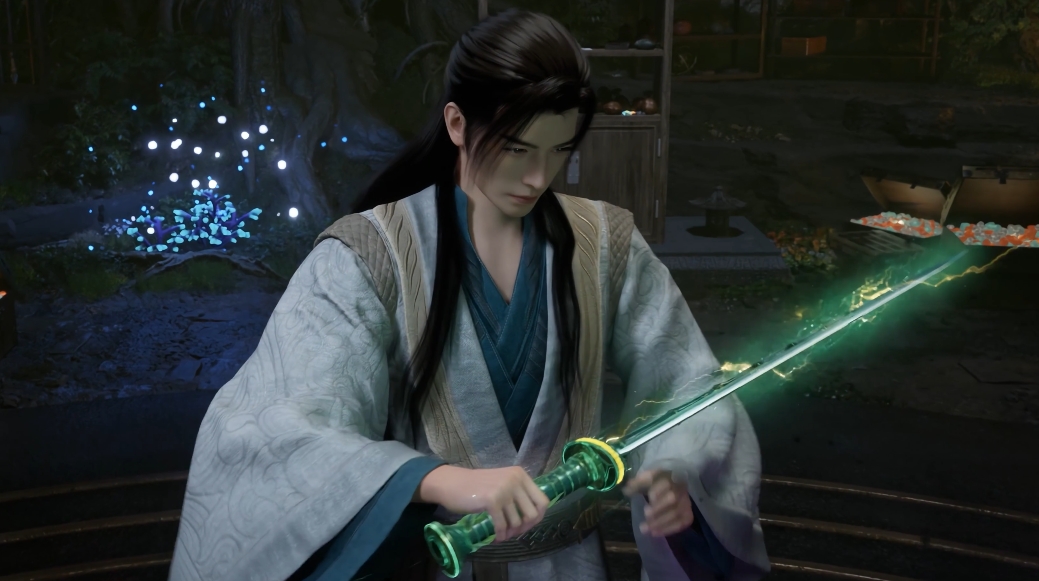
两条道路的根本分歧
修仙界的修炼路线虽然千变万化,但归根到底只有两个大方向:炼体和炼法。
法修以灵气为源,引天地灵气入体凝练为法力,再以法力驱动术法和法宝进行战斗。这是修仙界的绝对主流路线,九成以上的修士都走这条路。
体修则以肉身为根基,通过各种手段锤炼肉身,使肉身本身成为最强大的武器和防御。体修不依赖外界灵气施展术法,他们的力量来自肉身本身。
这两条路线在低阶时差距不大,但随着境界提升,它们之间的差异会越来越显著——各自的优势在放大,劣势也在放大。
法修之道:主流自有其道理
法修的核心优势
一、攻击手段的多样性。 法修可以修炼各种属性的术法,金木水火土、风雷冰暗……每一种属性都有独特的攻击方式和效果。加上法宝、阵法、符箓等辅助手段,法修的战术选择几乎是无穷的。
二、远程攻击能力。 法修的绝大多数攻击手段都是远程的——飞剑数里之外取人首级、术法覆盖方圆数百丈、阵法更是可以跨越极远的距离。在绝大多数战斗场景中,能保持距离的一方就掌握了主动权。
三、完善的修炼体系。 法修路线经过修仙界无数年的发展,已经形成了极为完善的体系。从功法选择到丹药辅助,从法宝炼制到阵法布置,每一个环节都有成熟的方案。修士只要按部就班地修炼,成长路径是清晰可预期的。
四、辅助能力强大。 法修不仅仅能战斗。炼丹、炼器、制符、布阵——这些修仙界的核心技能几乎都依赖法力。一个纯粹的体修在这些领域几乎毫无建树,而法修可以在战斗之外创造巨大的价值。
法修的致命弱点
一、法力消耗问题。 法修的所有战斗手段都需要消耗法力,而法力总量有限。一旦法力耗尽,法修的战力会断崖式下跌,沦为比普通人强不了多少的存在。
二、近身脆弱。 大多数法修将修炼资源集中在法力上,肉身强度远逊于体修。一旦被近身,法修施展术法需要的时间和空间都被压缩,处境极为被动。
三、禁灵环境的噩梦。 在某些特殊环境中——禁灵区域、法力封禁阵法、某些上古遗迹——法修几乎完全丧失战力。这是法修路线最根本的结构性弱点。
体修之道:少数人的选择
体修的核心优势
一、不依赖外界环境。 体修的力量来自肉身本身,不需要外界灵气来驱动。无论在何种环境下——禁灵区域、法力封禁、灵气枯竭——体修的战力都不受影响。这种环境适应性是法修无法比拟的。
二、持久战之王。 肉身力量的消耗和恢复速度远快于法力。在长时间的消耗战中,体修的优势会随着时间推移不断放大。当对手的法力逐渐耗尽时,体修依然生龙活虎。
三、惊人的抗打击能力。 体修的肉身经过千锤百炼,能承受远超常人的伤害。很多对法修来说致命的攻击,对体修可能只是皮肉之伤。在修仙界这个一击可能致命的残酷环境中,能挨打本身就是一种巨大的优势。
四、近身统治力。 一旦进入近身距离,体修对法修的优势是压倒性的。体修的攻击是瞬发的、连续的、不需要蓄力的。而法修在近身距离施展术法不仅效率低下,还可能误伤自己。
体修的根本困境
一、传承稀缺。 与法修路线的繁荣相比,体修的传承极为稀少。高阶体修功法更是凤毛麟角。很多有志于体修的修士,不是不想修,而是根本找不到合适的功法。
二、资源需求惊人。 锤炼肉身需要大量珍稀材料——灵液浸泡、妖兽精血淬体、天材地宝炼化入体……这些材料的价格往往远超法修所需的灵石和丹药。体修路线的经济门槛极高,这也是它成为小众路线的重要原因。
三、修炼痛苦。 体修的修炼过程伴随着剧烈的肉身痛苦——经脉重塑、骨骼锻打、皮肉再生……每一次突破都是一场对身体极限的挑战。很多修士不是承受不了身体上的痛苦,而是承受不了数百年持续痛苦的精神折磨。
四、攻击手段单一。 体修的攻击手段主要集中在近身物理攻击上。面对灵活的远程攻击者,体修往往陷入"追不上、打不到"的窘境。除非有高超的身法或特殊的远程手段,否则体修在对战灵活法修时会非常被动。
战力天花板的终极对比
低阶阶段(练气到结丹)
在低阶阶段,法修占据绝对优势。这个阶段的体修传承少、资源获取难、攻击手段单一,而法修有完善的成长体系支持。绝大多数放弃体修转投法修的修士,都是在这个阶段做出了选择。
中阶阶段(元婴到化神)
到了中阶阶段,体修如果能存活下来并找到合适的传承,战力开始接近甚至在某些场景下超过同阶法修。体修的肉身强度在这个阶段开始产生质变,近身战力惊人。但法修的术法体系也在这个阶段趋于完善,双方各有千秋。
高阶阶段(炼虚以上)
到了高阶阶段,情况变得更加复杂。纯粹的体修在这个阶段极为罕见——因为能修炼到这个境界的体修,几乎都会兼修法术。反过来,很多高阶法修也会重视肉身修炼,因为到了这个层次,肉身的脆弱会成为致命的短板。
换言之,到了真正的高阶,体修和法修的界限开始模糊。最强的存在往往是两者兼修的全面型修士。
韩立的启示:兼修才是王道
韩立的修炼道路完美诠释了"兼修"的智慧。
他本身以法修入道,修炼大衍决等功法,法力修炼是他的核心路线。但他同时也修炼了多种炼体功法,使得自己的肉身强度远超同阶法修。
这种兼修路线让韩立在战斗中拥有了全方位的战术选择:远程有飞剑和术法,近身有炼体之力,遁术保证了机动性,噬金虫提供了奇兵效果。无论对手擅长什么,韩立都能找到有效的应对方式。
更重要的是,炼体修炼赋予了韩立超强的生存能力。在多次致命危机中,正是他远超同阶的肉身强度让他撑过了法修根本无法承受的攻击,为后续反击赢得了时间。
兼修的代价
当然,兼修路线也有代价——时间和精力的分散。同样的修炼时间,专精法修的修士在法力方面的进展一定快于兼修者。韩立在某些阶段的修炼速度确实不算快,部分原因就是他将精力分配到了多条修炼路线上。
但韩立用自己的经历证明,在修仙界这个充满不确定性的世界里,全面性比单一的极致更有生存价值。专精一道或许能在特定场景下爆发出更强的力量,但在漫长的修仙道途上,任何一个短板都可能成为致命的隐患。
小说的回答
凡人修仙传对"体修vs法修"这个问题的回答,不是简单地选择其中一个,而是指向了一个更高层次的结论:真正的修炼之道不应该被路线所束缚。
法修也好,体修也好,它们都是通往大道的手段,而非目的。执着于某一条路线而拒绝其他可能性,本身就是一种偏执。修仙的终极目标是悟道长生,而道——是没有边界的。
韩立作为一个"凡人",他最大的智慧恰恰在于不给自己设限。伪灵根?那就想办法弥补。法力不够?那就修炼炼体。飞剑不够强?那就养噬金虫。他从不纠结于自己"应该"走哪条路,而是把所有能走通的路都走一遍,然后融合成自己的道。
这或许就是凡人修仙传给所有修士——也给所有读者——最重要的启示:不是选择正确的道路,而是把自己走过的每一条路都变成正确的。
The Fundamental Divergence of Two Paths
Though cultivation paths come in infinite variety, they ultimately boil down to two major directions: body refinement (Lian Ti) and spell refinement (Lian Fa).
Spell cultivators use spiritual energy as their source, drawing heaven-and-earth spiritual energy into their bodies and refining it into spiritual power, then using that power to drive spells and treasures in combat. This is the absolute mainstream path in the cultivation world -- over ninety percent of cultivators follow this route.
Body cultivators take the physical body as their foundation, using various methods to temper the flesh until the body itself becomes the most powerful weapon and defense. Body cultivators do not rely on external spiritual energy to cast spells; their power comes from the body itself.
In xianxia terminology, these two paths reflect a deep philosophical divide in Chinese cultivation traditions: the "external" path of channeling cosmic energy versus the "internal" path of perfecting the body. Think of it as the difference between a wizard and a martial artist, though both far transcend mortal limits.
At lower levels, the gap between these two paths is minimal, but as cultivation advances, the differences become increasingly pronounced -- each path's advantages amplify, and so do its weaknesses.
The Way of Spell Cultivation: The Mainstream Exists for Good Reason
Core Advantages of Spell Cultivation
First, diversity of attack methods. Spell cultivators can practice techniques across various elements -- metal, wood, water, fire, earth, wind, lightning, ice, darkness... Each element offers unique attack patterns and effects. Combined with treasures, formations, and talismans, spell cultivators' tactical options are virtually limitless.
Second, ranged attack capability. The vast majority of spell cultivator attacks are ranged -- flying swords can take heads from miles away, spells can cover areas spanning hundreds of zhang (roughly 300 meters), and formations can reach even farther. In most combat scenarios, the side that maintains distance controls the initiative.
Third, a mature cultivation system. The spell cultivation path has been developed over countless ages, forming an extraordinarily complete system. From technique selection to pill support, from treasure refinement to formation deployment, every aspect has established protocols. A cultivator following the standard path has a clear and predictable growth trajectory.
Fourth, powerful auxiliary capabilities. Spell cultivators can do far more than fight. Pill refining, treasure crafting, talisman creation, formation deployment -- nearly all core cultivation world skills depend on spiritual power. A pure body cultivator has virtually no capability in these fields, while spell cultivators can create enormous value beyond combat.
Fatal Weaknesses of Spell Cultivation
First, spiritual power depletion. All spell cultivator combat methods consume spiritual power, and total spiritual power is finite. Once depleted, a spell cultivator's combat power drops off a cliff, leaving them barely stronger than an ordinary person.
Second, vulnerability at close range. Most spell cultivators concentrate cultivation resources on spiritual power, resulting in physical bodies far weaker than body cultivators. Once an opponent closes to melee range, the time and space needed to deploy spells are compressed, putting the cultivator in an extremely passive position.
Third, the nightmare of spirit-nullification zones. In certain special environments -- spirit-nullification areas, spiritual power sealing formations, some ancient ruins -- spell cultivators lose virtually all combat capability. This is the spell cultivation path's most fundamental structural weakness.
The Way of Body Cultivation: The Road Less Traveled
Core Advantages of Body Cultivation
First, environment-independent. Body cultivators' power comes from the body itself, requiring no external spiritual energy. Regardless of environment -- spirit-nullification zones, spiritual power seals, spiritually depleted areas -- a body cultivator's combat power remains completely unaffected. This environmental adaptability is something spell cultivators simply cannot match.
Second, king of attrition warfare. Physical power depletes and recovers far faster than spiritual power. In prolonged battles of attrition, body cultivators' advantage grows continuously over time. When opponents' spiritual power gradually runs dry, body cultivators remain at full fighting capacity.
Third, extraordinary damage resistance. Body cultivators' flesh, forged through thousands of rounds of tempering, can withstand damage far beyond normal limits. Many attacks that would be lethal to spell cultivators are mere flesh wounds to body cultivators. In the cultivation world's environment where a single hit can prove fatal, the ability to take punishment is itself an enormous advantage.
Fourth, close-range dominance. Once combat enters melee range, body cultivators hold overwhelming advantage over spell cultivators. Body cultivator attacks are instantaneous, continuous, and require no charging time. At close range, spell cultivators casting spells is not only inefficient but risks self-injury.
The Fundamental Difficulties of Body Cultivation
First, scarce inheritance. Compared to spell cultivation's prosperity, body cultivation inheritances are extremely rare. High-level body cultivation techniques are even rarer. Many aspiring body cultivators do not lack the will -- they simply cannot find suitable techniques.
Second, staggering resource requirements. Tempering the body demands vast quantities of rare materials -- spiritual liquid immersion, demon beast blood essence for body quenching, precious materials refined into the body... These materials often cost far more than the spirit stones and pills spell cultivators need. Body cultivation's economic threshold is extremely high, which is an important reason it remains a niche path.
Third, excruciating cultivation process. Body cultivation involves intense physical agony -- meridian reconstruction, bone forging, flesh regeneration... Every breakthrough is a challenge against the body's absolute limits. Many cultivators cannot endure not the physical pain itself but rather the psychological torment of centuries of continuous pain.
Fourth, limited attack variety. Body cultivators' attacks are primarily close-range physical strikes. Against nimble ranged attackers, body cultivators often find themselves in the frustrating position of "can't catch up, can't reach." Without superior movement arts or special ranged capabilities, body cultivators can be extremely passive when dueling agile spell cultivators.
The Ultimate Power Ceiling Comparison
Low Stages (Qi Condensation through Core Formation)
At lower stages, spell cultivation holds absolute advantage. Body cultivation during this phase suffers from scarce inheritances, difficult resource acquisition, and limited attack variety, while spell cultivation enjoys a complete growth system for support. The vast majority of cultivators who abandon body cultivation for spell cultivation make that decision during this phase.
Mid Stages (Nascent Soul through Deity Transformation)
At mid stages, body cultivators who have survived and found suitable inheritances see their combat power begin approaching or even surpassing same-stage spell cultivators in certain scenarios. Body cultivators' physical strength begins undergoing qualitative transformation at this level, yielding astounding close-range combat power. But spell cultivators' technique systems also mature during this phase, and both sides have their merits.
High Stages (Void Refinement and Above)
At high stages, the picture becomes more complex. Pure body cultivators at this level are extraordinarily rare -- virtually every body cultivator who has advanced this far also studies spells. Conversely, many high-stage spell cultivators also emphasize physical body training, because at this level, physical fragility becomes a fatal shortcoming.
In other words, at truly high stages, the boundary between body and spell cultivation begins to blur. The strongest existences are almost always comprehensive cultivators who practice both.
Han Li's Lesson: Dual Cultivation Is the True Path
Han Li's (Han Li) cultivation journey perfectly illustrates the wisdom of "dual cultivation."
He entered cultivation as a spell cultivator, practicing the Great Development Technique and other methods, with spiritual power cultivation as his core path. But he simultaneously cultivated multiple body refinement techniques, giving his physical body strength far exceeding same-stage spell cultivators.
This dual cultivation approach grants Han Li comprehensive tactical options in combat: flying swords and spells for range, body refinement power for melee, movement arts for mobility, Gold Devouring Beetles for surprise attacks. No matter what an opponent specializes in, Han Li can find an effective counter.
More importantly, body cultivation grants Han Li extraordinary survivability. In multiple lethal crises, it was his physical toughness -- far beyond what same-stage spell cultivators could endure -- that allowed him to survive attacks that would have killed others, buying time for counterattacks.
The Price of Dual Cultivation
Naturally, the dual cultivation path carries a cost -- divided time and energy. Given the same cultivation period, a pure spell cultivator will inevitably advance faster in spiritual power than a dual cultivator. Han Li's cultivation speed was indeed not the fastest at certain phases, partly because he distributed energy across multiple cultivation paths.
But Han Li's experience proves that in the uncertainty-filled cultivation world, comprehensiveness has more survival value than single-focus excellence. Specializing in one path may yield stronger power in specific scenarios, but on the long road of cultivation, any single weakness can become a fatal vulnerability.
The Novel's Answer
A Record of a Mortal's Journey to Immortality's answer to "body cultivation vs. spell cultivation" is not to simply choose one, but to point toward a higher-level conclusion: true cultivation should not be constrained by any single path.
Whether spell or body cultivation, they are both means toward the Great Dao, not ends in themselves. Fixating on one path while rejecting all other possibilities is itself a form of obstinacy. The ultimate goal of cultivation is comprehension of the Dao and eternal life, and the Dao -- has no boundaries.
Han Li, as a "mortal," demonstrates his greatest wisdom precisely in refusing to limit himself. Pseudo spiritual roots? Find ways to compensate. Insufficient spiritual power? Then cultivate the body. Flying swords not strong enough? Then raise Gold Devouring Beetles. He never agonizes over which path he "should" follow, but instead walks every viable path and then fuses them into his own Dao.
This is perhaps the most important insight A Record of a Mortal's Journey to Immortality offers all cultivators -- and all readers: it is not about choosing the right path, but about making every path you walk the right one.