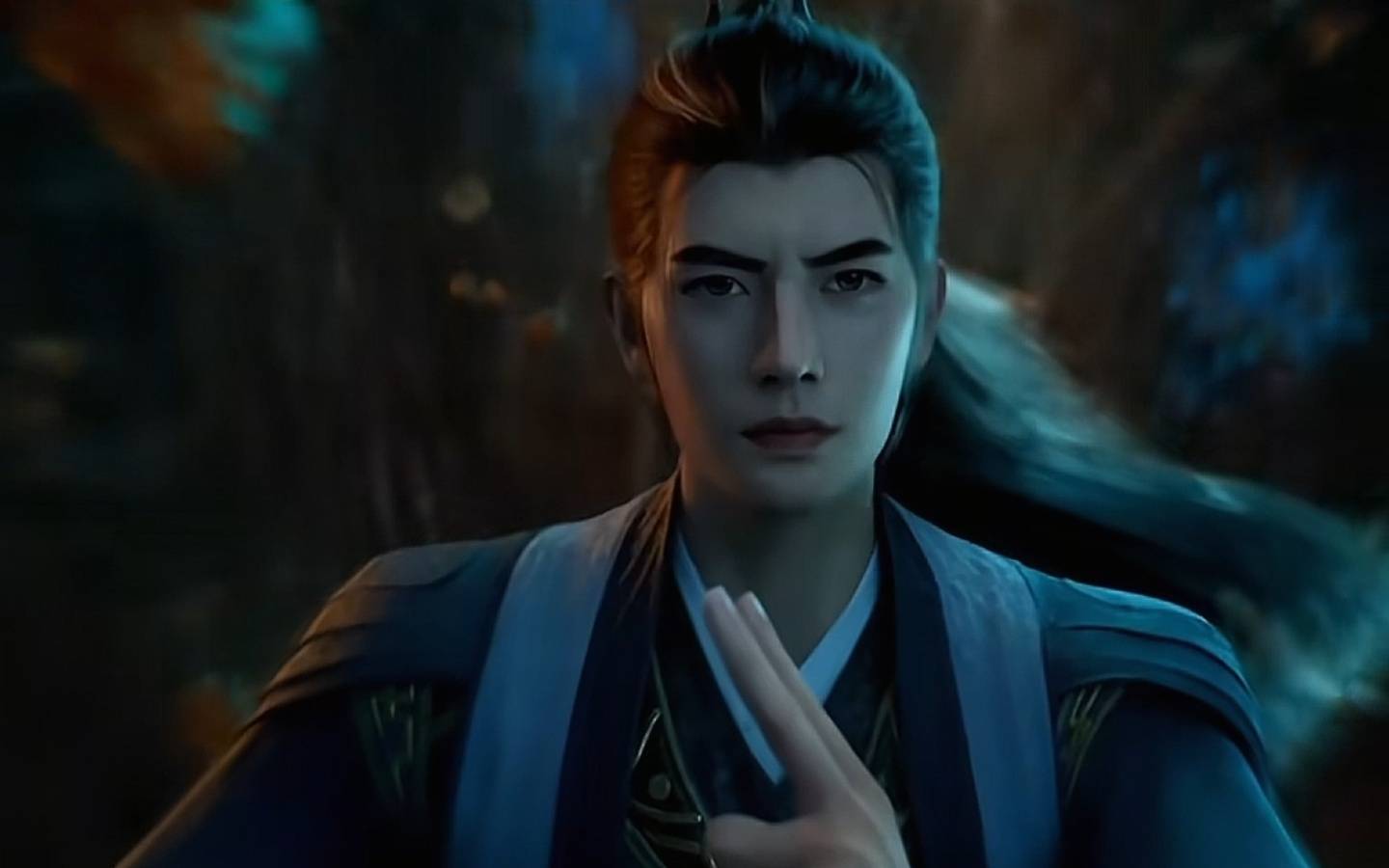
两条截然不同的道路
修仙界中存在两种截然不同的强者诞生模式。
一种是血脉觉醒型——凭借体内流淌的强大血脉,天生就拥有超越常人的力量。这些存在往往是上古神兽或仙人的后裔,血脉赋予他们与生俱来的天赋神通和远超常人的修炼速度。
另一种是后天苦修型——资质平平甚至低劣,没有任何先天优势,全靠后天的努力、机缘和不屈的意志一步步攀登。韩立就是这一类型的极致代表。
这两条道路孰优孰劣?凡人修仙传用数千章的篇幅给出了一个复杂而深刻的答案。
血脉之力的优势
起点碾压
血脉强大的修士从出生那一刻就赢在了起跑线上。以灵界的真灵后裔为例,它们天生就拥有普通修士修炼数百年才能达到的肉身强度和灵识。
冰凤作为天凤血脉的拥有者,其冰属性天赋神通是与生俱来的。普通修士需要专门修炼冰属性功法数百年才能掌握的术法,她天生就能施展,且威力远超同级修士的冰术。这种起点差距在低阶时尤为显著。
天赋神通的不可替代性
血脉带来的天赋神通往往有着术法无法复制的特殊效果。这些神通源自上古神兽或仙人的血脉记忆,是修仙界漫长历史中自然进化的产物,其精妙程度远非后天创造的术法可比。
例如,真龙血脉带来的龙威可以直接压制低阶妖兽的血脉,让其不战而降。这种效果不是任何术法能模仿的,因为它作用的是血脉层面的本能压制。
突破的先天优势
血脉强大的修士在突破境界时往往比普通修士顺利得多。这并非偶然——血脉本身就包含了对高阶境界的"记忆"。上古神兽的血脉中蕴含着它们祖先突破各个境界时的感悟,后代在突破时可以从血脉深处获得这些感悟的残留,大大降低突破的难度。
这是后天苦修者最难弥补的差距之一。韩立每次突破都要经历漫长的准备和九死一生的风险,而血脉强大的修士可能只需要等血脉自然觉醒。
后天修炼的优势
根基的扎实
凡事有利必有弊。血脉修士的顺畅突破恰恰可能成为他们的隐患——因为来得太容易,根基往往不如苦修者扎实。
韩立在每一个境界都经历了漫长的积累和充分的沉淀。他的每一分修为都是实打实修炼出来的,没有任何水分。这使得他在同阶修士中的法力纯度和运用精度往往名列前茅。
一个恰当的比喻:血脉修士像是坐电梯上楼的人,速度快但对楼层结构一无所知;后天苦修者像是一层一层爬楼梯的人,虽然慢,但对每一层的构造了然于胸。到了高层,爬楼梯的人反而更稳。
战斗经验的积累
血脉强大的修士因为实力超群,在成长过程中很少遇到真正的生死危机。而韩立从练气期开始就在生死边缘反复挣扎,每一次险死还生都让他的战斗经验和应变能力得到了质的提升。
修仙界的战斗不仅仅比拼修为高低。判断力、反应速度、心理素质、战术意识——这些只能在实战中锤炼的能力,韩立的积累远超那些在优渥环境中成长的血脉修士。
这也是为什么韩立在面对同阶甚至高阶血脉修士时屡屡获胜的原因之一——他的战斗效率更高,每一分力量都用在了刀刃上。
无上限的可能性
血脉修士的成长路径在很大程度上被血脉本身所决定。一条龙血脉的后裔,其天花板往往就是恢复到祖先的巅峰水平。血脉是起点,也是天花板。
后天苦修者则不同。他们的天花板取决于机缘、努力、悟性和意志——而这些因素的组合是无限的。韩立从一个伪灵根的凡人最终走到了修仙界的巅峰,他打破的不是某条血脉的极限,而是"凡人不可成仙"这个观念的极限。
这种"无上限"的可能性,是血脉修士所不具备的最大优势。
小说中的具体案例
案例一:韩立vs各路血脉强者
韩立一生中与无数血脉强大的对手交手。在低阶时期,他面对妖族修士的血脉压制往往力有不逮。但随着修为的提升和战斗经验的积累,血脉带来的先天优势被韩立后天的全面积累逐渐抹平。
到了灵界后期,韩立在面对真灵级别的对手时已经不落下风。这不是因为他的天赋超过了那些真灵,而是因为他在其他维度上的积累——法宝、战术、心性、经验——弥补了血脉上的差距,并在综合实力上实现了反超。
案例二:妖族的血脉困境
妖族是修仙界中最典型的血脉文明。高阶妖族凭借强大的血脉在低阶和中阶阶段往往碾压同阶人族修士。但到了更高的境界,妖族的突破难度反而急剧增加。
原因在于妖族过度依赖血脉之力,在功法体系和法宝运用方面远不如人族精深。到了需要"悟道"的高阶境界,纯粹的血脉力量已经不够用了,对天地法则的理解和感悟才是突破的关键。而这恰恰是后天苦修者在漫长修炼中不断积累的东西。
案例三:混合路线的可能
值得注意的是,小说中最顶尖的强者往往是血脉与修炼兼顾的存在。他们既有强大的先天血脉,又没有放弃后天的苦修。
这提示了一个重要观点:血脉与修炼并非互斥关系。真正的极致强者,是将先天优势和后天努力完美融合的人。
小说的立场:凡人之道
尽管小说客观呈现了血脉的强大,但从叙事的核心主题来看,凡人修仙传的立场是明确的——它歌颂的是凡人的奋斗。
小说的标题就是最好的注解。"凡人修仙传"——一个凡人的修仙故事。韩立没有显赫的血脉,没有强大的家族背景,甚至连灵根都是最劣等的伪灵根。他所拥有的一切,都是自己一步步争取来的。
这不是一碗简单的"努力就能成功"的鸡汤。小说同样诚实地展示了韩立一路走来所经历的无数次险死还生、无数次不得不妥协退让、无数次眼睁睁看着身边的人离去而无能为力。凡人的道路不是光鲜的,它充满了艰辛、屈辱和遗憾。
但正是这种不完美的奋斗历程,赋予了韩立这个角色无可替代的魅力。他证明了一件事:即便没有任何先天优势,一个普通人凭借坚韧不拔的意志、冷静务实的头脑和永不放弃的精神,也可以走到世界的顶端。
结语:天赋决定下限,努力决定上限
如果用一句话总结凡人修仙传在"血脉vs修炼"这个命题上的回答,那就是:天赋决定了你的下限,但努力和际遇决定了你的上限。
血脉强大的修士注定不会太弱——即便他们不怎么努力,血脉的力量也能保证他们在修仙界占有一席之地。但如果他们满足于血脉带来的先天优势而不思进取,他们的成就也会被限定在一个可预见的范围内。
而像韩立这样的凡人,起点或许卑微,道路或许崎岖,但他们的天花板——没有天花板。
这大概就是"凡人"二字最燃的地方。
Two Radically Different Paths
The cultivation world produces its powerhouses through two fundamentally different models.
The first is the bloodline awakening type -- through the powerful bloodline flowing in their veins, these beings are born with strength surpassing ordinary cultivators. They are often descendants of ancient divine beasts or immortals, their bloodlines granting innate divine abilities and cultivation speeds far exceeding normal cultivators.
The second is the diligent cultivation type -- possessing mediocre or even poor aptitude with no innate advantages whatsoever, relying entirely on effort, fortune, and indomitable will to ascend step by step. Han Li (Han Li) is the ultimate representative of this type.
Which path is superior? A Record of a Mortal's Journey to Immortality devotes thousands of chapters to providing a complex and profound answer.
In xianxia novels, "bloodline" refers to inherited supernatural traits from powerful ancestral beings, granting descendants innate abilities similar to genetic advantages in Western fantasy. "Spiritual roots" are the innate aptitude for cultivation -- Han Li's "pseudo spiritual roots" represent the lowest possible starting point.
The Advantages of Bloodline Power
Starting Line Dominance
Cultivators with powerful bloodlines win from the moment they are born. Taking the Spirit Realm's True Spirit descendants as examples, they are born with physical strength and spiritual awareness that would take ordinary cultivators centuries of cultivation to achieve.
Ice Phoenix (Bing Feng), as a possessor of the Heavenly Phoenix bloodline, has ice-attribute divine abilities that are entirely innate. Techniques that ordinary cultivators would need centuries of dedicated ice cultivation to master, she can cast from birth, with power far surpassing same-stage cultivators' ice arts. This starting gap is especially pronounced at lower stages.
The Irreplaceability of Innate Divine Abilities
Bloodline-granted divine abilities often have special effects that spells simply cannot replicate. These abilities originate from the bloodline memories of ancient divine beasts or immortals -- products of natural evolution across the cultivation world's vast history, with refinement far beyond what artificially created techniques can match.
For example, the Dragon's Might (Long Wei) carried by true dragon bloodline can directly suppress lower-level demon beasts' bloodlines, making them submit without a fight. No spell can mimic this effect because it operates at the level of bloodline-based instinctual suppression.
Innate Advantages in Breakthroughs
Cultivators with powerful bloodlines typically break through cultivation stages far more smoothly than ordinary cultivators. This is no coincidence -- the bloodline itself contains "memories" of higher stages. An ancient divine beast's bloodline carries residual insights from its ancestors' breakthroughs through various stages, and descendants can access these remnants from deep within their bloodline, dramatically reducing breakthrough difficulty.
This is one of the hardest gaps for diligent cultivators to compensate for. Every one of Han Li's breakthroughs required prolonged preparation and life-threatening risk, while powerful bloodline cultivators might need only to wait for their bloodline to naturally awaken.
The Advantages of Diligent Cultivation
Solid Foundations
Every advantage carries a corresponding drawback. The smoothness of bloodline cultivators' breakthroughs may itself become a hidden danger -- because it comes too easily, their foundations are often less solid than those of diligent cultivators.
Han Li endured prolonged accumulation and thorough refinement at every stage. Every ounce of his cultivation was genuinely earned through practice, with no shortcuts. This means his spiritual power purity and application precision consistently rank among the best at any given stage.
An apt analogy: bloodline cultivators are like those who take the elevator -- fast, but they learn nothing about the building's structure. Diligent cultivators are like those who climb the stairs -- slow, but intimately familiar with every floor's layout. At higher floors, the stair-climbers actually stand more securely.
Accumulated Combat Experience
Cultivators with powerful bloodlines, because of their overwhelming strength, rarely face genuine life-or-death crises during their growth. Han Li, from the Qi Condensation stage onward, repeatedly teetered at death's edge, and every near-death survival brought qualitative improvements to his combat experience and adaptability.
Cultivation world combat is not merely a comparison of cultivation levels. Judgment, reaction speed, mental fortitude, tactical awareness -- these abilities, forged only through real combat, represent areas where Han Li's accumulation far surpasses bloodline cultivators raised in privileged environments.
This is also why Han Li repeatedly defeats same-stage or even higher-stage bloodline cultivators -- his combat efficiency is higher, every ounce of power directed precisely where it matters most.
Limitless Potential
Bloodline cultivators' growth trajectories are largely predetermined by their bloodline. A dragon bloodline descendant's ceiling is typically restoring their ancestor's peak level. Bloodline is both the starting point and the ceiling.
Diligent cultivators are different. Their ceiling depends on fortune, effort, comprehension, and willpower -- and the combinations of these factors are infinite. Han Li ascended from a pseudo-spiritual-root mortal to the pinnacle of the cultivation world. What he shattered was not a single bloodline's limit, but the very notion that "mortals cannot become immortals."
This "limitless" potential is the greatest advantage that bloodline cultivators do not possess.
Specific Cases from the Novel
Case One: Han Li vs. Various Bloodline Powerhouses
Throughout his life, Han Li faced countless opponents with powerful bloodlines. In his earlier stages, he often struggled against the bloodline suppression of demon cultivators. But as his cultivation deepened and combat experience accumulated, the innate advantages of bloodline were gradually offset by Han Li's comprehensive rear-guard accumulation.
By the later stages of the Spirit Realm, Han Li stood on equal footing against True Spirit-level opponents. This was not because his talent surpassed those True Spirits, but because his accumulation in other dimensions -- treasures, tactics, temperament, experience -- compensated for the bloodline gap and achieved an overall reversal in comprehensive strength.
Case Two: The Demon Race's Bloodline Predicament
The demon race represents the cultivation world's most typical bloodline civilization. High-level demons, through their powerful bloodlines, typically dominate same-stage human cultivators at low and mid levels. But at higher stages, demon breakthrough difficulty actually increases dramatically.
The reason: demons over-rely on bloodline power, with technique systems and treasure utilization far less refined than the human race's. At advanced stages where "Dao comprehension" is required, pure bloodline power proves insufficient -- understanding and insight into the laws of heaven and earth become the keys to breakthrough. And this is precisely what diligent cultivators continuously accumulate throughout their long cultivation journey.
Case Three: The Possibility of a Hybrid Approach
Notably, the novel's most supreme powerhouses are often existences that combine both bloodline and cultivation. They possess powerful innate bloodlines but never abandon diligent cultivation.
This suggests an important insight: bloodline and cultivation are not mutually exclusive. The truly ultimate powerhouse is one who perfectly fuses innate advantages with acquired effort.
The Novel's Stance: The Way of the Mortal
Though the novel objectively presents bloodline's power, the core narrative stance of A Record of a Mortal's Journey to Immortality is unmistakable -- it celebrates the struggle of the ordinary.
The novel's title says it all. "A Record of a Mortal's Journey to Immortality" -- a mortal's cultivation story. Han Li has no illustrious bloodline, no powerful family background; even his spiritual roots are the lowest-grade pseudo type. Everything he possesses was fought for, step by step.
This is not a simple serving of "effort equals success" platitudes. The novel honestly depicts the countless near-death experiences, the countless forced compromises, the countless moments of watching loved ones leave while being powerless to help that Han Li endured along the way. The mortal's path is not glamorous -- it is filled with hardship, humiliation, and regret.
But it is precisely this imperfect journey of struggle that gives Han Li his irreplaceable charm as a character. He proves one thing: even without any innate advantage, an ordinary person with unyielding willpower, a cool and pragmatic mind, and a spirit that never surrenders can walk to the very top of the world.
Conclusion: Talent Sets the Floor, Effort Sets the Ceiling
If the novel's answer to "bloodline vs. cultivation" were summarized in a single sentence, it would be: talent determines your floor, but effort and fortune determine your ceiling.
Cultivators with powerful bloodlines are destined never to be too weak -- even without much effort, bloodline power guarantees them a place in the cultivation world. But if they rest content with their innate advantages and cease to strive, their achievements will be confined to a predictable range.
As for mortals like Han Li, the starting point may be humble and the road may be rocky, but their ceiling -- there is no ceiling.
This is perhaps what makes the word "mortal" so compelling.