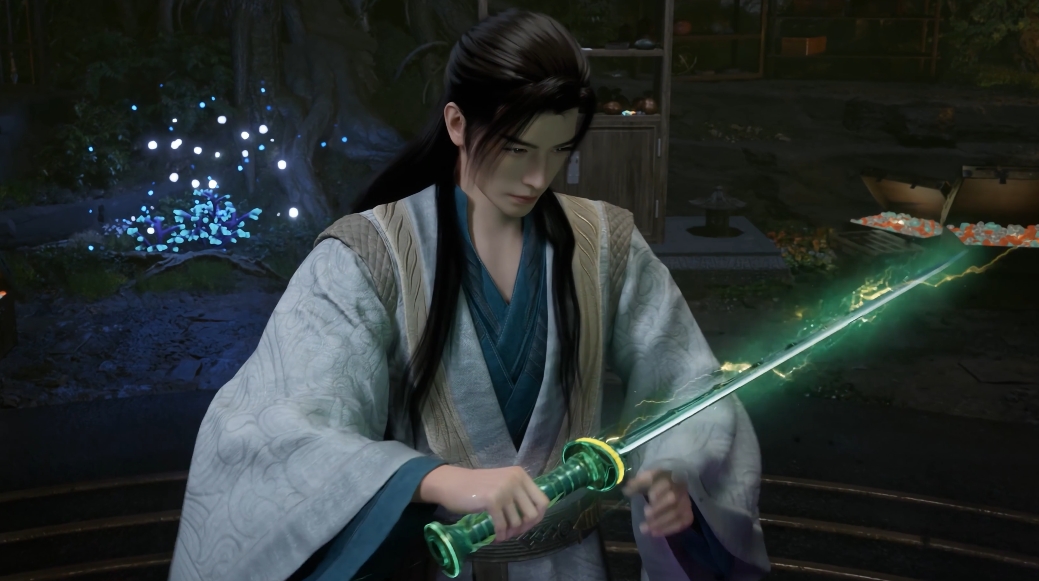
功法:修士的底层操作系统
如果把修士比作一台计算机,那么功法就是操作系统。法宝是外接设备,丹药是电池充电,而功法决定了这台机器的运算逻辑和性能上限。一个修炼低级功法的天才,上限可能还不如一个修炼顶级功法的普通人——这就是功法在修仙体系中的核心地位。
忘语在《凡人修仙传》中构建了一个层次分明的功法体系,虽然没有像某些小说那样给出明确的"天地玄黄"分级,但通过叙事和对比,我们可以梳理出一个相当完整的分类学。
按修炼属性分类
五行属性功法
最常见的功法类型,修炼后法力会带有对应的五行属性。金属性功法擅攻伐,水属性功法擅疗愈,火属性功法擅破坏,木属性功法擅生长,土属性功法擅防御。
韩立最初修炼的长春功就是典型的木属性功法。木属性功法修炼速度普遍偏慢,但胜在根基扎实、生命力强。长春功品级虽低,却为韩立打下了稳固的根基,更与小瓶的绿液产生了微妙的关联。
多灵根修士面临的一大困境就是:大多数功法只对应单一属性或少数属性,五行杂灵根修炼任何功法都会有大量灵气被浪费。这是韩立早期修炼缓慢的根本原因。
无属性功法
极为稀有的功法类型,不偏向任何一种属性,而是将各种属性灵气统一转化。大衍决就是这类功法的巅峰代表——它最惊人的特性是"万法归一"的兼容性,无论修士之前修炼何种功法,转修大衍决后都能完美融合先前的法力积累。
大衍决对韩立的意义怎么强调都不为过。它不仅解决了韩立杂灵根的修炼效率问题,更将他此前所有"浪费"的修炼时间都转化成了有效积累。这在功法史上几乎是独一无二的设计。
特殊属性功法
包括雷属性、风属性、冰属性等非五行正统属性的功法。这类功法往往有极为突出的某方面能力,但修炼条件也更为苛刻,通常需要对应的变异灵根。
按修炼目标分类
法力修炼功法(主修功法)
最核心的功法类型,决定修士法力的品质、数量和增长速度。每个修士只能选择一门主修功法,这个选择往往决定了一生的上限。
主修功法的品级差距有多大?一个直观的例子:修炼低阶功法的筑基修士,法力总量可能只有修炼高阶功法同境修士的三分之一。这意味着持久战中他会先耗尽法力,爆发战中他的术法威力也弱一截。
神识修炼功法
专门强化神识的辅助功法。韩立修炼的噬影决就属此类。在修仙世界中,神识强度决定了探查范围、控器精度和对术法的操控力。特别是对韩立这样依赖噬金虫群的修士来说,强大的神识就是战力倍增器。
炼体功法
通过特殊方法强化肉身的功法。这类功法在主流修仙界一直处于边缘位置,但在某些特定场合有不可替代的优势。后文专有文章详述。
辅助功法
包括炼丹、制器、阵法等方面的专门技艺。严格来说它们不算"功法",但修炼这些技艺同样需要系统的传承和长期的练习。
功法品级体系
虽然忘语没有给出一个明确统一的功法分级标准,但从小说中的描述可以归纳出大致的品级划分:
| 品级 | 特征 | 修炼上限 | 获取难度 | 代表功法 |
|---|---|---|---|---|
| 入门级 | 各宗门弟子普修 | 炼气期 | 容易 | 各宗基础功法 |
| 普通级 | 正式弟子修炼 | 筑基期 | 一般 | 长春功 |
| 精品级 | 内门弟子专属 | 结丹期 | 较难 | 各宗门核心功法 |
| 顶级 | 宗门镇派之宝 | 元婴期 | 极难 | 部分上古功法 |
| 至高级 | 传说中的存在 | 化神及以上 | 千年难遇 | 大衍决 |
功法经济学
功法的稀缺性创造了修仙界独特的"知识经济"。一部好的功法,其价值往往超过同阶最好的法宝——因为法宝可以用灵石购买或以物换物,而顶级功法几乎不会流通。
各大宗门最核心的资产不是灵脉、不是法宝库,而是它们的功法传承。黄枫谷之所以能在天南立足,不是因为它有多少元婴修士,而是因为它拥有足以培养元婴修士的功法传承体系。
散修的最大劣势就在于此。他们可以通过各种手段获取灵石、法宝甚至丹药,但很难获得真正的高品级功法。这就导致了一个恶性循环:没有好功法→修为提升缓慢→无法获取更好的资源→更无法获得好功法。
韩立早期以散修身份行走的经历中,功法匮乏始终是他的短板之一,直到获得大衍决才彻底解决了这个问题。
功法选择的策略分析
从韩立的修炼历程中,我们可以提炼出几条功法选择的核心原则:
第一,适配性优先于品级。 一部与自身灵根完美适配的中品功法,实际效果可能优于一部不太适配的上品功法。韩立在获得大衍决之前,一直在用"不够好但足够适合"的功法修炼,而不是盲目追求品级。
第二,上限比速度更重要。 一些功法修炼速度极快,但上限有限;另一些功法起步慢但天花板极高。韩立选择的功法普遍属于后者——他有小瓶辅助,速度的劣势可以用资源弥补,但上限的差距则无法弥补。
第三,兼容性是隐藏价值。 大衍决之所以珍贵,除了本身品级够高之外,最关键的是它的"万法归一"特性。修士一生中可能需要多次转修功法,每次转修都意味着法力的浪费和时间的损失,而兼容性强的功法可以最大程度地减少这种浪费。
结语
功法是修仙世界最核心的"基础设施"。它决定了修士能走多远、走多快,以及走在怎样的道路上。忘语通过功法体系的设计,不仅构建了一个逻辑自洽的修炼世界,更暗含了一个深刻的命题:在一个资源不均等的世界里,信息和知识的差距比物质资源的差距更加致命。
Cultivation Arts: The Cultivator's Operating System
If we compare a cultivator to a computer, then the cultivation art (功法, gongfa) is the operating system. Magical treasures are peripherals, pills are battery charges, and the cultivation art determines the machine's computational logic and performance ceiling. A genius practicing a low-grade cultivation art may have a lower ceiling than an ordinary person practicing a top-grade one -- this is the central importance of cultivation arts in the immortal cultivation system.
Wang Yu (忘语) constructed a clearly layered cultivation art system in A Record of a Mortal's Journey to Immortality. While he did not provide explicit rankings like the "Heaven, Earth, Mystic, Yellow" tiers found in some novels, through narrative and comparison we can reconstruct a fairly complete taxonomy.
Classification by Cultivation Attribute
Five Elements Attribute Arts
The most common type of cultivation art. After cultivation, one's spiritual power takes on the corresponding elemental attribute. Metal-attribute arts excel at offense, Water-attribute arts excel at healing, Fire-attribute arts excel at destruction, Wood-attribute arts excel at growth, and Earth-attribute arts excel at defense.
The Eternal Spring Arts (长春功, Changchun Gong) that Han Li (韩立) originally practiced was a classic Wood-attribute cultivation art. Wood-attribute arts are generally slower to cultivate, but their advantage lies in building a solid foundation and strong vitality. Though the Eternal Spring Arts were low-grade, they gave Han Li a stable foundation and had a subtle connection to the small vial's green liquid.
A major dilemma facing cultivators with multiple spirit roots is that most cultivation arts correspond to only a single element or a few elements. A cultivator with all five mixed spirit roots would waste a large portion of absorbed spiritual energy regardless of which art they practiced. This was the fundamental reason for Han Li's slow early cultivation.
Non-Elemental Arts
An extremely rare type of cultivation art that does not favor any particular element, instead converting all types of elemental spiritual energy uniformly. The Great Development Technique (大衍决, Da Yan Jue) is the pinnacle representative of this category -- its most astonishing property is "Ten Thousand Arts Return to One" compatibility. Regardless of what cultivation art a cultivator had previously practiced, switching to the Great Development Technique would perfectly integrate their prior spiritual power accumulation.
The significance of the Great Development Technique to Han Li cannot be overstated. It not only solved his mixed spirit root efficiency problem, but converted all his previously "wasted" cultivation time into effective accumulation. This is a virtually unique design in the history of cultivation arts.
Special Attribute Arts
This includes cultivation arts of non-standard Five Elements attributes such as lightning, wind, and ice. These arts often have exceptionally prominent abilities in certain areas, but their cultivation requirements are far more demanding, typically requiring a corresponding mutant spirit root.
Classification by Cultivation Goal
Spiritual Power Cultivation Arts (Primary Arts)
The most essential type of cultivation art, determining the quality, quantity, and growth rate of a cultivator's spiritual power. Each cultivator can only choose one primary cultivation art, and this choice often determines their lifetime ceiling.
How large is the gap between grades of primary cultivation arts? An intuitive example: a Foundation Establishment cultivator practicing a low-grade art may have only one-third the total spiritual power of a same-realm cultivator practicing a high-grade art. This means they will exhaust their power first in a battle of attrition, and their spell power will also be a notch weaker in burst combat.
Spiritual Sense Cultivation Arts
Auxiliary cultivation arts specifically for strengthening spiritual sense (神识, shenshi -- the cultivator's mental perception ability). Han Li practiced the Devouring Shadow Art (噬影决, Shi Ying Jue), which belongs to this category. In the cultivation world, spiritual sense strength determines detection range, precision of treasure control, and mastery over spells. Especially for a cultivator like Han Li who relied on swarms of Gold Devouring Beetles, powerful spiritual sense was a combat force multiplier.
Body Refinement Arts
Cultivation arts that strengthen the physical body through special methods. These arts have always occupied a marginal position in mainstream cultivation, but they offer irreplaceable advantages in certain specific situations. A dedicated article covers this topic in detail.
Auxiliary Arts
These include specialized disciplines such as pill refining, artifact crafting, and formation arrays. Strictly speaking, they are not "cultivation arts," but mastering these skills similarly requires systematic transmission and long-term practice.
The Cultivation Art Grade System
Although Wang Yu did not provide a single unified grading standard, the descriptions in the novel allow us to infer an approximate hierarchy:
| Grade | Characteristics | Cultivation Ceiling | Acquisition Difficulty | Representative Art |
|---|---|---|---|---|
| Entry-level | Universal practice for sect disciples | Qi Refining (炼气) | Easy | Basic sect arts |
| Ordinary | For formal disciples | Foundation Establishment (筑基) | Moderate | Eternal Spring Arts |
| Fine | Exclusive to inner disciples | Core Formation (结丹) | Difficult | Core sect arts |
| Top-tier | Sect-guarding treasures | Nascent Soul (元婴) | Extremely difficult | Some ancient arts |
| Supreme | Legendary existence | Deity Transformation (化神) and above | Once in a millennium | Great Development Technique |
The Economics of Cultivation Arts
The scarcity of cultivation arts created a unique "knowledge economy" in the cultivation world. A good cultivation art is often worth more than the best magical treasure of the same tier -- because treasures can be purchased with spirit stones or traded, while top-grade cultivation arts almost never circulate.
The most core asset of major sects is not their spirit veins or treasure vaults, but their cultivation art lineages. The reason Yellow Maple Valley could maintain its standing in the Tiannan region was not because of how many Nascent Soul cultivators it had, but because it possessed a cultivation art lineage system capable of producing Nascent Soul cultivators.
This is the greatest disadvantage of rogue cultivators (散修, sanxiu -- independent cultivators without sect affiliation). They can obtain spirit stones, magical treasures, and even pills through various means, but acquiring truly high-grade cultivation arts is extremely difficult. This creates a vicious cycle: no good arts -> slow cultivation progress -> unable to obtain better resources -> even less able to obtain good arts.
During Han Li's early years traveling as a rogue cultivator, the lack of cultivation arts was always one of his shortcomings, until obtaining the Great Development Technique finally resolved this problem.
Strategic Analysis of Cultivation Art Selection
From Han Li's cultivation journey, we can distill several core principles for cultivation art selection:
First, compatibility takes priority over grade. A mid-grade art perfectly suited to one's spirit root may yield better practical results than a top-grade art that is a poor fit. Before obtaining the Great Development Technique, Han Li consistently used arts that were "not good enough but sufficiently suitable" rather than blindly pursuing grade.
Second, ceiling matters more than speed. Some arts offer extremely fast cultivation but limited ceilings; others start slow but have extremely high ultimate potential. Han Li's chosen arts generally belonged to the latter category -- with his small vial providing assistance, the speed disadvantage could be offset with resources, but a ceiling gap could never be bridged.
Third, compatibility is hidden value. The Great Development Technique was precious not only because of its high grade, but most critically because of its "Ten Thousand Arts Return to One" property. A cultivator may need to switch arts multiple times throughout their life, and each switch means wasted spiritual power and lost time. An art with strong compatibility minimizes this waste.
Conclusion
Cultivation arts are the most fundamental "infrastructure" of the immortal cultivation world. They determine how far a cultivator can go, how fast they travel, and what path they walk. Through his cultivation art system design, Wang Yu not only built a logically consistent cultivation world, but embedded a profound proposition: in a world of unequal resources, the gap in information and knowledge is more lethal than the gap in material resources.