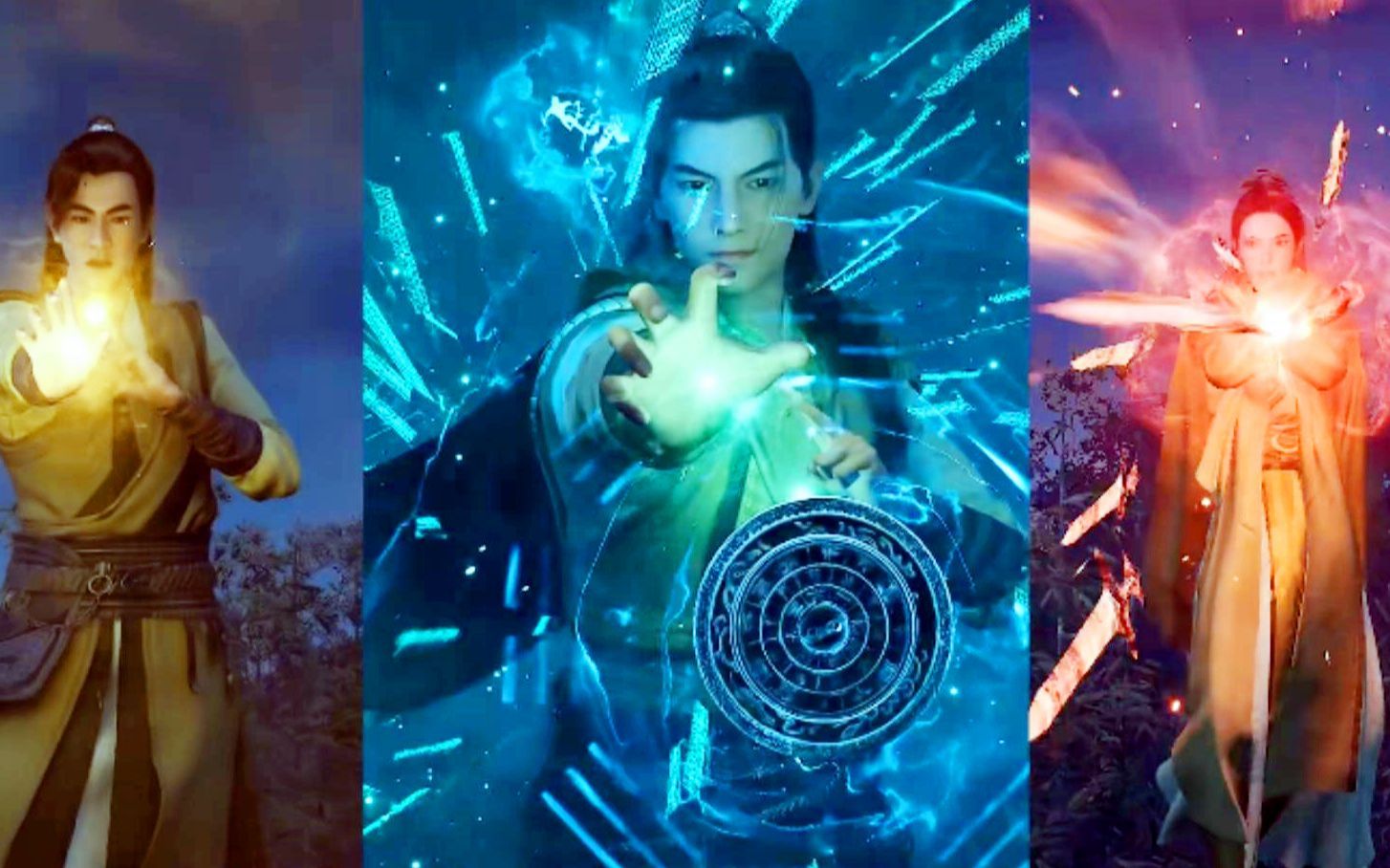
阵法:修仙界的基础设施
如果说功法是修士的操作系统,术法是应用程序,法宝是硬件设备,那么阵法就是修仙世界的基础设施——道路、城墙、通信网络、能源系统的总和。
没有阵法,宗门无法建立有效的防御体系;没有阵法,灵脉无法被稳定开发利用;没有阵法,修士的洞府就是一间没有门锁的房子。阵法是修仙文明区别于"散修野人"的核心标志。
忘语在《凡人修仙传》中对阵法的描写虽然不是重点叙事线,但每一次阵法的出场都精准地展现了它在修仙世界中不可替代的地位。
阵法的基本分类
防御阵法
最常见也最重要的阵法类型。从修士洞府的护山大阵到宗门总部的多层防御阵法,防御阵法是修仙界安全体系的基石。
一个设计精良的防御阵法可以让筑基修士抵挡结丹修士的攻击,让一个小宗门挡住大宗门的入侵。这就是阵法最核心的战略价值——它创造了不对称优势,让防守方的实力被成倍放大。
在天南修仙界的多次大战中,宗门防御阵法的强弱往往决定了战争的走向。那些拥有上古大阵传承的宗门,即使整体修士实力不如对手,也能凭借阵法优势立于不败之地。
攻击阵法
将多人的法力汇聚并以阵法增幅后释放。攻击阵法的威力通常远超参与者个人实力的简单相加——这就是阵法的"增幅效应"。
攻击阵法在大规模战斗中尤为重要。当数十乃至数百名低阶修士通过攻击阵法联合起来,其输出威力可以威胁到远高于他们个人境界的敌人。这使得"人多"不再只是一个数量优势,而是可以转化为质量优势的战略资源。
幻阵
制造幻境迷惑入侵者。幻阵的价值在于它可以消耗入侵者的法力和精力,为防守方争取时间。一个优秀的幻阵甚至可以在入侵者不知不觉中引导他们走入陷阱。
幻阵与杀阵的组合是最经典的防御体系设计。入侵者首先被幻阵迷惑、分散注意力,然后在混乱中触发杀阵,承受致命攻击。这种"软硬结合"的设计思路体现了阵法之道的战术深度。
传送阵法
连接不同空间位置的阵法。传送阵法的战略价值无法估量——它解决了修仙界最根本的后勤问题:距离。
修仙界的地域辽阔,即使是结丹修士飞行也需要数月才能跨越一个大区域。传送阵法使得人员和物资的快速调动成为可能,极大地增强了拥有传送阵网络的势力的战略灵活性。
韩立在人界和灵界都多次使用传送阵法,有时是为了赶路,有时是为了逃命。传送阵法的存在与否,往往是他规划行动路线时的关键考量。
聚灵阵
汇聚天地灵气的阵法,通常布置在灵脉之上。聚灵阵是修仙界最基础也最重要的"民用"阵法——每一个宗门、每一个修士洞府的核心都是一个或多个聚灵阵。
灵脉的品质加上聚灵阵的效率,决定了一个地方的修炼价值。这就是为什么灵脉丰富的地域总是兵家必争之地——它们不仅有天然优势,还可以通过阵法进一步放大这种优势。
阵法的技术壁垒
阵法之所以被称为"修仙世界的技术壁垒",核心原因在于它的知识密集型特征。
高门槛的学习成本
阵法的学习需要同时具备以下条件:
- 强大的神识:布阵需要精密的神识控制,对阵法中每一个节点都要有精确感知
- 深厚的理论功底:阵法理论涉及天地法则、五行生克、阴阳变化等多领域知识
- 丰富的实践经验:同一个阵法在不同地形、不同灵气环境中的表现可能截然不同
- 充足的材料支持:布阵需要阵旗、阵盘、灵石等大量材料
这些条件的叠加使得真正的阵法大师比炼丹大师更加稀有。很多修士可以学会布置简单的禁制,但能设计和操控复杂阵法的大师级人物,整个修仙界可能只有寥寥数人。
知识垄断
与功法和丹方类似,阵法知识也存在严重的传承垄断。上古大阵的阵图是各大势力最核心的机密之一,其保密程度甚至超过功法——因为功法是个人实力,而阵法是集体安全。
这种知识垄断进一步加剧了修仙界的马太效应。拥有阵法传承的势力能更好地保护自己、更有效地开发灵脉资源,从而积累更多财富来获取更多阵法知识。
阵法在关键战役中的作用
小说中多次大规模战斗都凸显了阵法的决定性作用:
天南修仙界大战: 各宗门的护山大阵是他们的最后防线。大阵的存亡直接关系到宗门的存亡。修士可以战死沙场,但只要大阵不破,宗门的根基就在。
乱星海争夺: 乱星海的岛屿争夺中,阵法的布置水平往往决定了岛屿能否守住。一个布满阵法的岛屿,即使守岛修士实力不强,进攻方也要付出巨大代价。
灵界大战: 灵界的战争规模远超人界,阵法的重要性也相应放大。跨域大阵、军团级战阵,这些人界罕见的大规模阵法在灵界战场上频繁出现。
韩立与阵法
韩立的阵法造诣处于"实用水平"。他能布置中等复杂度的防御阵法保护自己的洞府,能识别和破解多数常见阵法,但他不是专业的阵法师。
韩立对待阵法的态度与他对待炼丹的态度类似——掌握足够的知识来保护自己、不被阵法困住,但不追求在这个领域达到巅峰。他更倾向于利用阵法作为战术工具,而不是将其作为主要的战斗方式。
不过,韩立对阵法的"消费者视角"反而让我们更清楚地看到阵法的实际价值。他每到一处首先关注的就是当地的防御阵法是否可靠、传送阵法是否畅通、聚灵阵的效率如何。这种本能的关注说明,在修仙界生存,阵法意识可能比法力境界更重要。
阵法的哲学:集体力量vs个人力量
阵法代表了修仙界中"集体力量"的一面。在一个以个人修为为尊的世界里,阵法是少数能让集体超越个体的手段。
一个元婴修士或许能碾压上百个炼气修士,但如果这上百个炼气修士操控着一个精心设计的联合大阵,结果可能截然不同。阵法赋予了组织和协作以修仙世界中的"合法性"——它证明了即使在追求个人力量的极致道路上,团队和知识的力量也有其不可替代的价值。
结语
阵法是修仙世界中最接近"科技"概念的存在。它不依赖天赋灵根,不需要个人境界有多高,而是建立在知识积累、精密计算和系统工程之上。在一个天才频出、强者如林的世界里,阵法提醒我们:知识和工程思维,永远是文明进步的基石。
Formation Arrays: The Cultivation World's Infrastructure
If cultivation arts (功法) are the cultivator's operating system, spells (术法) are applications, and magical treasures are hardware, then formation arrays (阵法, zhenfa) are the cultivation world's infrastructure -- the sum total of roads, city walls, communication networks, and energy systems.
Without formation arrays, sects cannot establish effective defense systems; without formation arrays, spirit veins cannot be stably developed; without formation arrays, a cultivator's dwelling is a house without locks. Formation arrays are the defining marker that distinguishes cultivation civilization from "rogue cultivator savagery."
Wang Yu's (忘语) depiction of formation arrays in A Record of a Mortal's Journey to Immortality, while not a primary narrative thread, precisely demonstrates their irreplaceable role in the cultivation world every time they appear.
Basic Classification of Formation Arrays
Defensive Formations
The most common and most important type of formation. From the mountain-protecting grand arrays of cultivator dwellings to the multi-layered defensive formations of sect headquarters, defensive formations are the cornerstone of the cultivation world's security architecture.
A well-designed defensive formation can allow Foundation Establishment (筑基) cultivators to withstand attacks from Core Formation (结丹) cultivators, or enable a small sect to repel an invasion by a larger one. This is the core strategic value of formation arrays -- they create asymmetric advantage, multiplying the defender's effective strength many times over.
In the Tiannan cultivation world's many great battles, the strength of sect defensive formations often determined the course of war. Sects possessing ancient grand formation lineages could hold unassailable positions even if their overall cultivator strength was inferior to their opponents.
Offensive Formations
These pool multiple people's spiritual power and release it amplified through the formation. The power of offensive formations typically far exceeds the simple sum of the participants' individual strength -- this is the formation "amplification effect."
Offensive formations are particularly important in large-scale combat. When dozens or even hundreds of low-level cultivators unite through an offensive formation, their combined output can threaten enemies far above their individual realms. This transforms "numerical superiority" from a mere quantitative advantage into a strategic resource convertible to qualitative advantage.
Illusion Formations
These create illusory realms to confuse invaders. The value of illusion formations lies in their ability to drain the invader's spiritual power and mental energy, buying time for defenders. An excellent illusion formation can even guide invaders unwittingly into traps.
The combination of illusion formations and killing formations is the most classic defensive system design. Invaders are first confused and distracted by the illusion formation, then struck by lethal attacks from the killing formation while in disarray. This "soft-hard combination" design philosophy embodies the tactical depth of formation mastery.
Teleportation Formations
Formations that connect different spatial locations. The strategic value of teleportation formations is incalculable -- they solve the cultivation world's most fundamental logistical problem: distance.
The cultivation world spans vast territories; even Core Formation cultivators may need months of flight to cross a single major region. Teleportation formations enable rapid deployment of personnel and materials, greatly enhancing the strategic flexibility of factions possessing teleportation networks.
Han Li (韩立) used teleportation formations multiple times in both the mortal realm and the Spirit Realm, sometimes for travel and sometimes to escape danger. The presence or absence of teleportation formations was often a key consideration in his action planning.
Spirit Gathering Formations
Formations that concentrate ambient spiritual energy, typically placed over spirit veins. Spirit Gathering Formations are the most fundamental and most important "civilian" formations in the cultivation world -- every sect and every cultivator's dwelling centers on one or more of these.
The quality of a spirit vein plus the efficiency of its Spirit Gathering Formation determines a location's cultivation value. This is why territories rich in spirit veins are always hotly contested -- they possess natural advantages that can be further amplified through formations.
The Technological Barrier of Formation Arrays
Formation arrays are called "the cultivation world's technological barrier" primarily because of their knowledge-intensive nature.
High Learning Costs
Learning formation arrays simultaneously requires:
- Powerful spiritual sense: Formation deployment demands precise spiritual sense control, with exact perception of every node in the formation
- Deep theoretical foundations: Formation theory involves heaven-and-earth laws, Five Elements mutual generation and destruction, yin-yang transformations, and other multi-disciplinary knowledge
- Rich practical experience: The same formation can perform entirely differently in different terrain and spiritual energy environments
- Sufficient material support: Deployment requires formation flags, formation discs, spirit stones, and other materials in large quantities
The combination of these requirements makes true formation masters even rarer than pill refining masters. Many cultivators can learn to set up simple restrictions, but masters capable of designing and controlling complex formations may number only a handful in the entire cultivation world.
Knowledge Monopoly
Similar to cultivation arts and pill formulas, formation knowledge also suffers from severe lineage monopoly. Ancient grand formation diagrams are among the most closely guarded secrets of major powers, protected even more tightly than cultivation arts -- because cultivation arts are personal strength, while formations are collective security.
This knowledge monopoly further intensifies the Matthew effect in the cultivation world. Powers possessing formation lineages can better protect themselves and more efficiently develop spirit vein resources, thereby accumulating more wealth to acquire more formation knowledge.
The Role of Formations in Key Battles
Multiple large-scale battles in the novel highlight the decisive role of formations:
The Tiannan Cultivation World Great War: Each sect's mountain-protecting grand formation was their last line of defense. The survival of the grand formation directly determined the survival of the sect. Cultivators could die on the battlefield, but as long as the grand formation stood, the sect's foundation endured.
The Scattered Star Seas Territorial Disputes: In the island-seizing conflicts of the Scattered Star Seas (乱星海), formation deployment quality often determined whether an island could be held. An island covered in formations could force massive casualties on attackers even if its defending cultivators were not particularly strong.
The Spirit Realm Great War: The Spirit Realm's wars dwarfed the mortal realm in scale, and formations' importance scaled accordingly. Cross-domain grand formations and army-level battle formations -- rarely seen in the mortal realm -- appeared frequently on Spirit Realm battlefields.
Han Li and Formation Arrays
Han Li's formation attainments were at a "practical level." He could deploy moderately complex defensive formations to protect his dwellings and could identify and break most common formations, but he was not a professional formation master.
Han Li's approach to formations was similar to his approach to pill refining -- master enough knowledge to protect himself and avoid being trapped by formations, but not pursue reaching the pinnacle of the discipline. He preferred to use formations as tactical tools rather than making them his primary combat method.
However, Han Li's "consumer perspective" on formations actually gives us a clearer view of their practical value. Wherever he went, the first things he checked were whether the local defensive formations were reliable, whether teleportation formations were operational, and how efficient the Spirit Gathering Formations were. This instinctive attention shows that in the cultivation world, formation awareness may be more important than spiritual power level itself.
The Philosophy of Formations: Collective Power vs. Individual Power
Formation arrays represent the "collective power" side of the cultivation world. In a world that venerates individual cultivation, formations are one of the few means by which collectives can surpass individuals.
A single Nascent Soul (元婴) cultivator might be able to crush over a hundred Qi Refining (炼气) cultivators, but if those hundred Qi Refining cultivators are operating a carefully designed combined grand formation, the outcome might be entirely different. Formations grant organization and cooperation "legitimacy" within the cultivation world -- they prove that even on the path of pursuing individual power to its extreme, the power of teamwork and knowledge has its irreplaceable value.
Conclusion
Formation arrays are the closest thing to "technology" in the cultivation world. They do not depend on spirit root talent or high personal realm, but are built upon knowledge accumulation, precise calculation, and systems engineering. In a world of frequent genius and abundant powerhouses, formation arrays remind us that knowledge and engineering thinking are forever the cornerstones of civilizational progress.