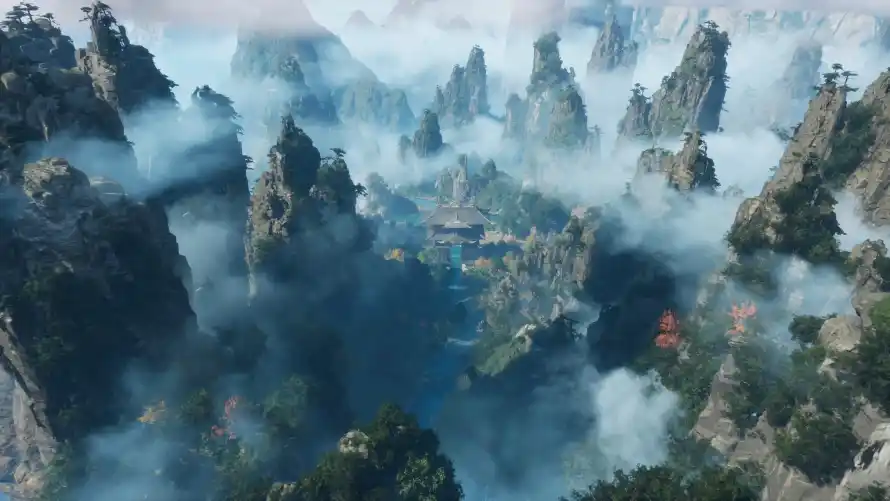
秘境,是修仙界中最为独特且重要的存在之一。它们散布于天地之间,如同一个个独立运转的小世界,承载着无数机缘与危险。对于修士而言,秘境既是获取珍稀资源的核心途径,也是检验自身实力的试炼场。本文将从多个维度全面剖析秘境的运作规则,揭示这一修仙界"副本机制"背后的深层逻辑。
一、秘境的形成原理
秘境并非凭空而生,其形成大致可归纳为三种主要途径。
上古修士遗迹
最为常见的秘境类型,源自上古时期大能修士留下的洞府、试炼场或藏宝之地。这些修士在陨落前,往往以大神通将自己的洞府封印于独立空间之中,设置层层禁制与考验。随着岁月流逝,这些封印逐渐与天地灵气交融,演化为半独立的空间节点。上古修士的修为越高,所留秘境的规模与危险程度也越大。例如某些化神期乃至炼虚期大能遗留的秘境,其中不仅藏有惊世功法与灵药,更有残留的傀儡守卫与杀阵,稍有不慎便是粉身碎骨。
天然空间裂缝
天地之间本就存在空间薄弱之处。当某些地域的灵脉交汇、星辰运行至特殊方位,或是遭受大战余波冲击时,空间壁障会出现天然裂缝。这些裂缝若长期稳定存在,便会在其中孕育出独立的小空间,形成天然秘境。此类秘境的特点在于其内部环境往往极为原始,可能生长着外界早已绝迹的天材地宝,但同时也可能栖息着凶猛至极的上古异兽。天然秘境的稳定性通常不如人为创建的秘境,存在坍塌的风险,这也使得探索此类秘境格外危险。
人为创建
实力达到一定境界的修士,能够以空间神通开辟独立空间,人为创建秘境。这在修仙界中属于极为高端的手段,通常只有元婴期以上的大修士方能做到。人为创建的秘境用途广泛:有的被用作宗门的秘密试炼场,有的被设为储藏珍贵物资的密库,还有的被改造为特殊的炼丹或炼器空间。人为秘境的优势在于可控性强,创建者能够精确设定准入条件、内部环境与资源分布,但维护成本极高,需要持续注入灵石或灵脉能量以维系空间稳定。
二、开放周期规律
秘境的开放并非随心所欲,而是遵循着特定的规律与条件。
定期开放型
绝大多数已知秘境属于定期开放类型。其开放周期与天地灵气潮汐、星辰运转密切相关。常见的开放周期包括:数十年一次(如虚天殿每三十年开启一次)、百年一次,乃至数百年一次。周期越长的秘境,通常意味着内部蕴含的资源越丰厚,危险等级也越高。定期开放型秘境的入口位置相对固定,各大势力往往会在入口附近设置据点,提前布局。每逢开放之际,入口附近便会汇聚大量修士,形成修仙界特有的"秘境集市",各种交易与情报交换在此频繁发生。
触发开放型
部分秘境的开放需要满足特定条件方可触发。这些条件可能包括:特定的天象出现(如五星连珠、日月同辉)、某种特殊物品的激活(如碎裂的玉牌拼合、古阵法的启动)、或是某个区域灵气浓度达到临界值。触发型秘境的开放往往带有极强的不确定性与突然性,一旦出现便引发各方势力的疯狂争夺。这类秘境由于长期处于封闭状态,内部资源的积累通常远超定期开放型,但相应的危险也更加不可预测。
三、准入限制机制
秘境的准入限制是其运作规则中最为核心的部分,直接决定了哪些修士有资格进入探索。
修为限制
最普遍的准入条件便是修为限制。大多数秘境的空间壁障本身就具有排斥高修为修士的特性——当修士的灵力强度超过某一阈值时,空间入口会自动将其弹出甚至产生反噬。这一机制并非人为设定,而是空间本身的承载极限所决定的。因此,许多秘境天然只允许特定境界以下的修士进入,例如仅限筑基期、仅限结丹期等。这种限制客观上为低阶修士提供了宝贵的机缘窗口,使得秘境不至于完全沦为高阶修士的专属猎场。
令牌与信物
部分秘境需要持有特定的令牌或信物方能进入。这些令牌可能是秘境创建者遗留的钥匙,也可能是各大势力通过协商分配的准入凭证。令牌的获取途径多样:有的通过宗门内部选拔赏赐,有的在拍卖行中以天价流通,有的则隐藏于某些特殊任务的奖励之中。令牌制度使得秘境的准入权成为一种稀缺资源,围绕令牌的争夺本身就构成了修仙界权力博弈的重要一环。
阵法钥匙与特殊条件
高级秘境往往设有更为复杂的准入机制。某些秘境的入口被强大的阵法封锁,需要破解特定的阵法序列方能开启;某些秘境要求进入者必须携带特定的灵物作为"钥匙";还有些秘境设置了血脉限制,仅允许具有特定血脉传承的修士进入。这些多重限制极大地提高了秘境探索的门槛,同时也催生了修仙界中专门研究秘境入口的"探秘师"职业。
四、各势力的名额分配
秘境名额的分配,是修仙界各势力间博弈的核心议题之一。
对于已被发现且定期开放的秘境,各大势力通常会通过以下方式分配名额:首先,秘境所在地域的主导势力拥有优先分配权,通常占据总名额的三到四成;其次,与主导势力签订盟约的友好势力可获得一定配额;最后,剩余名额通过拍卖、交换或其他方式向散修及中小势力开放。
大型宗门内部的名额分配同样竞争激烈。一般而言,宗门会综合考量弟子的修为、潜力、往期表现与任务贡献来进行选拔。核心弟子与内门精英拥有优先权,而外门弟子则需通过层层考核方能获得机会。名额分配的公平性与效率,直接影响着宗门弟子的修炼积极性与宗门的整体实力提升。
在某些重大秘境开放之际,各势力甚至会召开专门的"分额大会",通过谈判、比斗乃至联姻等方式来确定名额归属。这种大会本身便是修仙界政治生态的缩影,充满了明争暗斗与利益交换。
五、秘境经济学:资源产出与消耗的平衡
从经济学角度审视,秘境构成了修仙界资源循环体系中不可或缺的一环。
秘境的主要资源产出包括:珍稀灵药(许多品种仅在特定秘境环境中生长)、矿脉灵石、上古功法与秘术残篇、法宝材料乃至成品法宝、以及各类灵兽的妖丹与材料。这些资源的稀缺性与不可替代性,使得秘境成为修仙界经济体系的重要"增量来源"。
然而,秘境探索的消耗同样巨大。每次秘境探索都需要投入大量的准备资源:防护法宝、丹药补给、阵旗符箓等消耗品缺一不可。更重要的是,秘境探索伴随着极高的人员损失率——在危险等级较高的秘境中,探索者的折损率可达三成甚至更高。修士本身便是修仙界最宝贵的"资源",人员的大量折损对宗门战力的影响不容忽视。
长期来看,秘境资源并非取之不尽。定期开放型秘境在每次被探索后,内部资源需要一定时间恢复。若开放周期过短或探索过于频繁,可能导致秘境资源枯竭,甚至空间本身的崩塌。因此,各大势力在利用秘境时,也不得不考虑可持续性的问题,部分势力已开始尝试"养境"策略——主动向秘境中投放灵植种子与灵兽幼崽,以加速资源恢复。
六、秘境对修仙界权力格局的影响
秘境的存在深刻塑造了修仙界的权力格局。
资源垄断与势力分化。 掌控重要秘境入口的势力,等同于掌握了稳定的珍稀资源来源,这直接转化为宗门的硬实力。许多顶级宗门之所以能够长期维持其统治地位,正是因为它们控制着多个高价值秘境的准入权。反之,失去秘境控制权的势力往往会迅速衰落。
联盟与战争的催化剂。 围绕秘境控制权的争夺,是修仙界各势力间冲突的主要导火索之一。新秘境的发现往往引发多方势力的激烈争夺,甚至演变为大规模战争。同样,共同开发某一秘境的需求也促成了许多势力间的联盟与合作。
修士个体命运的转折点。 对于个体修士而言,秘境中的机缘足以改变一生的修炼轨迹。韩立的修仙之路便多次受益于秘境探索——从虚天殿中获取珍稀灵药,到各处秘境中磨砺实战经验,秘境在其成长历程中扮演了举足轻重的角色。秘境为底层修士提供了实现阶层跃升的可能性,是修仙界中为数不多的"公平竞技场"。
七、不同类型秘境的分类体系
根据不同的标准,秘境可被划分为多种类型。
按危险等级分类: 可分为低危(适合练气至筑基期修士)、中危(适合结丹至元婴期修士)、高危(仅适合化神期以上大修士)、以及禁地级(即便合体期修士也九死一生)四个等级。
按空间性质分类: 包括固定秘境(空间入口与内部结构稳定不变)、游离秘境(在特定区域内随机出现,位置不固定)、以及叠层秘境(内部嵌套多层空间,越深入越危险)。
按资源类型分类: 可分为灵药秘境(以珍稀灵药产出为主)、矿藏秘境(富含灵石与珍稀矿脉)、传承秘境(以功法秘术传承为核心价值)、以及综合秘境(兼具多种资源类型)。
按控制状态分类: 分为已占秘境(被某一势力或势力联盟独占控制)、共管秘境(由多方势力共同管理、协商分配)、以及无主秘境(尚未被任何势力有效控制,通常是新发现或极度危险的秘境)。
综合来看,秘境作为修仙界的核心机制之一,其运作规则远比表面所见更为复杂与精密。从形成原理到开放规律,从准入限制到名额分配,从资源经济到权力博弈,秘境的每一个侧面都折射出修仙界的运行法则。理解秘境的运作逻辑,不仅有助于修士更好地规划探索策略,更能帮助我们从宏观视角把握修仙界的本质面貌。
Secret realms (秘境) are among the most unique and important phenomena in the cultivation world. Scattered throughout the space between heaven and earth, they function as independently-operating pocket worlds that contain countless opportunities and dangers. For cultivators, secret realms serve as both the primary avenue for obtaining rare resources and as proving grounds for testing one's abilities. This article provides a comprehensive analysis of secret realm operating rules from multiple perspectives, revealing the deeper logic behind these cultivation world "dungeon mechanics."
Cultural Context: The concept of "secret realms" in xianxia fiction draws on the Daoist tradition of "cave heavens and blessed lands" (洞天福地) -- hidden paradises where immortals cultivated in seclusion. In narrative terms, they function similarly to dungeons in RPG games, providing structured environments where protagonists face dangers in exchange for treasure and growth. The Chinese fan term "副本" (literally "instance" or "copy"), borrowed from MMO gaming terminology, is commonly used to describe these self-contained adventure zones.
I. Formation Principles of Secret Realms
Secret realms do not appear from nowhere. Their formation can be broadly categorized into three primary pathways.
Ruins of Ancient Cultivators
The most common type of secret realm originates from the cave dwellings, trial grounds, or treasure vaults left behind by great powers of the primordial era. Before their passing, these cultivators often used supreme techniques to seal their dwellings within independent spaces, setting layer upon layer of restrictions and challenges. Over the ages, these seals gradually merged with the ambient spiritual energy of heaven and earth, evolving into semi-independent spatial nodes. The higher the cultivation of the original creator, the larger the scale and greater the danger of the resulting secret realm. For example, secret realms left by Deity Transformation or even Void Refinement (炼虚期) great powers contain not only extraordinary techniques and spiritual medicines but also residual puppet guardians and killing formations -- a moment's carelessness means certain death.
Natural Spatial Rifts
Weak points in space naturally exist throughout the world. When spiritual veins in certain regions converge, celestial bodies align in special configurations, or aftershocks from great battles impact an area, the spatial barriers may develop natural cracks. If these cracks remain stable over extended periods, they can nurture independent sub-spaces within them, forming natural secret realms. Such realms are characterized by extremely primordial internal environments, potentially growing heavenly materials and earthly treasures long extinct in the outside world, but also potentially harboring extraordinarily ferocious ancient aberrant beasts. Natural secret realms are typically less stable than artificially created ones, carrying the risk of collapse, which makes exploring them especially dangerous.
Artificially Created
Cultivators who have reached a certain realm of power can use spatial techniques to carve out independent spaces, artificially creating secret realms. In the cultivation world, this is an extremely advanced capability, typically achievable only by Nascent Soul (元婴期) or higher great cultivators. Artificially created secret realms serve diverse purposes: some are used as sect training facilities, others as secure vaults for precious resources, and still others as specialized pill-refining or artifact-crafting spaces. The advantage of artificial secret realms lies in their high controllability -- creators can precisely set access conditions, internal environments, and resource distributions -- but maintenance costs are high, requiring continuous infusion of spirit stones or spiritual vein energy to sustain spatial stability.
II. Opening Cycle Patterns
Secret realm openings are not arbitrary but follow specific patterns and conditions.
Periodically Opening Type
The vast majority of known secret realms fall into the periodically opening category. Their opening cycles are closely tied to the tidal flows of heaven-and-earth spiritual energy and the movements of celestial bodies. Common opening intervals include: once every several decades (for example, the Void Heaven Hall opens every thirty years), once per century, or even once every several centuries. Longer-cycle secret realms typically contain richer resources and higher danger levels. The entrance locations of periodically opening secret realms are relatively fixed, and major factions typically establish outposts near entrances, positioning themselves in advance. Around each opening, large numbers of cultivators gather at entrance sites, forming the cultivation world's distinctive "secret realm bazaars" where trading and intelligence exchange flourish.
Trigger-Activated Type
Some secret realms require specific conditions to trigger their opening. These conditions may include: the appearance of particular celestial phenomena (such as a five-planet alignment or simultaneous sun-moon illumination), activation of specific objects (such as reassembling a broken jade token or activating an ancient formation), or a region's spiritual energy concentration reaching a critical threshold. Trigger-activated secret realms carry strong uncertainty and suddenness in their openings, and once they appear, they spark frenzied competition among all factions. Because these realms remain sealed for long periods, their internal resource accumulation typically far exceeds the periodically opening type, but corresponding dangers are also more unpredictable.
III. Access Restriction Mechanisms
A secret realm's access restrictions form the most core element of its operating rules, directly determining which cultivators are qualified to explore.
Cultivation Restrictions
The most universal access condition is cultivation restriction. Most secret realms' spatial barriers inherently repel high-cultivation cultivators -- when a cultivator's spiritual power intensity exceeds a certain threshold, the spatial entrance will automatically eject them or even produce a backlash. This mechanism is not artificially set but determined by the space's own carrying capacity. Thus, many secret realms naturally only permit entry to cultivators below a specific realm, such as "Foundation Establishment only" or "Core Formation only." This restriction objectively provides lower-level cultivators with precious windows of opportunity, preventing secret realms from becoming the exclusive hunting grounds of high-level cultivators.
Tokens and Credentials
Some secret realms require specific tokens or credentials for entry. These tokens may be keys left by the secret realm's creator or access certificates distributed through negotiation among major factions. Token acquisition methods are diverse: some are awarded through internal sect selection, some circulate at auction houses at premium prices, and some are hidden within the rewards of particular quests. The token system makes secret realm access rights a scarce resource, and competition surrounding tokens itself constitutes an important component of cultivation world power dynamics.
Formation Keys and Special Conditions
Advanced secret realms often employ more complex access mechanisms. Some secret realm entrances are sealed by powerful formations requiring specific sequence-breaking to open; some require entrants to carry particular spirit objects as "keys"; still others impose bloodline restrictions, permitting entry only to cultivators with specific hereditary lineages. These layered restrictions enormously raise the barrier to secret realm exploration, while simultaneously giving rise to the specialized "realm explorer" profession -- cultivators who dedicate themselves to researching secret realm entrances.
IV. Faction Quota Allocation
The allocation of secret realm quotas is one of the central negotiation topics among cultivation world factions.
For discovered, periodically opening secret realms, major factions typically allocate quotas through the following methods: First, the dominant faction controlling the realm's geographic location holds priority allocation rights, usually claiming thirty to forty percent of total quotas. Second, friendly factions with alliance treaties with the dominant faction receive a certain allotment. Finally, remaining quotas are made available to independent cultivators and minor factions through auction, exchange, or other methods.
Internal quota allocation within major sects is equally competitive. Generally, sects comprehensively evaluate disciples' cultivation level, potential, past performance, and mission contributions for selection. Core disciples and inner-gate elites have priority, while outer-gate disciples must pass through layers of assessment to earn their chance. The fairness and efficiency of quota allocation directly impact disciples' cultivation motivation and the sect's overall strength development.
When certain major secret realms open, factions may even convene specialized "quota conferences," where negotiations, combat duels, and even arranged marriages determine quota ownership. These conferences are themselves microcosms of cultivation world political ecology, brimming with open rivalry, covert maneuvering, and interest exchanges.
V. Secret Realm Economics: Balancing Resource Output and Consumption
From an economic perspective, secret realms constitute an indispensable link in the cultivation world's resource circulation system.
Primary resource outputs from secret realms include: rare spiritual herbs (many species grow only in specific secret realm environments), ore veins and spirit stones, fragments of ancient techniques and secret arts, magical treasure materials and even finished magical treasures, and various demon beast cores and materials. The scarcity and irreplaceability of these resources make secret realms a crucial "incremental source" in the cultivation world economy.
However, the costs of secret realm exploration are equally enormous. Each expedition requires substantial investment in preparatory resources: protective magical treasures, pill supplies, formation flags, talismans, and other consumables are all indispensable. More importantly, secret realm exploration carries extremely high personnel loss rates -- in higher-danger secret realms, explorer attrition can reach thirty percent or higher. Cultivators themselves are the cultivation world's most precious "resource," and the impact of heavy personnel losses on a sect's combat strength cannot be overlooked.
In the long term, secret realm resources are not inexhaustible. Periodically opening secret realms require a certain recovery period after each exploration. If opening cycles are too short or exploration too frequent, resource depletion or even spatial collapse may result. Therefore, major factions must also consider sustainability when utilizing secret realms. Some factions have begun experimenting with "realm cultivation" strategies -- proactively introducing spirit plant seeds and young spirit beasts into secret realms to accelerate resource recovery.
VI. How Secret Realms Shape Cultivation World Power Dynamics
The existence of secret realms profoundly shapes the cultivation world's power dynamics.
Resource Monopoly and Power Stratification. Factions controlling important secret realm entrances effectively command stable sources of rare resources, which directly translates into hard power. Many top-tier sects maintain their long-term dominant positions precisely because they control access to multiple high-value secret realms. Conversely, factions that lose control of secret realms often decline rapidly.
Catalyst for Alliances and Wars. Competition for control of secret realms is one of the primary flashpoints for inter-faction conflicts in the cultivation world. The discovery of new secret realms often triggers fierce multi-faction scrambles that can escalate into large-scale wars. Equally, the shared need to develop a particular secret realm fosters many inter-faction alliances and cooperative arrangements.
Turning Points in Individual Cultivators' Fates. For individual cultivators, the opportunities found within secret realms can change the course of an entire lifetime of cultivation. Han Li's cultivation path benefited numerous times from secret realm exploration -- from obtaining rare spiritual medicines in the Void Heaven Hall to honing practical combat experience in various secret realms, these pocket worlds played a crucial role throughout his growth. Secret realms provide lower-level cultivators with the possibility of class transcendence, representing one of the cultivation world's few "fair arenas."
VII. Classification System for Different Types of Secret Realms
Secret realms can be categorized into multiple types based on different criteria.
By Danger Level: Divided into Low-Danger (suitable for Qi Condensation to Foundation Establishment cultivators), Medium-Danger (suitable for Core Formation to Nascent Soul cultivators), High-Danger (suitable only for Deity Transformation or higher cultivators), and Forbidden Zone-Grade (where even Body Integration cultivators face nine-in-ten odds of death).
By Spatial Properties: Includes Fixed Secret Realms (with stable spatial entrances and unchanging internal structures), Drifting Secret Realms (appearing randomly within specific regions, with unfixed locations), and Layered Secret Realms (containing nested multiple layers of space, growing more dangerous with each deeper layer).
By Resource Type: Divided into Herb Secret Realms (primarily producing rare spiritual herbs), Mineral Secret Realms (rich in spirit stones and rare ore veins), Inheritance Secret Realms (whose core value lies in technique and art transmissions), and Comprehensive Secret Realms (combining multiple resource types).
By Control Status: Categorized as Occupied Secret Realms (exclusively controlled by a single faction or faction alliance), Co-Managed Secret Realms (jointly administered by multiple factions with negotiated allocation), and Uncontrolled Secret Realms (not yet effectively controlled by any faction, typically newly discovered or extremely dangerous realms).
Taken together, secret realms as one of the cultivation world's core mechanisms operate with far greater complexity and precision than surface appearances suggest. From formation principles to opening patterns, from access restrictions to quota allocation, from resource economics to power dynamics, every facet of secret realms reflects the operating laws of the cultivation world. Understanding the operational logic of secret realms not only helps cultivators better plan their exploration strategies but also enables us to grasp the fundamental nature of the cultivation world from a macro perspective.