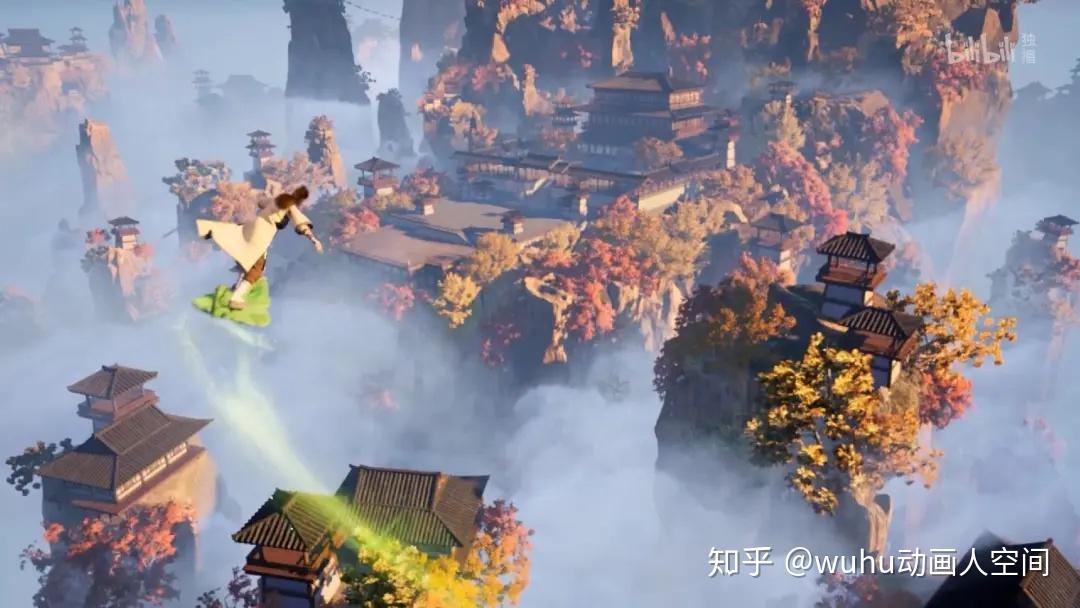
空间节点的本质与形成原理
在凡人修仙传的世界体系中,人界与灵界并非完全隔绝的两个独立空间,而是通过一种被称为"空间节点"的特殊通道彼此相连。空间节点的本质,是两界空间壁障在特定位置产生的天然薄弱点。这些薄弱点并非恒定存在,而是随着天地灵气的潮汐变化而周期性地开启与闭合,其规律极难被寻常修士所掌握。
远古时期,人界与灵界之间的空间壁障远比当世稳固。然而,经历了数次旷古大战——尤其是人魔两族的界域之争——空间壁障遭受了难以修复的创伤,遂在若干固定位置留下了永久性的裂痕。这些裂痕在漫长岁月的演化中逐渐稳定下来,形成了所谓的空间节点。据古籍记载,整个人界已知的稳定空间节点不超过十数个,且大部分被各大势力严密把控,寻常散修根本无从接近。
空间节点的内部构造极为复杂。它并非一条简单的直线通道,而更类似于一片充满褶皱与裂隙的混沌空间。修士进入节点后,需要在这片混沌中找到通往灵界的正确路径,稍有偏差便会迷失在无尽虚空之中,最终灵力耗尽而亡。更为凶险的是,空间节点内部时刻都有空间乱流涌动,任何一股微小的空间波动都可能将修士撕成碎片。
值得注意的是,空间节点并非双向通道。人界修士可以通过节点飞升灵界,但灵界之人想要降临人界则需要付出远超寻常的代价。这种单向性源于两界灵气浓度的巨大差异——灵界灵气远胜人界,从低浓度区域向高浓度区域移动相对容易,反之则困难重重。这一设定也从侧面解释了为何灵界少有大能降临人界干预凡尘之事。
空间风暴的恐怖程度
空间节点中最令修士闻风丧胆的存在,莫过于空间风暴。所谓空间风暴,是空间节点内部因两界空间法则的剧烈碰撞而自然生成的毁灭性力量。它既非风,亦非雷,而是空间本身的撕裂与重组,是一种超越五行属性的原始破坏之力。
空间风暴的恐怖之处在于其绝对性。无论修士修为多高、法宝多强、护体法术多么精妙,一旦被空间风暴正面席卷,便是灰飞烟灭的结局。化神期修士引以为傲的元婴护体、大乘期强者的肉身不坏——在空间风暴面前统统不值一提。这并非力量的大小之争,而是维度层面的碾压。空间风暴撕裂的是空间本身,而修士无论多强,终究是存在于空间之中的生命体,如何能抵挡容纳自身的空间被直接抹除?
据韩立飞升时的亲身经历,空间风暴在节点内部并无固定的运行轨迹。它时而汇聚成银白色的巨大旋涡,吞噬一切靠近之物;时而化作无数细如发丝的空间裂缝,无声无息地弥漫在通道之中。后者尤为致命,因为这些裂缝几乎不可见,待修士察觉时往往已身处其中,连反应的时间都没有。许多化神期大修士便是这样无声无息地陨落在飞升途中,连尸骨都未能留下。
更令人绝望的是,空间风暴的爆发毫无规律可循。有时数日风平浪静,让修士误以为安全;有时连续数月狂暴不休,将整条通道变成绝对的死域。老练的修士会选择在风暴间歇期尝试通过,但即便如此,突如其来的局部空间坍缩仍然可以在一瞬间夺去修士的性命。飞升之路,从来都是九死一生的豪赌。
六丁天甲符的关键保护作用
面对空间风暴的绝对破坏力,人界修士并非完全束手无策。在漫长的岁月中,先辈大能呕心沥血,终于炼制出了一种能够在空间风暴中提供短暂庇护的奇物——六丁天甲符。
六丁天甲符的炼制之法源自上古,据传最初是由一位成功飞升灵界的绝世符修所创。此符以九天玄铁为基材,以天雷之力为引,融合六丁六甲之术,在符箓表面构建出一层微型的独立空间壁障。当空间风暴来袭时,六丁天甲符会自动激发,在修士周身形成一个独立于周围空间的"安全气泡"。空间风暴虽能撕裂一切,但面对另一层完整的空间壁障,其破坏力会被大幅削减,从而为修士争取到宝贵的存活时间。
然而,六丁天甲符的局限性同样显而易见。首先,此符极难炼制,所需材料稀有至极,且对炼制者的符道造诣有着近乎苛刻的要求。整个人界能够成功炼制此符的修士屈指可数。其次,六丁天甲符的持续时间有限,一般只能维持数个时辰的防护。一旦符力耗尽,修士便重新暴露在空间风暴之下。最后,即便有六丁天甲符护身,面对特别强烈的空间风暴,符箓也可能被直接击碎,修士仍然难逃一死。
韩立在准备飞升之前,便花费了大量心血搜集炼制六丁天甲符的材料。凭借其深厚的炼器与符道功底,他成功炼制了数枚品质极高的六丁天甲符。正是这些符箓,在他穿越空间节点的过程中数次救了他的性命。每当空间风暴骤然袭来,六丁天甲符便在他周身绽放出金色光幕,将那足以毁灭一切的恐怖之力挡在体外。即便如此,韩立在飞升途中仍然险象环生,多枚符箓被逐一耗尽,最终几乎是以最后一枚符箓的余力才堪堪抵达灵界。
冰凤同行的经过
韩立飞升灵界之时,并非孤身一人。与他同行的还有冰凤——一只拥有远古天凤血脉的妖兽。冰凤与韩立之间的关系颇为复杂,二者既非主仆,亦非盟友,更多的是一种建立在利益与些许信任之上的微妙合作。
冰凤选择与韩立同行飞升,有其深层考量。作为一只拥有远古血脉的妖兽,冰凤在人界的修炼已经接近极限。灵界灵气浓厚,远非人界可比,唯有飞升灵界才能突破血脉的桎梏,获得更进一步的可能。然而,穿越空间节点对妖兽而言同样凶险万分,冰凤虽实力不俗,但独自面对空间风暴仍然胜算不大。韩立手中的六丁天甲符是其选择合作的关键因素之一。
在穿越空间节点的过程中,韩立与冰凤相互扶持,共同抵御了数次空间风暴的侵袭。冰凤以其强横的妖力化作护盾,分担了六丁天甲符的压力;韩立则以符箓之力为冰凤提供了关键的空间防护。二者的配合在生死关头显得默契而高效,这种在绝境中建立的信任,也为他们日后在灵界的经历埋下了伏笔。
值得一提的是,冰凤在穿越空间节点时承受了远超预期的伤害。远古血脉虽然赋予了她超凡的实力,但同时也使她的存在更加"显眼",更容易引来空间乱流的攻击。多次险象环生之后,冰凤身受重伤,抵达灵界后不得不花费漫长的岁月恢复元气。这段经历也让冰凤深刻认识到,所谓飞升之路,绝非想象中那般只需实力足够便可坦然通过。
向之礼的悲剧:偷渡灵界被天魔吞噬元神
在空间节点的众多飞升故事中,向之礼的结局无疑是最令人唏嘘的一段。向之礼是人界一位化神后期的大修士,修为精深,手段高明,本有着光明的飞升前途。然而,他的贪婪与急躁最终将他推入了万劫不复的深渊。
向之礼并未选择在空间节点稳定开放时正式飞升,而是企图通过一处尚未完全稳定的空间裂缝偷渡灵界。其动机众说纷纭,有人说他急于逃避仇敌的追杀,有人说他觊觎灵界的某件奇宝,也有人说他仅仅是不愿与其他修士分享空间节点的使用权。无论原因为何,向之礼的选择本身便已注定了悲剧的收场。
未经稳定处理的空间裂缝远比正规空间节点危险百倍。向之礼凭借自身化神后期的深厚修为与数件顶级法宝勉强进入了裂缝,却在通道内部遭遇了一个远超他认知的恐怖存在——天魔。
天魔是一种栖息在空间夹缝中的异界生物,无形无质,以修士元神为食。它们不存在于人界,也不存在于灵界,而是寄居在两界之间的虚无之中。正规的空间节点因历代修士的不断维护与封印,天魔早已被驱除殆尽;但未经处理的野生空间裂缝中,天魔却比比皆是。
向之礼进入裂缝后不久便察觉到了异常。他的神识在通道内部受到了严重干扰,周围的空间法则混乱不堪,就连最基本的方向感都无法维持。就在他惊慌失措之际,天魔无声无息地靠近了他。向之礼甚至来不及做出任何反应,便感到元神传来了撕裂般的剧痛。天魔如同一条无形的毒蛇,缠绕住他的元神,开始贪婪地吞噬。向之礼拼尽全力反抗,法宝符箓倾泻而出,但对无形无质的天魔毫无效果。在经历了漫长而绝望的挣扎后,向之礼的元神被彻底吞噬,肉身在失去元神支撑后迅速崩溃,化为虚无。
向之礼的陨落给人界修仙界留下了深刻的警示:飞升之路虽然凶险,但最危险的从来不是空间风暴本身,而是修士心中的贪婪与侥幸。正道飞升虽然九死一生,但终究有一线生机;走捷径偷渡者,等待他们的只有比死亡更可怕的结局。
历代修士的飞升尝试史
回顾人界修仙史,飞升灵界从来都是金字塔尖的极少数者才有资格面对的终极挑战。在数十万年的漫长历史中,真正成功飞升灵界的修士,寥寥无几。
上古时期,人界灵气充沛,大能辈出。彼时飞升灵界虽然同样艰险,但成功率远高于后世。据残存的古籍记载,上古修士中每百年便有数人成功飞升,其中不乏合体期甚至大乘期的绝世强者。这些先辈在飞升之前,往往会在空间节点附近留下大量防护法阵与指引标记,为后来者开辟道路。
然而,随着天地灵气的不断衰减,人界能够修炼到化神期以上的修士越来越少,飞升更是成为了近乎传说般的壮举。中古时期以降,每隔数千年才有一位修士成功飞升,大量化神期修士折戟在空间节点之中。更有甚者,一些修士穷尽毕生之力到达空间节点,却因准备不足或时机不对,在节点外便已力竭而亡。
到了韩立所处的时代,空间节点的信息已经被各大宗门视为最高机密。许多化神期修士甚至不知道空间节点的具体位置,更遑论做出充分的飞升准备。韩立能够成功飞升,除了自身实力过硬外,与他多年来不断搜集空间节点相关情报、精心炼制六丁天甲符等护身之物的未雨绸缪密不可分。
飞升之路的哲学意义
空间节点与飞升之路,在凡人修仙传的叙事中远不止是一个简单的场景设定,它承载着整部作品最核心的哲学命题之一——面对未知的绝境,选择前行还是止步?
修仙之路的本质是对抗天命、逆天而行。然而,飞升灵界这最后一步,却将这种对抗推向了极致。空间节点中的空间风暴不讲道理、不看修为、不问善恶,它是宇宙法则本身的冷漠体现。修士在空间风暴面前的渺小,恰如凡人在天灾面前的无力——无论你多么强大,在更高维度的力量面前终究不过是蝼蚁。
然而,正是这种近乎绝望的险境,才映照出修士内心最真实的选择。有人如韩立,明知九死一生仍毅然踏入;有人如向之礼,因贪婪而走上歧途自取灭亡;更多的修士则是在空间节点前驻足许久,最终选择退回人界了此残生。这三种选择,恰恰对应了人面对命运时的三种态度——勇毅、贪妄与怯懦。
飞升之路同时也是一面照妖镜,将修士毕生修行的成果在最后一刻做出终极检验。修为的高低、法宝的优劣、符箓的多寡固然重要,但真正决定生死的,往往是修士在千钧一发之际的判断与心性。韩立在空间风暴中的每一次闪避、每一次符箓的精准激发,靠的不仅是实力,更是他历经无数生死磨砺后锻造出的冷静与果断。
从更宏观的视角来看,空间节点的存在暗示了一个残酷的宇宙真相:世界之间的壁障并非为了保护谁而存在,它只是自然法则运行的结果。修士的飞升不是被允许的恩赐,而是硬生生从天地法则的缝隙中撕扯出来的机遇。这种设定让整个凡人修仙传的世界观显得格外冷峻而真实——天道无情,众生平等地被碾压,唯有最坚韧、最谨慎、最幸运的极少数者,才能在法则的碾压下侥幸存活,踏入更广阔的天地。
空间节点的故事至此落幕,但它留下的启示却历久弥新:在通往未知的道路上,没有任何准备是多余的,没有任何谨慎是过分的,而最终的成败,往往悬于那最后一丝不可预知的命运之线。
The Nature and Formation Principles of Spatial Nodes
In the world system of A Record of a Mortal's Journey to Immortality, the Mortal Realm and the Spirit Realm are not two completely isolated independent spaces but are connected through special passages known as "spatial nodes" (空间节点). A spatial node is essentially a natural weak point in the spatial barrier between the two realms at specific locations. These weak points do not exist permanently but periodically open and close following the tidal fluctuations of heaven and earth's spiritual qi, with patterns extremely difficult for ordinary cultivators to master.
During the primordial era, the spatial barrier between the Mortal Realm and Spirit Realm was far more robust than in the current age. However, after several cataclysmic wars — particularly the territorial disputes between humans and demons — the spatial barrier suffered irreparable damage, leaving permanent fractures at certain fixed locations. These fractures gradually stabilized over the long ages, becoming what are known as spatial nodes. According to ancient texts, the total number of known stable spatial nodes in the entire Mortal Realm does not exceed a dozen or so, with most under the tight control of major factions, completely inaccessible to ordinary independent cultivators.
The internal structure of spatial nodes is extremely complex. Rather than a simple straight passage, a node more closely resembles a chaotic space filled with folds and fissures. After entering a node, a cultivator must find the correct path to the Spirit Realm within this chaos — the slightest deviation could lead to becoming lost in the endless void, eventually dying of spiritual power exhaustion. Even more perilous, spatial node interiors are constantly roiling with spatial turbulence, where any minor spatial fluctuation could tear a cultivator to pieces.
Notably, spatial nodes are not bidirectional passages. Mortal Realm cultivators can ascend to the Spirit Realm through the nodes, but for beings in the Spirit Realm to descend to the Mortal Realm requires costs far exceeding the norm. This unidirectional nature stems from the enormous difference in spiritual qi concentration between the two realms — moving from a lower to higher concentration is relatively easier, while the reverse is extremely difficult. This setting also explains from the side why Spirit Realm powerhouses rarely descend to the Mortal Realm to interfere with mundane affairs.
The Terror of Spatial Storms
The most feared phenomenon within spatial nodes is spatial storms. A spatial storm is a destructive force naturally generated by the violent collision of spatial laws from both realms within the node. It is neither wind nor lightning, but the tearing apart and reconstitution of space itself — a primordial destructive force that transcends the five elemental attributes.
The terror of spatial storms lies in their absolute nature. No matter how high a cultivator's cultivation, how powerful their treasures, or how refined their protective spells, once caught directly by a spatial storm, the result is instant annihilation. The Nascent Soul protection that Deity Transformation cultivators take pride in, the indestructible physical body of Mahayana powerhouses — all are utterly worthless before a spatial storm. This is not a contest of power magnitude but a crushing at the dimensional level. A spatial storm tears apart space itself, and cultivators, no matter how powerful, are ultimately living beings that exist within space — how could they possibly withstand the direct erasure of the space that contains them?
Based on Han Li's firsthand experience during his ascension, spatial storms follow no fixed trajectory within the nodes. They sometimes coalesce into massive silver-white vortexes that devour everything nearby; at other times they transform into innumerable hair-thin spatial fissures that spread silently through the passage. The latter is especially lethal — these fissures are virtually invisible, and by the time a cultivator detects them, they are usually already inside, with no time to react. Many great Deity Transformation cultivators perished silently during their ascension journey in exactly this manner, leaving not even bones behind.
What is even more despairing is that spatial storm outbreaks follow no discernible pattern. Sometimes days pass in calm, lulling cultivators into false security; sometimes storms rage continuously for months, turning entire passages into absolute death zones. Experienced cultivators choose to attempt passage during storm lulls, but even so, sudden localized spatial collapses can claim a cultivator's life in an instant. The ascension path has always been a nine-deaths-for-one-survival gamble.
The Critical Protective Role of the Six Ding Heavenly Armor Talisman
Facing the absolute destructive power of spatial storms, Mortal Realm cultivators are not entirely helpless. Over the long ages, ancestors of great power devoted their hearts and blood to finally refining a wondrous item capable of providing brief protection within spatial storms — the Six Ding Heavenly Armor Talisman (六丁天甲符).
The refining method of the Six Ding Heavenly Armor Talisman originates from antiquity, reportedly created by an ultimate talisman cultivator who successfully ascended to the Spirit Realm. Using Nine Heavens Dark Iron as the base material and heavenly lightning as the catalyst, it incorporates the arts of the Six Ding and Six Jia to construct a microscopic independent spatial barrier on the talisman's surface. When a spatial storm strikes, the Six Ding Heavenly Armor Talisman automatically activates, forming a "safety bubble" around the cultivator that is independent of the surrounding space. While the spatial storm can tear apart everything, facing another layer of intact spatial barrier, its destructive power is greatly diminished, buying the cultivator precious survival time.
However, the Six Ding Heavenly Armor Talisman's limitations are equally obvious. First, this talisman is extremely difficult to craft, requiring extraordinarily rare materials and nearly impossible demands on the craftsman's talisman dao mastery. Cultivators in the entire Mortal Realm who can successfully craft this talisman can be counted on one hand. Second, the talisman's duration is limited, generally maintaining protection for only several hours. Once talisman power is exhausted, the cultivator is exposed to the spatial storm once more. Finally, even with the Six Ding Heavenly Armor Talisman's protection, particularly powerful spatial storms can shatter the talisman directly, leaving the cultivator still unable to escape death.
Before preparing for ascension, Han Li expended enormous effort collecting materials to craft the Six Ding Heavenly Armor Talisman. Leveraging his deep foundation in artifact refining and talisman dao, he successfully crafted several talismans of exceptionally high quality. These talismans saved his life multiple times during his passage through the spatial node. Each time a spatial storm suddenly struck, the Six Ding Heavenly Armor Talisman bloomed with golden light barriers around him, blocking the terrifying force capable of annihilating everything outside his body. Even so, Han Li's ascension journey was fraught with danger — the talismans were consumed one by one, and he barely reached the Spirit Realm with the remaining power of his very last talisman.
Traveling with the Ice Phoenix
When Han Li ascended to the Spirit Realm, he was not alone. Accompanying him was the Ice Phoenix (冰凤) — a demon beast possessing ancient Heavenly Phoenix bloodline. The relationship between the Ice Phoenix and Han Li was rather complex — neither master and servant nor allies, but more of a subtle cooperation built on mutual interest and a measure of trust.
The Ice Phoenix's choice to ascend alongside Han Li was based on deep considerations. As a beast with ancient bloodline, the Ice Phoenix had nearly reached the limits of what could be achieved through cultivation in the Mortal Realm. The Spirit Realm's spiritual qi was vastly superior, and only by ascending could she break free of her bloodline's constraints and achieve further advancement. However, traversing the spatial node was equally perilous for demon beasts, and despite her considerable strength, the Ice Phoenix's odds of facing spatial storms alone were not promising. The Six Ding Heavenly Armor Talismans in Han Li's possession were a key factor in her decision to cooperate.
During their passage through the spatial node, Han Li and the Ice Phoenix supported each other, jointly weathering several spatial storm assaults. The Ice Phoenix used her formidable demonic power to create shields, sharing the pressure on the Six Ding Heavenly Armor Talismans; Han Li in turn used the talisman power to provide the Ice Phoenix with critical spatial protection. Their coordination proved seamless and efficient at life-or-death moments, and the trust built in these dire straits planted seeds for their future experiences in the Spirit Realm.
It is worth noting that the Ice Phoenix sustained far greater damage than expected during the passage. While her ancient bloodline granted her extraordinary strength, it also made her existence more "conspicuous" and more prone to attracting spatial turbulence attacks. After multiple close calls, the Ice Phoenix was severely injured and had to spend a very long time recovering after reaching the Spirit Realm. This experience also gave the Ice Phoenix a profound realization that the so-called ascension path was not simply a matter of having sufficient strength to pass through safely.
Xiang Zhili's Tragedy: Devoured by Heavenly Demons While Illegally Crossing
Among the many ascension stories involving spatial nodes, Xiang Zhili's (向之礼) fate is undoubtedly the most lamentable. Xiang Zhili was a late Deity Transformation cultivator of the Mortal Realm, with deep cultivation and masterful techniques, who should have had a bright ascension future. However, his greed and impatience ultimately thrust him into an abyss of no return.
Rather than ascending formally when a spatial node was stably open, Xiang Zhili attempted to cross over through an incompletely stabilized spatial rift. His motivations were widely debated — some said he was fleeing enemies, others that he coveted some treasure in the Spirit Realm, and still others that he simply refused to share a spatial node with other cultivators. Regardless of the reason, his choice itself sealed his tragic fate.
Unstabilized spatial rifts are a hundredfold more dangerous than proper spatial nodes. Xiang Zhili, relying on his deep late Deity Transformation cultivation and several top-tier magical treasures, barely forced his way into the rift, only to encounter an existence within the passage far beyond his understanding — a Heavenly Demon (天魔).
Heavenly Demons are extraplanar creatures dwelling in the interstices between spaces, formless and insubstantial, feeding on cultivators' primordial spirits. They exist neither in the Mortal Realm nor in the Spirit Realm but inhabit the void between the two. Proper spatial nodes, continuously maintained and sealed by generations of cultivators, had long been purged of Heavenly Demons; but unprocessed wild spatial rifts teemed with them.
Shortly after entering the rift, Xiang Zhili sensed something was wrong. His spiritual sense was severely disrupted within the passage, surrounding spatial laws were chaotic beyond comprehension, and even basic directional sense became impossible to maintain. Just as panic set in, a Heavenly Demon silently approached. Xiang Zhili barely had time to react before he felt his primordial spirit being torn apart in searing pain. The Heavenly Demon wrapped around his primordial spirit like an invisible serpent, greedily devouring it. Xiang Zhili fought back with all his might, unleashing magical treasures and talismans, but against the formless Heavenly Demon, nothing had any effect. After a long and desperate struggle, Xiang Zhili's primordial spirit was completely consumed, and his physical body, losing its spiritual support, rapidly disintegrated into nothingness.
Xiang Zhili's demise left the Mortal Realm cultivation world with a profound warning: while the ascension path is perilous, the most dangerous thing was never the spatial storms themselves, but the greed and wishful thinking within a cultivator's heart. The proper path of ascension, though nine deaths for one survival, at least offered a thread of hope; those who took shortcuts to cross illegally would find only fates worse than death awaiting them.
A History of Ascension Attempts Through the Ages
Looking back through Mortal Realm cultivation history, ascending to the Spirit Realm has always been the ultimate challenge that only the absolute pinnacle of the cultivation pyramid has the qualification to face. In hundreds of thousands of years of long history, cultivators who truly succeeded in ascending to the Spirit Realm were vanishingly few.
During the primordial era, the Mortal Realm was rich in spiritual qi and produced numerous powerhouses. Though ascension was equally perilous then, the success rate was far higher than in later ages. According to surviving ancient texts, several cultivators ascended successfully every century during that period, including no shortage of Body Integration or even Mahayana powerhouses. These predecessors typically left extensive protective formations and guide markers near spatial nodes before ascending, opening the way for those who came after.
However, as spiritual qi steadily declined, cultivators capable of reaching the Deity Transformation stage or above became increasingly scarce, and ascension became a near-legendary feat. From the Middle Ages onward, only one cultivator successfully ascended every several thousand years, with large numbers of Deity Transformation cultivators meeting their end in spatial nodes. Some cultivators even exhausted their lifetime of effort to reach a spatial node only to die of exhaustion before even entering, having insufficient preparation or bad timing.
By Han Li's era, information about spatial nodes had become the highest-level secret of major sects. Many Deity Transformation cultivators did not even know the specific locations of spatial nodes, let alone make adequate preparations for ascension. Han Li's successful ascension, beyond his own considerable strength, was inseparable from his years of continuous intelligence gathering about spatial nodes and his meticulous advance preparation of protective items like the Six Ding Heavenly Armor Talismans.
The Philosophical Significance of the Ascension Path
Spatial nodes and the ascension path, in the narrative of A Record of a Mortal's Journey to Immortality, are far more than a simple setting — they carry one of the work's most fundamental philosophical questions: when facing an unknown abyss, does one advance or stand still?
The essence of the cultivation path is defying heaven's mandate, going against the natural order. However, this final step of ascending to the Spirit Realm pushes that defiance to its extreme. Spatial storms within the nodes are unreasoning, blind to cultivation level, and indifferent to good or evil — they are the cold indifference of universal law incarnate. A cultivator's insignificance before spatial storms mirrors a mortal's helplessness before natural disasters — no matter how powerful, before forces of a higher dimension, all are ultimately ants.
Yet it is precisely this near-hopeless peril that illuminates the truest choice within a cultivator's heart. Some, like Han Li, stride forward knowing they face nine deaths for one survival; some, like Xiang Zhili, take the crooked path of greed and bring destruction upon themselves; and far more cultivators stand before the spatial node for a long time before ultimately choosing to retreat to the Mortal Realm to live out their remaining years. These three choices correspond precisely to three attitudes humans take when facing fate — courage, reckless greed, and timidity.
The ascension path is also a mirror that reveals truth, delivering a final examination of a cultivator's lifetime of practice. Cultivation level, treasure quality, and talisman quantity are certainly important, but what truly decides life and death is often the cultivator's judgment and temperament at the critical moment. Han Li's every evasion within the spatial storms, every precisely timed talisman activation, relied not only on ability but on the composure and decisiveness forged through countless life-and-death temperings.
From an even broader perspective, the existence of spatial nodes implies a cruel universal truth: the barriers between worlds do not exist to protect anyone but are simply the result of natural law in operation. A cultivator's ascension is not a granted grace but an opportunity torn by force from the cracks in heaven and earth's laws. This setting gives the entire worldview of A Record of a Mortal's Journey to Immortality an especially stark and authentic quality — the Heavenly Dao is merciless, all beings are equally crushed beneath it, and only the most tenacious, most cautious, and most fortunate few can survive the grinding of law and step into wider heavens.
The story of the spatial node concludes here, but its lessons remain as relevant as ever: on the road to the unknown, no preparation is excessive, no caution is too great, and ultimate success or failure often hangs upon that last unforeseeable thread of fate.